The Goal Isn't a Stress-Free Life. It's a More Resilient One.
There will always be stress in life.
…And that’s ok. You don't need to eliminate stress to feel better. You need to build the capacity to move through it without letting it consume you.
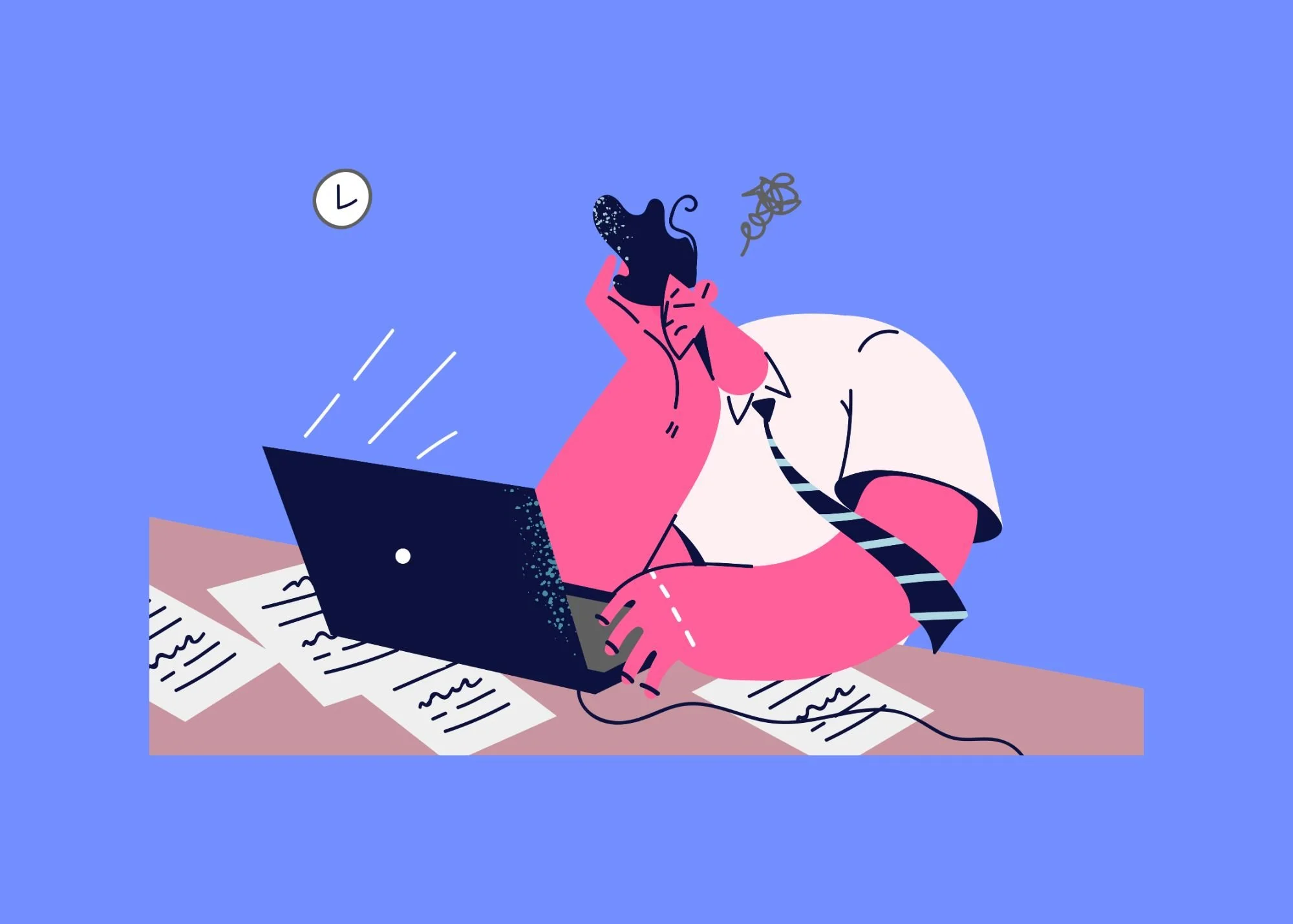
For years, the wellness industry has sold us a seductive idea: if we could just manage our stress well enough, we could finally get to a place where we feel calm, balanced, and in control. Meditate every morning. Sleep eight hours. Exercise more. Take a vacation. Set better boundaries. Delete the apps. Practice gratitude. All useful advice but there's a problem with the premise. Stress is not a problem you can permanently eliminate.
Life will continue to ask things of you. There will be demanding projects, difficult conversations, aging parents, health scares, relationship challenges, financial decisions, unexpected setbacks, deadlines, losses, and seasons when everything seems to happen at once. Even good things create stress—a promotion, a new relationship, moving, having a child, starting a business, buying a home, taking on a leadership role.
The goal, then, cannot be to create a life in which nothing stressful ever happens. The goal is to build a life—and a nervous system, body, mindset, and support system—that can handle stress without continually paying for it with your health. That is resilience.
Stress Isn't the Enemy
Stress has gotten a bad reputation. But biologically, it is not inherently harmful. It's a normal response to challenge, uncertainty, and perceived threat, and it helps mobilize the energy and attention you need to respond to what's happening. The problem isn't that you experience stress. The problem is when stress becomes your baseline.
A stressful week is different from living in a constant state of urgency. A demanding season is different from never having an opportunity to recover. A difficult conversation is different from spending months in an environment that keeps your nervous system on high alert.
Your body is designed to respond to stress. It is also designed to recover from it…and that second part is where many high-performing professionals struggle. They know how to push, how to perform, how to meet the deadline, solve the problem, take care of everyone else, and keep moving. What they haven't necessarily learned is how to come back down. Over time, that matters.
Why "Coming Back Down" Is Its Own Skill
Most of what we're taught about handling stress focuses on the front half of the cycle: how to push through, how to perform under pressure, how to grind it out. Almost nothing teaches the back half about how to actually let your body register that the threat has passed. This isn't a metaphor. Your nervous system has two broad modes: one that mobilizes you (sympathetic activation) and one that allows you to rest, digest, and repair (parasympathetic activation). High performers often get remarkably good at flipping into the first mode. Fewer ever practice deliberately flipping into the second.
If you go from a stressful meeting straight into scrolling your phone, straight into the next task, straight into the next obligation, your body never gets the signal that it's safe to downshift. The stress response stays partially switched on, even when nothing urgent is actually happening. Over weeks and months, that partial activation adds up and it's part of why you can take a full week of vacation and still come home feeling wound up. Your body never got the "all clear."
Learning to come back down isn't indulgent; it's physiological maintenance. A short walk without your phone, a few minutes of slow breathing after a hard conversation, an actual pause between meetings instead of stacking them back-to-back—these are what let your body complete the stress cycle instead of carrying it forward into the next one.
The Real Problem With Trying to Become "Stress-Free"
When you make stress elimination the goal, normal human experiences can start to feel like personal failures.
You have a stressful week and think, I'm doing something wrong.
You wake up tired despite following your sleep routine: Why can't I get this right?
You feel overwhelmed during a particularly demanding month: I need to get better at managing my stress.
You take a vacation and come home exhausted: I clearly didn't relax enough.
Suddenly, you aren't just experiencing stress; you're stressed about being stressed. That creates another layer of pressure, and for high achievers, it can become especially problematic. The same personality traits that helped you build a successful career like conscientiousness, ambition, discipline, responsibility, and high standards can make it easy to turn wellness into another performance metric. You can end up trying to optimize your way out of being human: more steps, better sleep scores, perfect nutrition, more productivity, better morning routines, more meditation, more supplements, more tracking, more discipline.
Eventually, even recovery becomes another thing you have to perform well. That's not resilience. That's another form of pressure.
Resilience Is Not the Ability to Handle Everything
There is another misconception we need to clear up. Resilience does not mean becoming so mentally tough that nothing affects you. It does not mean being able to tolerate an unreasonable workload indefinitely, or staying positive through difficult circumstances. And it certainly does not mean repeatedly putting yourself through situations that are harming you because you're "strong enough" to handle them. Resilience is not endurance without limits.
A resilient person still gets tired. They still become overwhelmed, still have bad days, still need help, still experience grief, frustration, anger, disappointment, and uncertainty. The difference is that they have more capacity to respond, recover, adapt, and recalibrate.
Sometimes resilience looks like pushing through. Sometimes it looks like resting, or asking for help, or having the difficult conversation, or lowering the bar temporarily. And sometimes it looks like recognizing that the situation itself needs to change. That last one is particularly important.
You Can't Self-Care Your Way Out of an Unsustainable Life
There is a limit to what individual wellness strategies can accomplish. If your workload consistently exceeds your capacity, a 10-minute meditation cannot fix the structural problem. If you are chronically sleep deprived, another productivity hack won't compensate indefinitely. If your relationships are consistently draining you, a gratitude journal won't resolve the underlying conflict. If your work environment is psychologically unsafe, telling yourself to "think positively" isn't resilience. And if you never have time to recover, adding another item to your morning routine may simply give you one more thing to feel guilty about.
Sometimes the most resilient thing you can do is change the conditions creating the stress: renegotiating expectations at work, delegating responsibilities, setting a boundary, leaving an unhealthy environment, seeking professional support, changing your schedule, having an honest conversation, or admitting that the way you've been living is no longer sustainable. Resilience is not just an internal skill. It is also the ability to recognize when your external environment needs to change.
Think About Resilience as Capacity
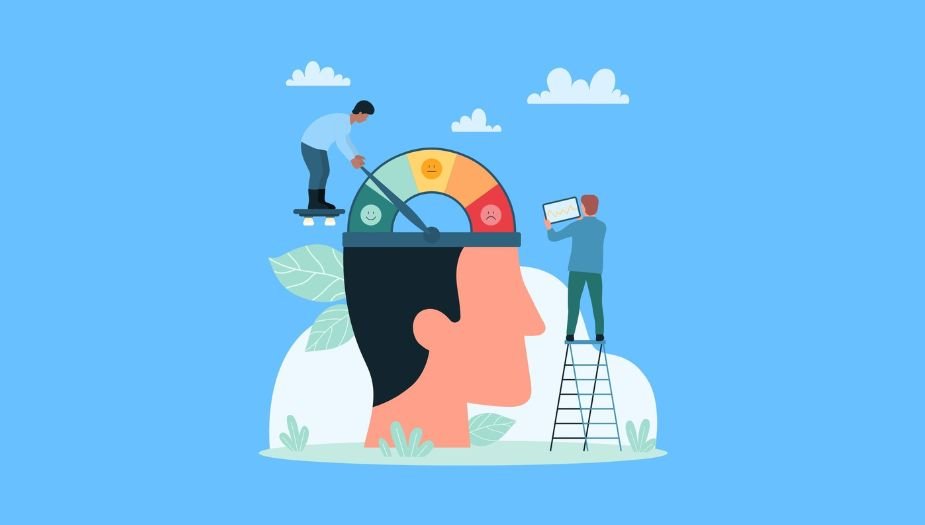
A useful way to think about resilience is through the concept of capacity. Imagine your capacity as a battery. Stress draws from that battery, while sleep, nutrition, movement, relationships, meaningful work, time outdoors, emotional processing, rest, and other forms of recovery help replenish it. When the demands placed on you consistently exceed your ability to recover, the battery doesn't get a chance to recharge.
Eventually, small things start feeling disproportionately difficult. You become more irritable. Your concentration declines and your motivation disappears. You stop exercising because you're exhausted, rely more heavily on caffeine, and find your patience getting shorter. You sleep poorly, withdraw socially, crave quick energy, and start feeling like you're constantly behind.
This is one reason chronic stress can become such a difficult cycle to interrupt. The issue isn't necessarily that you suddenly became less capable, it’s that your available capacity has been depleted. And the solution isn't always to become more disciplined. Sometimes you need to reduce the load. Sometimes you need to increase recovery. Often, you need both.
Reading Your Own Battery Gauge
If capacity is a battery, the harder skill is learning to read your own gauge before it hits empty, not after. Most people don't notice depletion as a single dramatic moment. It shows up as a drift: a slightly shorter fuse, a slightly harder time focusing, a slightly stronger pull toward the couch instead of the gym. None of those, on their own, look like a crisis which is exactly why they're so easy to miss.
A few questions are worth checking in on regularly:
Am I more reactive than usual with people I care about?
Am I relying on caffeine, sugar, or scrolling to get through the day rather than to enjoy it?
Have my workouts started feeling like one more obligation instead of something that helps?
Is my sleep getting shorter, or am I sleeping enough hours but still waking up tired?
Am I saying yes to things out of guilt rather than genuine capacity?
When was the last time I had an hour that wasn't accounted for by someone else's expectations?
None of these questions are meant to produce a verdict about whether you're "handling stress well" or "failing." They're meant to give you information early enough that the response can be a small adjustment instead of a crisis intervention.
A Resilient Life Still Has Hard Seasons
One of the most important mindset shifts is recognizing that resilience doesn't mean every season of your life should feel good. There will be seasons where work is unusually demanding, where a family member needs you, where your health requires more attention. There will be seasons of grief and seasons of transition, and there will also be seasons of growth that are exciting but exhausting.
The objective isn't to make every season equally balanced.
The objective is to know what you need when the season changes.
During a high-demand period, resilience might mean maintaining the basics: getting enough sleep to function well, eating regular and nourishing meals, strength training instead of abandoning movement entirely, walking when intense workouts aren't realistic, staying connected to people who support you, protecting a small amount of genuine downtime, saying no to unnecessary commitments, and recognizing your warning signs before you reach a breaking point.
You don't need a perfect wellness routine. You need a sustainable baseline. That baseline becomes your anchor when life gets complicated.
Building a Baseline That Actually Holds Under Pressure
A baseline only earns its name if it survives contact with a hard week. A wellness routine that falls apart the moment life gets busy was never a baseline to begin with, it was a best-case scenario.
The most durable baselines tend to share a few features.
They're small enough to maintain even in a bad week: twenty minutes of movement you'll actually do beats an hour-long routine you'll abandon the first time work gets heavy.
They don't depend on willpower alone—a baseline that requires you to talk yourself into it every single day is fragile, while one that's built into your environment (the walking shoes by the door, the workout already on your calendar, the protein already in the fridge) asks less of you on the days you have the least to give.
They have a floor, not just a ceiling: instead of "I'll work out five days a week," a durable baseline asks what the minimum is that you'll do even in the worst week, so a hard week doesn't turn into a lost month.
They get revisited, not just set once, since what counts as a sustainable baseline in a calm season is often unrealistic in a demanding one.
Resilient people adjust the baseline itself as the season changes, rather than treating any adjustment as a failure.
The Strongest Person in the Room Isn't Always the One Who Can Do the Most
High performers are often rewarded for capacity.
You become the person people can count on. You take the difficult project, answer the late-night email, solve the problem, remember the details, carry more than your share. And eventually, being capable can become part of your identity which can make slowing down feel uncomfortable.
Rest can feel undeserved. Delegation can feel like weakness. Saying no can feel selfish. Asking for help can feel like failure.
But resilience requires something different: accurate self-assessment.
How much can I realistically take on right now?
What is actually important, and what can wait?
Where am I operating from capacity, and where am I operating from depletion?
What am I tolerating that is no longer sustainable?
What would recovery look like if I stopped treating it as something I have to earn?
Those are not signs of weakness. They're signs of self-awareness.
Resilience Is Built in Ordinary Moments
You don't build resilience only when life falls apart.
You build it every day when:
You go to bed instead of squeezing in another hour of work, when you eat lunch instead of working through it, when you take a walk between meetings, when you strength train consistently instead of punishing yourself with exercise.
You notice that you're becoming irritable and recognize that you're depleted rather than deciding everyone else is the problem, when you pause before responding to a difficult email, when you call a friend, when you spend time outside.
You allow yourself to experience an emotion instead of immediately distracting yourself from it, when you set a boundary before resentment builds, and when you recover after a difficult week instead of immediately moving into the next one.
These choices may look insignificant however collectively they change your capacity.
The Goal Is Not to Become Someone Who Never Gets Overwhelmed
You will get overwhelmed sometimes. You will have weeks where your routines fall apart. You will occasionally sleep poorly, eat differently, skip workouts, lose your patience, procrastinate, overcommit, or realize you've been running on empty. That's life. The goal isn't perfection. The goal is return.
How quickly can you recognize that you've drifted away from what supports you?
How willing are you to make an adjustment?
How much recovery can you create before depletion becomes burnout?
How willing are you to ask for help?
How capable are you of changing course without turning the situation into a judgment about yourself?
That is a far more useful definition of resilience than simply "handling stress well."
A More Resilient Life Is Not Necessarily a Less Ambitious Life
Perhaps the most important distinction is this: resilience does not require you to want less from your life.
You can still be ambitious. You can still pursue difficult goals, still want a demanding career, meaningful relationships, physical strength, financial security, travel, creative work, leadership, or personal growth. The question isn't whether your life contains pressure.
The question is whether your health has enough margin to support the life you're asking your body and mind to live.
Ambition without recovery eventually becomes depletion. Discipline without flexibility becomes rigidity. Productivity without boundaries becomes chronic urgency. Strength without restoration becomes wear and tear. And self-care without addressing the actual source of stress becomes another task on an already overloaded list.
A resilient life makes room for all of it: effort and recovery, ambition and boundaries, challenge and restoration.
Final Thoughts
So, what should you be aiming for?
Instead of asking, "How can I eliminate stress from my life?" try asking, "How can I become better equipped to meet the life I actually have?" That question changes everything.
You start paying attention to your capacity instead of simply your output. You stop treating exhaustion as a character flaw and become more interested in recovery, not just performance. You notice patterns before they become crises, and you build routines that support you instead of routines that give you another standard to fail. You learn to distinguish between a temporary stressful season and a life that has become chronically unsustainable.
And you begin to understand that health isn't about creating a life where nothing difficult happens. It's about creating enough physical, mental, emotional, relational, environmental, and existential capacity to meet difficulty without losing yourself in the process. Because stress is going to be part of your life. The question is whether it gets to run your life.
The goal isn't a stress-free life. It's a life resilient enough to handle the stress that comes with being fully engaged in it.
Article References
The sources cited in the article:
Positive Psychology (PP). “What is Resilience and Why Is It Important to Bounce Back?” PP - What is Resilience?
Positive Psychology (PP). “Moving from Chronic Stress to Wellbeing & Resilience.” PP - From Chronic Stress to Resilience
American Psychological Association (APA). "Burnout and Stress Are Everywhere." APA - Burnout and Stress Are Everywhere
The NYTimes (NYT). “Your Body Knows You’re Burned Out.” NYT - Your Body Knows You’re Burned Out
The NYTimes (NYT). “What Makes Some People More Resilient Than Others?” NYT - What Makes Some People More Resilient?
Harvard Business Review (HBR). “How Burnout Became Normal and How to Push Back Against It.” HBR - Burnout Became Normal
Mayo Clinic. “Resilience: Build Skills to Endure Hardship.” Mayo Clinic - Resilience: Build Skills to Endure Hardship