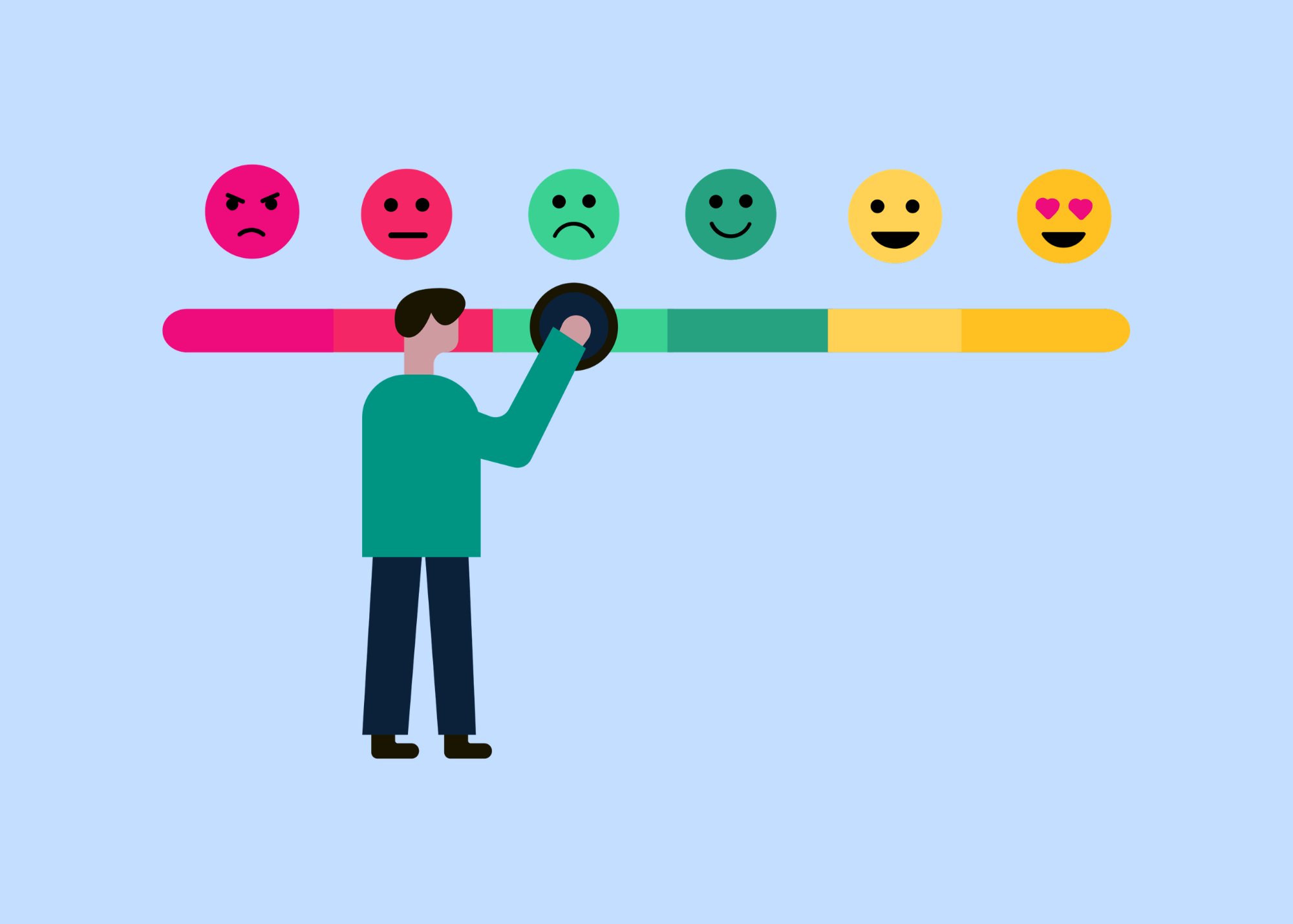
Core values aren’t meant to be five words that define you forever—they evolve with you.
There's a special kind of discomfort that can emerge when the life you built no longer feels entirely like your own. Nothing may be obviously wrong. Your career may be going well. Relationships may be stable. You may be financially secure, physically healthy, and meeting the responsibilities you once hoped you would have. From the outside, there may be very little evidence that anything needs to change.
And yet, something has.
Perhaps you already had a major epiphany moment about the way you were living. You recognized that your choices had drifted away from what genuinely mattered to you, so you stopped, looked honestly at your life, and carefully selected a set of core values to help bring it back into alignment. Maybe those values changed everything. They gave you language for what you had been missing. They helped you make different decisions, set better boundaries, pursue more meaningful goals, and stop organizing your life around expectations that no longer felt like your own.
But a year or two, or a few seasons later, you may notice that something feels different again. The values that once helped you return to yourself may now feel as though they belong to a smaller version of who you have become.

Values Aren't a Contract—They're a Living Compass
If you’re feeling like you don’t quite align with your values, it doesn't mean they were wrong. Those values may have served their purpose precisely because they reflected what you needed to reclaim at that time and now the person who chose them has continued to live, learn, succeed, fail, lose, love, and change.
Core values are often presented as though they are fixed components of personality: fundamental truths buried somewhere inside us, waiting to be discovered. There is certainly value in identifying the priorities that consistently matter to you. Someone who has always cared deeply about learning may continue to value intellectual growth throughout life. Someone who places enormous importance on family may continue to organize major decisions around relationships for decades.
But stability doesn't require permanence. A value can remain important while its meaning changes. Its relative importance can shift, the way you express it can mature, and sometimes something that once occupied the center of your life can legitimately become less central. That doesn't necessarily signal inconsistency: it may simply mean you have more information about yourself than you did before.
At twenty-five, you have a very different understanding of adulthood than you do at forty. At forty, you have experiences that were unavailable to you at twenty-five. You have encountered consequences, discovered strengths and limitations, and learned which ambitions delivered what they promised and which did not. You have learned which relationships nourish you, which environments deplete you, and what kinds of sacrifice you are actually willing to make. It would be strange if none of that changed your understanding of what constitutes a good life.
Signs You’re Outgrowing Your Values
Perhaps the goals that once motivated you no longer hold the same appeal. Perhaps you are becoming less interested in impressing people and more interested in belonging somewhere. Perhaps achievement still matters, but not at the expense of your health. Perhaps independence, which once felt synonymous with strength, has begun to feel a little too much like isolation. Perhaps you have started thinking more seriously about faith, family, community, service, simplicity, or what you want the second half of your life to mean.
These shifts can be unsettling, particularly when your values once gave you such a clear sense of direction. We tend to think of values as permanent: choose your core values, write them down, and use them as a compass for the rest of your life. But that understanding is incomplete. Your values are not a contract you sign with an earlier version of yourself, they are a way of articulating what matters to you now, in your current life. What matters to you can become clearer as you grow into experiences, responsibilities, relationships, and possibilities that your earlier self could not yet see.
I'm not saying to constantly reinvent yourself or abandon every value that no longer feels perfectly current. Rather, as you evolve, periodically ask whether the life you are building still reflects the person you have become and whether the values guiding you still feel large enough for the life you are growing into.
Some of Your Values Were Chosen for You
Before you can determine whether your values have changed, it helps to consider where they came from in the first place.
We absorb ideas about what matters from the environments in which we develop.
Family teaches us what constitutes a good life.
Culture teaches us what deserves admiration.
Religion can shape our understanding of responsibility, morality, service, and meaning.
Schools and communities communicate ideas about achievement and belonging.
Careers establish their own hierarchies of status and success.
Social environments expose us to increasingly sophisticated, and often relentless, models of what a successful life is supposed to look like.
Much of this influence is inevitable, and much of it is valuable. We do not develop in isolation, and there is nothing inherently problematic about adopting values from people or communities we respect. The problem is unexamined inheritance.
You may have learned that success means professional advancement, that security means earning more, that being a good person means always being available, that independence means rarely asking for help, or that ambition means continually wanting more. Perhaps you learned that sacrifice is evidence of love, productivity is evidence of discipline, or busyness is evidence that your life matters. You can live according to these assumptions for years without ever consciously deciding that you believe them.
This is one reason a values review can be so revealing. You aren’t simply asking, What matters to me?
You are also asking:
Which of the things I have been pursuing were actually chosen by me?
That question can be surprisingly difficult to answer.
Sometimes the Value Doesn't Change. Your Understanding of It Does.
One of the more interesting forms of personal development occurs when a value remains important but becomes more nuanced.
Consider achievement. Earlier in your career, achievement might have meant advancement, recognition, financial independence, or proving that you were capable of succeeding in a competitive environment. There is nothing inherently shallow about that. Achievement can provide challenge, mastery, autonomy, and a genuine sense of accomplishment.
But eventually, you may begin asking different questions.
What is all this achievement for?
How much of my life do I want to give to work?
What do I want my success to make possible?
What am I unwilling to sacrifice for the next promotion?
Achievement may not disappear from your values. It may simply move into a larger framework that includes health, relationships, meaning, contribution, or stewardship.
The same evolution can happen with independence. At one stage of life, independence may mean proving that you can take care of yourself. Later, you may recognize that genuine autonomy includes the ability to receive support, depend on other people, and participate in relationships characterized by mutual responsibility.
Or consider health. Earlier in life, health may have been primarily about appearance or physical performance. With greater experience, it may come to mean having enough physical, mental, and emotional capacity to participate fully in the life you care about.
Maturation does not always replace a value. Sometimes it deepens it. This distinction matters because a values review should not become an exercise in discarding everything you once believed.
The more useful question is often not, What no longer matters?
It’s: What do I understand differently now?
The Life You Built Can Outlive the Values That Built It
Values tend to become most visible during periods of transition, because change forces us to examine assumptions that were previously operating in the background.
A career transition can alter your relationship with ambition. Parenthood can change your understanding of responsibility and time. A divorce can illuminate the importance of autonomy, intimacy, or boundaries. A health challenge can make physical well-being suddenly feel less abstract. Losing someone can fundamentally change your relationship with time, presence, legacy, or meaning.
Even positive experiences can reorganize your priorities. You may finally achieve the professional milestone you spent a decade pursuing and discover that the achievement itself is less satisfying than you anticipated. You may reach financial security and realize that what you actually want is more time. You may acquire enough professional status to discover that you are more interested in mentoring someone else than accumulating another title.
This isn’t necessarily a sign that your previous goals were misguided. They may have been exactly right for the person you were and the life you were living at the time and there comes a point when the life you built can continue operating on momentum long after the internal reasons for building it have changed.
You can become extraordinarily efficient at living a life that no longer reflects your deepest priorities.
That is one of the quieter forms of misalignment and one of the reasons it can be particularly difficult for high achievers to recognize.
The Danger of Optimizing for an Outdated Definition of Success
High achievers are often especially vulnerable to this kind of misalignment because competence can conceal it.
If you are disciplined, organized, ambitious, and capable of tolerating discomfort, you can continue making progress long after a particular goal has stopped being meaningful to you. You may even become better at pursuing it. That is what makes the problem so difficult to identify because you aren’t necessarily failing.
You may be succeeding according to a definition of success that you no longer fully endorse.
You continue accepting opportunities because they look impressive. You keep saying yes because you have always been someone who can handle more. You maintain a lifestyle because you invested years building it. You continue pursuing a particular income level, title, or professional identity because acknowledging that you no longer want it can feel like admitting that all the effort was somehow wasted.
Changing your priorities doesn’t erase the value of what came before. The career you built may have taught you discipline. The ambition you pursued may have developed your confidence. The independence you cultivated may have carried you through difficult circumstances.
You can be grateful for what something gave you without deciding that it must remain the organizing principle of your life.
At some point, the question stops being How can I become better at managing all of this?
It becomes:
Is the life I am getting better at managing actually the life I want?
That is a values question.
Signs That Your Values May Need Reassessment
There is no single moment when your values expire. More often, you notice a growing discrepancy between what you say matters and what you increasingly want your life to make room for.
You may:
find yourself repeatedly questioning goals that once seemed obvious.
feel resentful about how your time is being spent, even though you are technically choosing those commitments.
admire qualities in other people like presence, courage, rootedness, generosity, intellectual curiosity, or community, that you have gradually crowded out of your own life.
continue achieving things without experiencing the satisfaction you expected them to provide.
find yourself increasingly unwilling to make sacrifices that once seemed acceptable.
notice a quiet but persistent thought: I don't think I want to live this way anymore.
These thoughts and feelings deserve attention. They don’t necessarily mean that your values have changed. You might be exhausted, in a difficult season, or experiencing temporary dissatisfaction with something that still matters deeply to you. However, recurring friction is information.
The purpose of a values review is not to immediately act on every uncomfortable feeling, rather it’s to become curious about the pattern beneath it.
How to Revisit Your Values Honestly
A meaningful values review begins with your actual life rather than a list of attractive words.
1. Start by looking backward.
Think about the experiences in which you have felt most grounded, alive, connected, proud, or deeply yourself. What was present in those moments? What were you honoring? What made the experience meaningful beyond the achievement itself?
2. Then look at the opposite experiences.
When have you felt particularly resentful, depleted, conflicted, or out of alignment? What felt violated? What were you giving away that mattered to you? What were you tolerating that no longer felt acceptable?
Pay attention to admiration and envy, too. Both can contain useful information. If you consistently admire someone else's courage, perhaps courage matters to you more than you have acknowledged. If you envy someone's freedom, perhaps what you actually want is greater autonomy. If you are deeply moved by someone's devotion to their community, perhaps belonging or service has become more important than your current life reflects.
3. Next, examine the values you inherited.
Ask yourself what you were taught about success, money, work, family, relationships, productivity, appearance, responsibility, and adulthood. Which of those beliefs still feel genuinely yours? Which have become so familiar that you have mistaken familiarity for conviction?
4. From there, begin looking for the themes that persist.
You may discover that several words are pointing toward the same underlying idea. What initially appears to be a desire for freedom, flexibility, and independence may actually be a deeper need for autonomy. What looks like a commitment to authenticity may have matured into a commitment to integrity. What once looked like ambition may now be more accurately described as excellence, contribution, or mastery.
5. Now: Update your values.
Do not choose the most impressive words. Choose the words that feel most truthful. And then narrow the list.
If everything is a core value, nothing is. Your values should be meaningful enough to help you make difficult choices, which means some things will have to remain important without being central.
For each value you choose, ask yourself what it actually means in your life. Not the dictionary definition. Not the definition that sounds good on a website. Not what the people around you tell you that you should value.
Your definition.
Then ask the question that turns reflection into action:
If this genuinely mattered to me, what would I do differently?
That question often reveals more than the original exercise.
How Often Should You Revisit Your Core Values?
You probably don’t need to conduct a formal values exercise every year.
If you are constantly revising your values, reflection can become another form of self-optimization. Values are supposed to provide some stability. They should help you orient yourself when circumstances are uncertain rather than changing every time your mood does.
For many people, revisiting their values every few years is enough. A major transition can be a particularly useful point for reflection: a career change, marriage or divorce, parenthood, relocation, significant loss, financial change, health challenge, or period of substantial spiritual or personal development. But you don’t need a dramatic event to justify reconsidering what matters. Sometimes you simply reach a point at which the person you have become has a clearer understanding of what the person you were could not yet see.
The important thing is your attention.
If you remain attentive to your own life, you will eventually notice when your internal priorities have begun to shift.
Evolution Is Not the Same as Avoidance
There’s one important distinction to make when we talk about changing values.
Sometimes we want to call something “personal growth” when what we really want is permission to avoid discomfort.
A commitment becomes difficult, so we decide it is no longer aligned. A relationship requires work, so we decide we suddenly value independence. A long-term goal requires patience, so we decide we have outgrown ambition. Discipline becomes uncomfortable, so we decide that balance is more important. That’s not necessarily values evolution.
Genuine evolution tends to produce greater coherence, not simply greater convenience. It may ask more of you in some ways even as it releases you from obligations that no longer belong to you.
If community becomes more important, you may need to become more available to other people.
If health becomes more important, you may need to establish boundaries around work.
If integrity becomes more important, you may have to disappoint someone.
If faith becomes more important, you may need to reorganize your time.
If simplicity becomes more important, you may have to tolerate having less.
In other words, changing your values does not necessarily make life easier. It can make your life more honest.
That is a very different thing.
A Mature Relationship With Your Values
Perhaps the most useful way to think about core values isn’t as a permanent list but as an ongoing relationship.
Some values may remain with you for your entire life. Others may become less central. Some may deepen. New ones may emerge as your experience expands your understanding of what matters. Your job isn’t to protect the original list, it’s to remain awake to the life you are actually living. That means periodically asking whether your time, energy, relationships, work, attention, and commitments still reflect the things you claim to care about.
It also means allowing yourself to hold complexity.
You can value ambition and rest.
You can value independence and interdependence.
You can value excellence without making perfectionism your operating system.
You can value generosity while maintaining boundaries.
You can value stability while still wanting growth.
A mature value system does not eliminate these tensions. It helps you navigate them consciously.
This is where values become much more useful than a list of words on a piece of paper. They become a way of making decisions when two good things compete, when an old definition of success stops serving you, or when the life you have built begins asking to be reconsidered.
Final Thoughts
There is freedom in realizing that you are allowed to revise your definition of a meaningful life. You don’t have to remain loyal to an identity simply because you spent years building it; or have to keep pursuing goals that belonged to an earlier version of yourself; and you don’t have to interpret changing priorities as evidence that you have become less ambitious, less disciplined, or less capable. Sometimes your ambition has simply become more discerning.
The values that guided you before may have served you well. You can honor them without being obligated to organize the rest of your life around them. The person you were made decisions based on the information, experiences, needs, and understanding available to her at the time. That’s not a betrayal of your former self, it’s development. You’ve evolved.
Perhaps a mature relationship with your values ultimately means being willing to ask, periodically and honestly:
What matters to me now? What has changed? What has deepened? Does the way I am living reflect the answers?
Your values are allowed to change. Revisiting them isn’t a sign that you have lost your direction, it’s how you find a direction that actually belongs to you.
Article References
The sources cited in the article:
Psychology Today (PT). "Choosing to Live According to Your Values" PT - Choosing to Live According to Your Values
Psychology Today (PT). “Know Your Core Value to Build a Fulfilling Life.” PT - Know Your Core Value to Build a Fulfilling Life
National Institutes of Health (NIH). “Core Values at Work - Essential Elements of a Healthy Workplace.”NIH - Core Values at Work
Columbia SPS. "The Great Resignation: The Perils of Misaligned Employee/Employer Values."Columbia - Misaligned Values
Forbes. “The Importance of a Workplace that Aligns with Personal Values.” Forbes - Workplace that Aligns Personal Values
Forbes. “How to Live In Alignment with Your True Values.” Forbes - How to Live In Alignment with Your True Values
Mayo Clinic. “Breaking Down Burnout in the Workplace.” Mayo Clinic - Breaking Down Burnout in the Workplace
Harvard Business Review (HBR). “Your Burnout is Trying to Tell You Something.” HBR - Burnout Trying to Tell You Something