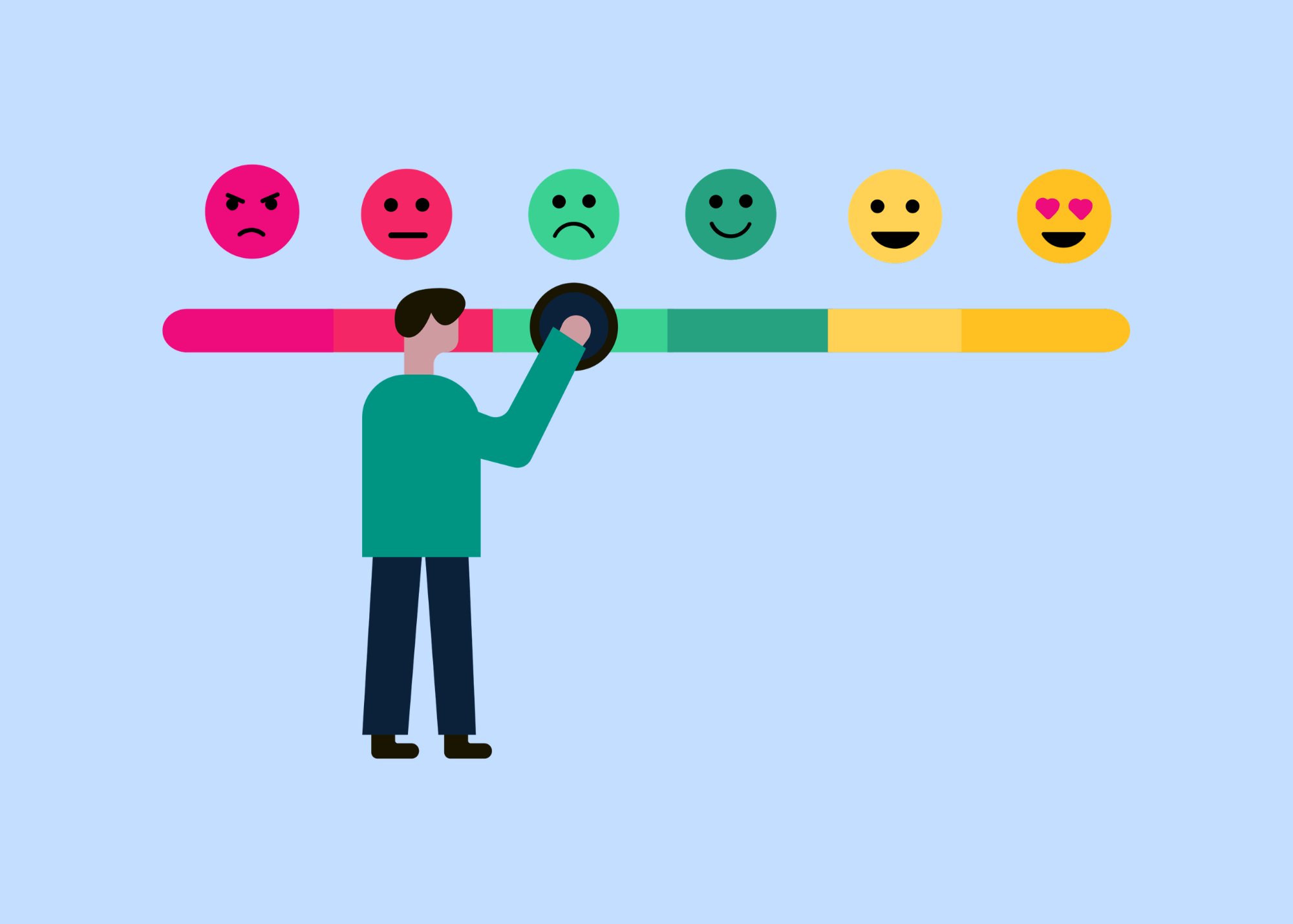
Why High Achievers Have Trouble Processing Emotions
Being good at managing yourself doesn’t necessarily mean you know how to access your emotions and process how you feel.
There is a particular kind of emotional struggle that can be difficult to recognize because, from the outside, you appear to be handling everything just fine.You are composed. You are responsible. You rarely lose your temper. You can have an incredibly difficult day and still show up to the meeting, make the decision, solve the problem, take care of everyone else, and keep moving.
People probably describe you as calm under pressure.
You may even pride yourself on being the person who doesn't fall apart.
And yet, something may be happening beneath that composure that you have become very good at overlooking.
Perhaps you find yourself disproportionately quietly irritated by something small. Maybe you feel exhausted after a conversation that shouldn't have been particularly difficult. You might unexpectedly cry in your car, feel strangely numb after something that should have upset you, or find yourself unable to explain why you feel so overwhelmed.
Or someone you trust asks a deceptively simple question: How are you feeling about all of this?
Your mind immediately begins generating answers about what happened, what you should do next, and why the situation makes sense.
But you have absolutely no idea what you actually feel.
This can be particularly confusing when you are highly competent.
You know how to analyze a problem. You know how to make a plan. You know how to push through discomfort. You know how to remain professional when other people are losing their composure. You have spent years developing the ability to regulate your behavior and perform under pressure.
So why can it sometimes feel so difficult to simply feel what you feel?
The answer may have less to do with emotional weakness than with the fact that you have spent years becoming exceptionally good at functioning.
And functioning is not the same thing as processing.
You May Be Excellent at Managing Emotions Without Actually Processing Them
Emotional regulation and emotional processing are related, but they are not the same thing.
Regulation is your ability to manage how you respond to an emotion. Processing involves recognizing, experiencing, understanding, and integrating what that emotion may be communicating.
You can be extremely good at the first while struggling with the second.
You can feel angry and choose not to yell.
You can feel anxious and still give the presentation.
You can feel disappointed and congratulate someone else.
You can feel overwhelmed and continue completing your responsibilities.
These are valuable skills, however, the problem begins when “I can handle it” becomes synonymous with “I don't need to feel it.” It’s a problem because emotions do not necessarily disappear simply because you have behaved appropriately.
You can put an emotion aside without resolving it.
You can intellectually understand something without emotionally processing it.
You can recognize that a relationship wasn't right for you while still grieving its loss.
You can understand why someone treated you poorly while still feeling hurt by what happened.
You can become so accustomed to moving forward that you never stop long enough to discover what you are carrying with you.
How High Achievers Learn to Become “Fine”
Most high achievers did not consciously decide that emotions were inconvenient.
Instead, many learned through experience that competence gets rewarded. Being responsible gets you trusted. Being composed gets you respected. Being productive gets you recognized. Solving problems gets you praised. Being independent means you don't have to rely on anyone else.
Perhaps you became the reliable one.
The mature one.
The rational one.
The strong one.
The person who could be counted on.
Over time, these characteristics can become deeply embedded in your identity. You don't simply practice competence; you begin to understand yourself as a fundamentally competent person. That creates an interesting problem.
Emotions do not always behave like problems that can be solved through competence.
Grief cannot be optimized. Disappointment cannot always be reasoned away. Fear cannot necessarily be eliminated with a better plan. Anger does not disappear because you have identified the most rational response. Sadness doesn't care how impressive your résumé is.
The very skills that helped you succeed can sometimes become the skills that keep you disconnected from your emotional experience.
This is especially true when you have learned that being emotionally self-sufficient is part of what makes you strong.
Sometimes, “Fine” Was Something You Learned
For some high achievers, emotional self-sufficiency was not simply a personality trait. It was an adaptation.
Maybe you grew up in a family where emotions were met with criticism, dismissal, unpredictability, or discomfort. Maybe there wasn't much room for sadness, anger, fear, disappointment, or need. Perhaps, the people you depended on were emotionally unstable or immature and there wasn’t room for anyone else’s emotions besides their own.
Your learned to walk on eggshells around the most dysregulated and volatile person in your home. You learned to read the room. You learned when it was better to stay quiet. You learned that being independent was preferable to needing something from someone else. Maybe you were praised for being “mature for your age” or became known as the strong one.
Maybe you learned, explicitly or implicitly, that certain emotions made life harder — for you or for the people around you.
The message doesn't always sound harsh.
Sometimes it sounds like:
You're okay.
It's not that big of a deal.
Stop crying.
You need to toughen up.
Don't let people see that you're upset.
Just move on.
And sometimes the message is never spoken at all. You simply learn, through repeated experience, which parts of yourself receive connection and which parts create discomfort. Children are remarkably adaptive. When emotional expression repeatedly leads to dismissal, criticism, conflict, or withdrawal, a child may learn to minimize what they feel rather than continue reaching for a response they aren't getting.
You learn to be fine.
Not necessarily because you are fine, but because being fine is what works. That adaptation can become particularly powerful when it is later reinforced by the environments in which high achievers tend to excel.
You enter a demanding academic program, competitive profession, leadership role, or high-performance workplace and discover that the qualities you've spent years developing are valued here, too.
Composure is rewarded.
Being the person who doesn't fall apart is rewarded.
Making decisions under pressure is rewarded.
Not taking things personally is rewarded.
Getting on with it is rewarded.
The ability to compartmentalize can become an asset. Emotional distance can look like professionalism. Self-sufficiency can look like confidence. And the person who learned early in life to put their feelings aside may find themselves exceptionally well suited to environments that reward exactly that skill.
This is where the distinction becomes important. A strategy that once helped you navigate your environment can eventually become so automatic that you stop experiencing it as a strategy at all.
You may simply think:
I'm not emotional.
I don't really need to talk about things.
I'm fine.
I just need to figure out what to do.
There is nothing inherently wrong with being composed, rational, independent, or emotionally steady. Those can be genuine strengths.
The question is whether you can choose those responses — or whether you've become so practiced at overriding your emotional experience that you no longer recognize what you're overriding. There’s a difference between not being controlled by your emotions and not being connected to them.
One reflects emotional regulation and the other may reflect emotional disconnection. High achievers can become very good at confusing the two.
When Every Emotion Becomes a Problem to Solve
One of the ways highly capable people can avoid emotional discomfort is through intellectualization: thinking about an emotion rather than actually experiencing it. Instead of sitting with disappointment, you analyze the situation.
You identify what happened.
You consider everyone's perspective.
You determine what you could have done differently.
You develop a strategy for what to do next.
You may even convince yourself that you have successfully processed the situation because you can explain it rationally.
But understanding something intellectually and processing it emotionally are not necessarily the same thing.
Imagine that someone you care about disappoints you.
Your mind might immediately begin working:
Was I being unreasonable?
Did I communicate my expectations clearly?
Maybe they didn't realize how important this was to me.
What could I have done differently?
Should I bring it up?
What would be the most productive way to handle this?
All of these questions may be reasonable.
But notice what can disappear completely: I am hurt.
That sentence doesn't solve anything. It doesn't create a strategy or produce an action item. It simply acknowledges your internal experience. For someone who has spent years being rewarded for solving problems, acknowledgment can feel strangely unproductive.
You can become so good at explaining your emotions that you never actually experience them.
The Difference Between Thinking About Your Emotions and Feeling Them
High achievers often live heavily in their cognitive world.
You think. You analyze. You evaluate. You anticipate. You plan. You make decisions. You solve problems.
These are strengths. However, when you approach every internal experience through the same cognitive lens, emotions can become another problem to figure out.
You may tell yourself:
I'm not really upset. I'm just frustrated because the situation was handled poorly.
I'm not hurt. I'm just disappointed because my expectations weren't met.
I'm not anxious. I just need more information.
I'm not angry. I'm just trying to understand why they made that decision.
Sometimes those statements are completely accurate and sometimes they are incredibly sophisticated ways of staying one step removed from what you are actually experiencing.
You may know why you're upset without allowing yourself to acknowledge that you are upset.
You may understand something ended for good reasons without allowing yourself to grieve it.
You may know that your job has become unsustainable without admitting that you are angry about how long you have tolerated it.
You may understand that someone else didn't intend to hurt you while still acknowledging that you were hurt.
Emotional maturity does not require you to choose between logic and emotion. It requires you to allow both to exist.
Why Emotional Avoidance Can Become Exhausting
Your emotional life does not exist separately from your physical experience.
Stress activates physiological systems designed to help you respond to perceived demands or threats. When stress becomes chronic, constantly remaining vigilant, suppressing emotional reactions, solving problems, and overriding your own needs can become exhausting.
This doesn’t mean that every uncomfortable emotion needs to be expressed immediately or that suppressing an emotion automatically causes physical illness.
It means that continually fighting, avoiding, judging, or overriding your internal experience requires energy.
High achievers can become exceptionally skilled at spending that energy without realizing it.
You may think you are simply having a stressful week. Though underneath the stress might be anger you haven't acknowledged, grief you haven't allowed yourself to experience, fear you don't want to admit, disappointment you keep minimizing, loneliness you continue filling with work, or resentment you don't feel entitled to have.
The emotion itself isn't necessarily the problem.
Sometimes the problem is that you haven't given yourself enough space to discover what is actually there.
Could You Be Disconnected From Your Emotions?
Difficulty processing emotions does not always look like obvious emotional suppression.
Sometimes it looks like not knowing what you feel in the first place.
You may recognize yourself in some of the following experiences:
You can explain why something happened, but have difficulty explaining how you feel about it.
When someone asks how you're doing, your automatic response is, “I'm fine.”
You tend to analyze your emotions rather than experience them.
You frequently tell yourself that something “isn't a big deal.”
You feel uncomfortable when conversations become emotionally vulnerable.
You minimize your own needs because you believe someone else “has it worse.”
You can identify what other people are feeling more easily than what you are feeling yourself.
When life becomes difficult, you immediately start making a plan.
You become more productive when you're distressed.
You feel guilty when you need emotional support.
You have difficulty asking other people for help.
You become irritated when you are overwhelmed rather than recognizing that you are overwhelmed.
You experience periods of emotional numbness or detachment.
You feel like you are carrying something emotionally but cannot identify exactly what it is.
You experience sudden emotional reactions that seem disproportionate to the immediate situation.
You stay busy because being still gives your thoughts too much room.
You have difficulty knowing what you want because you are accustomed to focusing on what needs to be done.
You regularly prioritize being reasonable, helpful, productive, or composed over being honest about your internal experience.
You repeatedly tell yourself, “I don't have time to deal with this right now.”
You sometimes envy people who seem comfortable expressing their emotions.
You believe you have processed something because you understand it intellectually, even though the emotional reaction continues to resurface.
None of these experiences automatically means that you have a problem with emotional processing. People have different temperaments, coping styles, cultural backgrounds, and life experiences, and there are many reasons someone may have difficulty identifying or expressing emotions.
But if you consistently find yourself thinking about your emotions without actually connecting to them, it may be worth paying attention to—particularly if you are also experiencing chronic stress, burnout, irritability, emotional numbness, or increasing disconnection from yourself or other people.
Why “Just Be More Vulnerable” Isn't Particularly Helpful
We have become increasingly comfortable telling people that they need to be vulnerable.
Just open up. Talk about your feelings. Let people in.
The problem is that vulnerability isn't a switch. If you have spent twenty years becoming highly self-sufficient, emotionally contained, and fiercely independent, suddenly telling yourself to become vulnerable can feel less like emotional growth and more like standing exposed in a crowded room.
You don’t need to force yourself into emotional disclosure; you need to develop emotional safety and emotional literacy. Before you can comfortably tell someone else what you feel, you need to become capable of noticing what you feel yourself.
That starts with something surprisingly simple:
Stop immediately asking what you are going to do about the emotion.
First ask:
What am I actually feeling?
Your Emotions Are Information, Not Instructions
An important distinction: an emotion is information, it’s not necessarily an instruction.
Feeling angry does not mean you should send the email.
Feeling anxious does not mean something terrible is going to happen.
Feeling jealous does not mean you are a bad person.
Feeling resentful does not automatically mean someone has wronged you.
Feeling sad does not mean you need to fix your life.
Feeling afraid does not mean you should avoid the situation.
An emotion can be acknowledged without being obeyed. This is one of the most useful ideas for high achievers to understand. You don't have to lose your rationality in order to become more emotionally aware. In fact, emotional awareness can give your rational mind better information to work with.
Instead of immediately asking:
“What is the logical response?”
You can begin with:
“What is happening inside me?”
Then you can decide what, if anything, you want to do about it.
Processing Is Not the Same as Ruminating
Another reason high achievers may resist emotional processing is the fear that if they start feeling everything, they will never stop.
What if I let myself cry and can't pull it together?
What if I admit I'm angry and become bitter?
What if I acknowledge that I'm unhappy and have to change my entire life?
What if I allow myself to feel the grief I've been avoiding?
These fears are understandable. But emotional processing is not the same thing as endlessly dwelling on your feelings.
Processing moves you toward greater awareness and integration. Rumination keeps you trapped in repetitive thought.
Processing might ask:
What am I feeling?
What happened?
Why does this matter to me?
What do I need?
What can I learn from this?
Is there anything I need to change?
Rumination tends to circle the same questions without creating greater clarity:
Why did they do that?
What if I had said something different?
What does this mean?
Why can't I stop thinking about it?
What should I have done?
The goal isn’t to spend more time inside your head.
The goal is to become more connected to your actual experience.
How to Begin Processing Your Emotions
If emotional awareness doesn't come naturally to you, don't turn this into another skill you need to master perfectly…that would be very on-brand for a high achiever. Instead, approach it with curiosity.
1. Notice the first sign that something is happening
Your first instinct may be to push through. Instead, pause. You don't need an hour-long meditation. Sometimes a few seconds is enough to recognize that something has shifted. Maybe your chest feels tight. Your jaw is clenched. Your stomach drops. You suddenly feel hot. You want to leave the conversation. You want to defend yourself. You want to shut down.
You don't have to interpret it immediately. Just notice.Your body can sometimes tell you something is happening emotionally before your conscious mind has identified what it is.
2. Name the emotion before analyzing the situation
Try moving beyond broad categories like good, bad, stressed, or fine. Are you angry? Hurt? Disappointed? Embarrassed? Afraid? Lonely? Resentful? Grieving? Ashamed? Relieved? Jealous? Overwhelmed? Confused? Hopeful? Proud? Grateful?
You may discover that what you have been calling “stress” is actually a combination of several different emotions.
Maybe you're not simply stressed about work.
You're angry that expectations keep increasing.
You're afraid that you cannot maintain your current pace.
You're disappointed that your effort isn't being recognized.
You're resentful that you keep being the person who picks up the slack.
That is very different information.
3. Ask what the emotion might be communicating
Emotions can point toward needs, values, boundaries, losses, or perceived threats.
Ask yourself:
What is this emotion reacting to?
What feels threatened?
Why does this matter to me?
What do I wish were different?
What am I afraid this means?
What do I need that I haven't acknowledged?
The objective isn't to assume that every emotional interpretation is factually correct. Your emotions are information, not objective truth. But they are still worth listening to.
4. Notice your urge to immediately fix it
When you identify an uncomfortable emotion, notice what your brain immediately wants to do.
Do you want to make a plan? Send a text? Clean the house? Go to the gym? Work longer? Research the situation? Explain yourself? Convince someone you're right? Distract yourself? Scroll your phone? Eat? Isolate?
None of these behaviors is inherently unhealthy.
Sometimes the urgency to do something is an attempt to stop feeling something.
Give yourself a little space between feeling and acting.
5. Allow the emotion to exist without demanding that it disappear
You don't need to make yourself feel better immediately. This can be surprisingly difficult for someone accustomed to measuring progress by outcomes. If something feels bad, you want to know what you can do to make it better.
But sometimes the healthiest response is simply:
This hurts.
I'm disappointed.
I'm grieving.
I'm scared.
I'm angry.
And for the moment, that's enough. You are not failing because an emotion hasn't been resolved.
Some emotions need to be experienced before you can understand what they require from you.
6. Ask yourself what you need
Once you understand the emotion, ask a different question:
What do I need right now?
Maybe you need rest.
Maybe you need reassurance.
Maybe you need to have a difficult conversation.
Maybe you need a boundary.
Maybe you need connection.
Maybe you need solitude.
Maybe you need to grieve.
Maybe you need to ask for help.
Maybe you need to stop pretending something is okay when it isn't.
And sometimes you may discover that you don't need to do anything immediately.
Sometimes what you need is simply permission to feel what you feel.
7. Practice emotional honesty in low-stakes situations
You don't have to begin with your deepest wound or your most complicated relationship.
Start small. Instead of:
“I'm fine,” try, “I'm actually more tired than I realized.”
“It doesn't bother me,” try, “I think that bothered me more than I expected.”
“I'm just busy,” try, “I've been feeling overwhelmed.”
“It's no big deal,” try, “It mattered to me.”
These small moments teach you something important:
You can acknowledge your internal experience without losing control of yourself.
What Emotional Processing Can Change
When you become more emotionally aware, the endgame isn't to become a person who talks about feelings constantly.
The goal is to become a person who knows what is happening inside them. Knowledge is power. That awareness can change the way you make decisions.
You may realize that:
the job you thought you hated is actually a job where you feel chronically undervalued.
your anxiety about an upcoming decision is actually grief about what you will have to give up.
your “lack of motivation” is actually resentment.
your perfectionism is protecting you from the possibility of being judged.
what you called independence has sometimes been an inability to let other people support you.
the reason slowing down feels uncomfortable isn't because you are incapable of resting.
It's because quiet gives emotions you have been outrunning a chance to catch up with you.
That information matters.
When Emotional Suppression Becomes Part of Burnout
Burnout is often discussed in terms of workload, sleep, energy, productivity, and stress.
Those things are important, but burnout can also change your emotional experience. You may become more irritable, cynical, detached, impatient, or emotionally unavailable. Things that normally wouldn't bother you suddenly feel unbearable. You may stop caring about things you once cared about. You may feel emotionally flat rather than overtly distressed.
Because you are still functioning, you may assume that you simply need to try harder to get yourself back on track.
Sometimes the problem isn't that you need more discipline, it’s that your emotional system is telling you that something has been asking too much of you for too long. This is one reason emotional health belongs in the burnout conversation: you cannot always separate the way you feel from the way you are living. If your life continually requires you to suppress anger, ignore exhaustion, override disappointment, minimize your needs, or remain composed through situations that genuinely hurt, eventually that emotional labor can become part of the burden.
You Don't Have to Become Less Strong
This may be the most important part. Learning to process your emotions doesn’t make you weak.
It doesn’t mean becoming less ambitious, making every decision based on how you feel, or abandoning rational thinking. And it certainly does not mean that every emotion deserves an audience. You can healthily process your emotions in private and display a tight emotional range in public. In fact, that’s a solid display of emotional health: not being disconnected and not being unhinged.
Emotional health isn't the absence of emotional control. It's having a healthy relationship with what you feel.
You can be disciplined and emotional. Rational and vulnerable. Strong and sad.Ambitious and tired. Confident and afraid. Independent and supported. Composed and deeply connected to yourself. These things are not opposites.
Emotional maturity often looks less like feeling less and more like having enough internal capacity to feel without being controlled by what you feel.
Also, The Goal Isn't to Feel Everything All the Time
There’s another misconception worth challenging.
You don’t need to be intensely connected to your emotions every minute of every day.
Sometimes you genuinely need to put something aside so you can get through the workday. Sometimes a crisis requires action before reflection. Sometimes you need to regulate yourself before you can process what happened. Sometimes you simply don't have the capacity to unpack something immediately.
That's okay. Healthy emotional processing is not about constantly monitoring yourself.
It is about knowing that the emotion is still there and giving yourself permission to return to it when you have the capacity.
There is a difference between:
“I can't deal with this right now, but I will come back to it.”
and
“I don't have time for feelings.”
The first can be healthy emotional regulation and the second can become emotional avoidance.
You May Not Need to Fix Your Emotions. You May Need to Listen to Them.
High achievers are extraordinarily good at turning discomfort into action. Often it’s exactly what makes them successful.
But your internal world isn't a performance problem. You don't have to optimize your emotions. You don't have to eliminate negative feelings. You don't have to turn every emotional experience into a lesson. And you don't have to become perfectly emotionally regulated.
Sometimes the first step is simply becoming willing to know yourself beyond what you accomplish.
What are you feeling?
What have you been minimizing?
What have you been telling yourself doesn't matter?
What are you tired of pretending doesn't hurt?
Where are you angry?
Where are you grieving?
Where are you afraid?
What do you need?
Those questions can feel surprisingly uncomfortable when you have spent years becoming exceptionally good at answering a different question:
What needs to be done?
Final Thoughts
Being able to keep functioning when life gets difficult is a strength.
But functioning is not the same thing as being okay.
You can answer the emails, make the decision, take care of your family, go to the gym, lead the meeting, hit the deadline, and continue moving forward while carrying an enormous amount emotionally. Nobody may ever know.
You may barely know yourself.
This is one of the hidden costs of becoming exceptionally good at handling things: people begin to assume that because you can handle something, it isn't affecting you. Eventually, you may begin to believe it too.
Your emotions don't need to be justified by a crisis before they deserve your attention. You are allowed to be disappointed even when the situation isn't objectively terrible; be angry even when you understand the other person's perspective; be sad even when you know things will eventually get better; to need support even when you are capable of handling things yourself.
And you are allowed to stop long enough to ask yourself what is actually happening beneath the polished, competent, highly functional version of yourself that everyone else sees. You don't have to become less capable. You may simply need to become more connected to the person doing all that capable work.
The goal of emotional health isn't to feel everything, it’s to stop having to outrun what you feel in order to keep functioning.
Sometimes the most important question isn't “How do I make this feeling go away?”
It's simply: “What is this feeling trying to tell me?”
Article References
The sources cited in the article:
Psychology Today (PT). “Intellectualization.” PT - Intellectualization
Harvard Business Review HBR). “How to Control Your Emotions During Difficult Conversations.” HBR - Control Your Emotions Difficult Conversations
Psychology Today (PT). “How to Stop Intellectualizing Your Emotions.” PT - How to Stop Intellectualizing Your Emotions
Harvard Business Review (HBR). “How to Manage your Emotions Without Fighting Them.” HBR - Manage Emotions Without Fighting Them
Forbes. “How to Decode Your Emotions.” Forbes - How to Decode Your Emotions