What If Your Stress Is Driven From Trying to Meet an Unmet Need?
TL;DR: The thing you've been relentlessly trying to earn may be something you need to learn how to give yourself.
You can have a successful career, a full calendar, a healthy lifestyle, people who love you, and a life that looks perfectly fine from the outside and still feel like something is constantly off.
You work harder. Accomplish more. Learn more. Take on more responsibility. Become more disciplined.
And yet the feeling of "enough" remains strangely out of reach. Sometimes chronic stress isn't simply a result of having too much to do. Instead sometimes the behaviors creating your stress are attempts to meet a psychological need that isn't being met in a healthier way. This is one way to think about the Human Needs Map developed by Chase Hughes and used within NCI University.
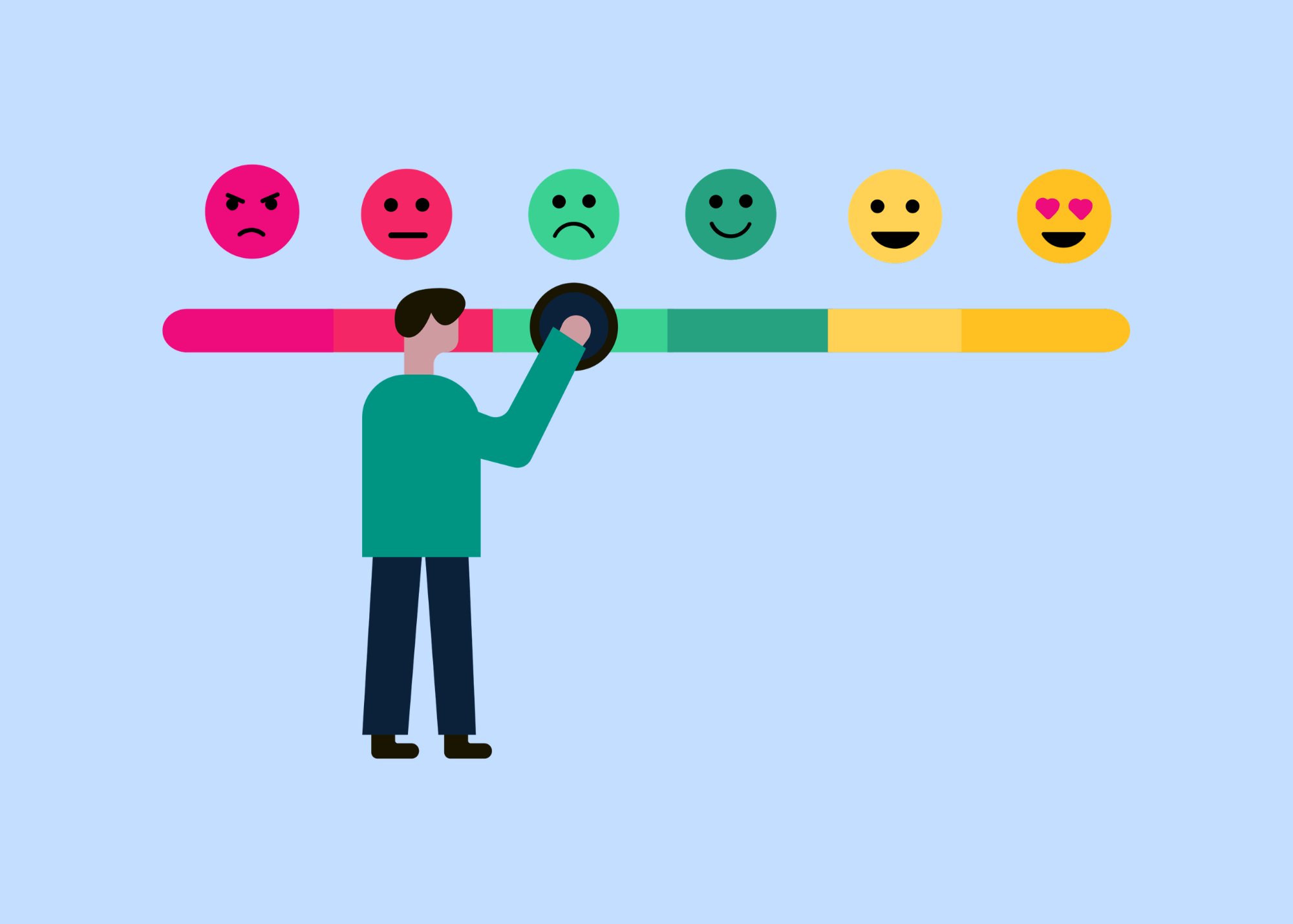
The framework identifies six core human needs:
Significance
Approval
Acceptance
Intelligence
Pity
Strength/Power
The idea isn't that everyone has one single dominant need or that this framework can diagnose why you behave a certain way. Rather, it can be used as a lens for asking a more interesting question:
What am I repeatedly trying to get and what happens when I don't get it?
For someone experiencing chronic stress or burnout, that question can be surprisingly revealing because sometimes the problem isn't simply that you're doing too much. It's that doing too much is helping you feel like enough.
And for high-achieving professionals (the people reading this) the gap between those two things is often where burnout lives. Not in the workload itself. In what the workload has been asked to provide.

The Hidden Relationship Between Needs, Stress, and Burnout
Human beings don't just pursue goals because the goals themselves matter. We pursue them because of what we believe they will give us:
A promotion might provide financial security; it might also provide significance.
A perfect presentation might demonstrate competence; it might also provide approval.
Another certification might increase your knowledge; it might also reassure you that you're intelligent enough.
Taking control of every detail might improve the outcome; it might also provide a sense of power.
The behavior can be productive and yet the underlying motivation can still become exhausting.
This is where things get interesting. Imagine someone who feels an intense need to prove their value. They volunteer for the difficult project, stay late, answer messages immediately, and become the person everyone relies on. Their behavior may be rewarded. They may even be objectively successful.
But if the underlying need is: "I need to prove that I matter," there may be no natural stopping point.
There is always another project. Another milestone. Another opportunity to demonstrate competence. Another person to impress. Another problem to solve. And eventually, a behavior that began as ambition becomes a mechanism for regulating self-worth.
That is where stress can become chronic.
Research on occupational burnout consistently identifies a mismatch between what work is being asked to provide psychologically and what it can actually deliver. Work can provide income, purpose, contribution, skill development, and community. It cannot reliably provide unconditional worth, guaranteed belonging, or proof of significance that actually sticks. When the need exceeds what the container can hold, the container eventually breaks.
And when the body and mind are repeatedly asked to operate under those conditions without sufficient recovery, chronic stress can eventually contribute to burnout.
Human Needs Map: Six Core Needs by Chase Hughes
1. Significance: "I Need to Matter."
Significance is the need to feel that you matter: that your existence, abilities, contributions, or achievements have value.
For some people, significance comes from accomplishment. For others, it comes from being exceptional, influential, respected, needed, or recognized. When this need is unmet, you may find yourself unconsciously trying to establish your value through achievement.
You might:
Set increasingly ambitious goals
Become uncomfortable with mediocrity
Compare yourself with people who appear more successful
Feel guilty when you're not being productive
Take on more responsibility than you actually have capacity for
Struggle to celebrate an accomplishment before moving on to the next one
Feel strangely empty after achieving something you've worked toward for months
Equate being busy with being valuable
Feel threatenedwhen someone else receives recognition
The dangerous part?
There may never be enough achievement to satisfy the underlying need.
You reach the goal and immediately create another. You get the promotion and start thinking about the next level. You finish the project and wonder what you've done lately. You finally take a vacation and feel guilty for not being productive.
This is the treadmill that most burnout literature describes in terms of workload. The treadmill is real, however, the speed setting is often controlled by significance, not by the organization demanding the output. The organization can slow down and still the need unaddressed keeps accelerating. You just find new projects to fill the slow spaces with.
The professional running on a significance deficit is also uniquely vulnerable to the revision of values that happens at Stage 5 of the burnout spiral where work crowds out everything else not because the organization required it, but because significance required it. The social plans get canceled. The health practices disappear. The relationships run on fumes.
Not because there wasn't time. but because significance needed the hours.
Eventually, your life can become an endless attempt to answer:
"Am I significant enough yet?"
A question to consider:
If nobody could see your accomplishments, would they still feel meaningful to you?
If the answer changes dramatically, it may be worth exploring how much of your drive is connected to significance.
2. Approval: "I Need People to Think Well of Me."
Approval is the need to receive positive evaluation from others.
Everyone appreciates encouragement and recognition. Approval becomes more psychologically powerful when your sense of safety or self-worth becomes dependent on it.
You may notice this need if you:
Have difficulty disappointing people
Over-explain your decisions
Frequently seek reassurance
Worry about how you're being perceived
Replay conversations afterward
Avoid giving honest feedback because someone might dislike you
Say yes when you really want to say no
Become highly sensitive to criticism
Feel responsible for keeping everyone happy
Measure your performance by other people's reactions
At work, this can look deceptively like being an excellent employee. You're responsive. Helpful. Reliable. Accommodating. You anticipate what everyone needs.
But eventually, being liked can become more important than being well.
You may accept unreasonable workloads because saying no feels worse than being exhausted. You may avoid conflict because disapproval feels threatening. You may continue performing long after your energy is depleted because disappointing someone feels unbearable.
Here is the specific cost for your demographic: the approval-driven professional is almost constitutionally unable to set boundaries — not because they don't know what a boundary is, but because a boundary, by definition, risks disapproval. The boundary is not a request for the other person to behave differently. It is a declaration of what you will do regardless of how they respond. And if their response involves disappointment, disapproval, or displeasure — the approval need makes that cost feel genuinely intolerable.
So the boundary gets walked back. The yes gets said again. And the cost accumulates in the places the approval-seeker believes are private: their energy, their resentment, their health.
The result isn't necessarily obvious anxiety. It may look like chronic over-functioning.
Ask yourself:
How much of what I do is driven by what I genuinely value— and how much is driven by how I want other people to perceive me?
3. Acceptance: "I Need to Belong."
Approval and acceptance can look similar, but they aren't identical.
Approval asks: "Do you think I'm good enough?"
Acceptance asks: "Do I belong here?"
The need for acceptance can influence your relationships, workplace behavior, social environments, and even major life decisions.
When this need feels threatened, you may:
Change yourself to fit into a group
Hide opinions that might make you different
Stay in relationships or environments that don't feel right
Fear being excluded
Avoid taking risks that could make you stand out
Suppress parts of your personality
Constantly evaluate whether you "fit"
Feel lonely even when surrounded by people
This can create a particularly exhausting form of stress: the stress of self-abandonment.
When you're continually monitoring yourself to determine whether you're acceptable to the people around you, your nervous system rarely gets to fully relax.
You're performing. Editing. Scanning. Adjusting. Trying to belong.
The physiological cost is real and underappreciated. The nervous system in a chronic social performance state is not at rest; it’s running a continuous low-level threat assessment, asking "am I still safe here?" on behalf of the belonging need. That vigilance consumes energy. It taxes the same executive function resources that your career demands. And it never fully switches off, because the belonging need does not sleep.
This is also the dimension most likely to produce the particularly painful burnout symptom of feeling alone in a room full of people because the version of yourself that showed up to belong is not the version that would actually feel seen.
And eventually you may find yourself asking:
"Why am I exhausted when nothing is technically wrong?"
Sometimes the answer is that you're spending enormous amounts of energy trying to be someone who feels safe to other people.
Ask yourself:
Where in my life do I feel most like I can be completely myself— and where do I feel like I'm performing a version of myself?
4. Intelligence: "I Need to Understand."
The need for intelligence is particularly interesting for high achievers.
This isn't simply about wanting to be smart. It's about the drive to understand, learn, solve, analyze, and make sense of things.
When this need is strong, learning can be deeply rewarding. But it can also become a way of managing uncertainty.
You might:
Research extensively before making decisions
Feel uncomfortable saying "I don't know"
Become frustrated when things don't make logical sense
Constantly pursue additional education or certifications
Analyze situations long after a decision has been made
Consume enormous amounts of information
Feel compelled to understand why something happened
Delay action until you feel sufficiently informed
Believe that if you can just understand the problem, you can control the outcome
This can create a subtle form of burnout: analysis without resolution.
You keep researching. Another article. Another book. Another podcast. Another expert. Another framework. Another course. Another credential.
For the high achiever, this pattern is particularly insidious because it looks like diligence. It looks like conscientiousness. It looks like someone taking their professional development seriously. From the inside, it feels like progress. But the gap between understanding and action keeps widening because no amount of information eliminates the uncertainty that the intelligence need is actually trying to resolve.
There is also a burnout-specific version of this pattern worth naming: the professional who, having experienced burnout, begins consuming enormous volumes of content about burnout, stress, neuroscience, psychology, and recovery. Learning about the problem becomes a way of managing the discomfort of the problem. Understanding becomes a substitute for the harder work of actually changing the conditions. More podcasts. Less structural change.
Knowledge is powerful. But knowledge cannot guarantee certainty.
Ask yourself:
When I'm anxious about something, do I genuinely need more information — or am I using information to avoid the discomfort of not knowing?
5. Pity: "I Need My Pain to Be Seen."
Pity can be an uncomfortable need to examine because most people don't want to think of themselves as seeking pity.
But the deeper concept is not necessarily "I want people to feel sorry for me."
It can involve the need for your suffering, difficulty, vulnerability, or hardship to be recognized and acknowledged.
When this need becomes a primary way of receiving attention or care, you may notice patterns such as:
Feeling unseen unless you're struggling
Finding yourself emphasizing how difficult things have been
Feeling disappointed when others don't recognize how much you're carrying
Resenting people who seem to have it easier
Having difficulty accepting help unless your suffering is first validated
Feeling that your pain gives you a legitimate reason to stop, withdraw, or be cared for
There is an important distinction here: wanting your pain acknowledged is not unhealthy.
Humans need compassion. The issue arises when suffering becomes one of the primary ways you experience connection, worth, or permission to receive care.
For high-achieving professionals specifically, this need can hide beneath a persona of relentless capability. The person who never asks for help, who absorbs everything, who performs fine — until they don't — is sometimes running a quiet calculation: if I am suffering enough, visibly enough, finally enough, then I have earned the right to be cared for. Then I can stop. Then I don't have to keep performing.
The tragedy is that the permission to rest and receive care does not actually require visible suffering. It only feels that way when the need has not been met through healthier channels.
And there's an interesting paradox: if you believe you must be suffering badly enough before you're allowed to rest, you may unconsciously wait until you're depleted before giving yourself permission to recover.
Ask yourself:
Do I believe I have to be struggling before I deserve support, rest, or compassion?
6. Strength and Power: "I Need to Be in Control."
The need for strength or power isn't necessarily about dominating other people.
At its healthiest, it can look like agency, competence, independence, leadership, self-efficacy, and the ability to influence your circumstances.
But when this need becomes threatened, control can become a coping strategy.
You may:
Have difficulty delegating
Feel responsible for everything
Become uncomfortable depending on others
Take over when things aren't being done correctly
Struggle to tolerate mistakes
Feel uneasy when someone else is making the decisions
Keep working because stopping feels like losing control
Believe that if you don't handle something, it won't get done properly
Experience vulnerability as weakness
This can produce one of the most exhausting beliefs a person can carry:
"If I don't do it, nobody will."
It can also produce the specific pattern described in the Spheres of Control framework: the high achiever who spends enormous cognitive and emotional energy trying to manage variables that are genuinely outside their control, not because they don't understand the distinction intellectually, but because releasing control feels physiologically dangerous. Their nervous system is not wrong — it learned at some point that control kept things safe. The problem is that the strategy now has a cost that exceeds its benefit.
The strength need, unexamined, is also a significant driver of the reluctance to ask for help that characterizes burnout at its most advanced stages: when the person most in need of support is the one least able to admit it, because admission feels like loss of the power that has been keeping them together.
And perhaps the most important question is: what happens to you when you cannot control the outcome?
Because control is useful, but it has limits. You can control your preparation. You cannot control other people's reactions. You can control your effort. You cannot control every outcome. You can make excellent decisions. You cannot guarantee that nothing will go wrong.
When your sense of safety depends on controlling things that are fundamentally uncontrollable, chronic stress is almost inevitable.
Ask yourself:
What am I trying to control because I genuinely need to — and what am I trying to control because uncertainty feels intolerable?
Which Need Is Driving You?
You don't have to choose only one. In fact, several needs may interact.
For example:
Significance + Approval
"If I perform exceptionally, people will recognize my value."
Intelligence + Strength/Power
"If I understand everything, I'll be able to control what happens."
Acceptance + Approval
"If I keep everyone happy, I'll belong."
Significance + Intelligence
"If I become exceptionally knowledgeable, I'll prove that I have something important to contribute."
Strength/Power + Significance
"If I'm competent and indispensable, I'll know that I matter."
These combinations can create powerful behavioral loops. Since the behavior itself may look positive, it can make it so difficult to recognize.
The additional complexity: the combinations are often mutually reinforcing. The person running on significance and strength simultaneously will work harder when challenged, control more when uncertain, and find it nearly impossible to stop because stopping violates both needs at once. Understanding which needs are in play, and how they interact, is significantly more useful than treating the behavior in isolation.
When a Healthy Strength Becomes a Stress Strategy
Your unmet need isn't necessarily hidden inside something obviously unhealthy.
Sometimes it's hiding inside your greatest strengths.
Your ambition may be connected to significance. Your curiosity may be connected to intelligence. Your reliability may be connected to approval. Your independence may be connected to strength. Your adaptability may be connected to acceptance. Your ability to endure difficult circumstances may be connected to a need to have your suffering recognized.
None of these traits are inherently problematic.
The question is:
Can you choose the behavior — or do you feel compelled to do it in order to feel okay?
That's an important distinction.
Healthy ambition says: "I want to achieve this."
An unmet significance need may say: "I need to achieve this to feel valuable."
Healthy learning says: "I'm fascinated by this."
An unmet intelligence need may say: "I need to understand this before I can feel safe."
Healthy independence says: "I enjoy being capable."
An unmet strength/power need may say: "I cannot let anyone else take control."
Healthy connection says: "I value these relationships."
An unmet acceptance need may say: "I need these people to accept me in order to feel okay."
The behavior can look almost identical from the outside.
The difference is what happens internally when you don't get the desired outcome.
And the difference is also what the behavior costs you over time. The chosen behavior is renewable. The compelled behavior is not. One leaves you energized. The other leaves you depleted even when the output looks the same from the outside.
Your Burnout May Be Telling You Something
If you're burned out, the answer isn't necessarily to eliminate your ambition, become less productive, stop caring about your career, or lower your standards. Those recommendations can miss the point.
Instead, consider asking:
What am I trying to get from all this effort?
Am I trying to prove that I matter?
Am I trying to make sure everyone approves of me?
Am I trying to guarantee that I belong?
Am I trying to understand everything so I never feel uncertain?
Am I waiting until someone recognizes how much I've endured?
Am I trying to maintain control because letting go feels unsafe?
The answer might reveal something important.
Burnout isn't always caused by doing too much. Sometimes it's caused by needing the things you're doing to prove something about you. When that's the driver, no amount of workload reduction fully resolves it. You can take the sabbatical, reduce the hours, delegate the projects and still feel the restlessness, the inadequacy, the pull back toward the behavior. Because the need is still unmet. The container changed. The underlying driver did not.
A Simple Self-Reflection Exercise
Take five minutes and finish these sentences without overthinking them:
I feel most valuable when...
I feel most inadequate when...
I become most stressed when other people...
I have the hardest time saying no when...
I feel most uncomfortable when I don't know...
I become controlling when...
I feel most accepted when...
I feel most invisible when...
I tend to overwork when...
If I stopped achieving, people might think...
Then look for repetition. What seems to matter underneath the individual situations?
Recognition? Being liked? Belonging? Understanding? Being cared for? Control? Or perhaps something else entirely?
Whatever surfaces: sit with it. No need to judge it or solve it. Just sit with it to see it clearly. The need that's been invisible is the one that's been running the show.
The Goal Isn't to Eliminate the Need
Here's the most important point: Having a psychological need isn't a problem.
These needs are part of being human. The goal isn't to become someone who doesn't care about significance, approval, acceptance, intelligence, compassion, or agency. The goal is to become less dependent on external behaviors to regulate those needs.
You can pursue meaningful accomplishments without making achievement responsible for your self-worth.
You can care what people think without needing universal approval.
You can belong to communities without abandoning yourself to fit in.
You can pursue knowledge without believing you must understand everything before you can move forward.
You can accept compassion without needing to reach a breaking point first.
You can be powerful and capable without needing to control everything.
That’s a very different kind of resilience. And it is also, not coincidentally, the foundation of sustainable performance: the kind that does not require a burnout cycle to reset it every few years.
The professional who has learned to meet these needs from the inside through self-knowledge, genuine relationships, values-aligned work, and the kind of identity that does not depend on daily external confirmation is not less ambitious or less excellent. They are more durable and are building something that holds.
Final Thoughts
The next time you notice yourself becoming unusually driven, anxious, controlling, perfectionistic, accommodating, or unable to stop, pause before asking: "What am I doing wrong?"
Instead ask: "What am I trying to get right now?"
Then go one level deeper: "What would getting that give me emotionally?"
That answer may point toward the need underneath the behavior. Once you can see the need, you have more choices. You don't necessarily have to work harder. You don't necessarily have to push through. You don't necessarily need another productivity system. Sometimes the most powerful intervention is recognizing that the thing you've been relentlessly trying to earn may be something you need to learn how to give yourself.
The shift seeking to being the one that meets your own needs internally is the most structurally significant change a high-achieving professional can make. When the need is met from the inside the behaviors that were serving it become choices rather than compulsions. And choices, unlike compulsions, can be evaluated, adjusted, and aligned with what actually matters. That is where recovery lives: not in doing less, in needing differently.
Need help? Recognizing the need underneath the behavior is where the real work begins.
If you've been treating the symptoms while the driver goes unexamined, let's change that.
Article References
The sources cited in the article:
NCI University. “NCI University: Master Influence.” NCI University - website
Verywell Mind (VM). “40 Signs Your Needs Aren’t Being Met According to Therapists.” VM - Signs Your Needs Aren’t Being Met
Psychology Today (PT). “The Enduring Heartache of Unmet Childhood Needs.” PT - Unmet Childhood Needs
Psychology Today (PT). “Letting Go of the Chase and Reclaiming Your Self-Worth.” PT - Letting Go of the Chase and Reclaiming Your Self-Worth