The Paradox of Progress: Why Growth Can Feel Like a Breakdown
You’ll have to lose who you were to become who you’re meant to be.
Let’s be honest: everyone loves the idea of growth.
New year, new goals. New role, new paycheck. New version of yourself who drinks green smoothies, journals daily, and still slays Q3 like a boss.
But here’s the uncomfortable truth no one puts on a vision board: Real growth feels like chaos. Sometimes, like failure. Almost always like emotional whiplash. And that’s not a bug. It’s a feature.
This is the paradox of progress: the more you evolve, the more uncomfortable it gets—at least for a while. And if you’re someone who’s smart, capable, and used to being the most competent person in the room, change doesn’t just stretch you—it threatens your identity.
So let’s unpack why that is, what’s actually going on behind the scenes of personal evolution, and how to stop mistaking progress for a problem.
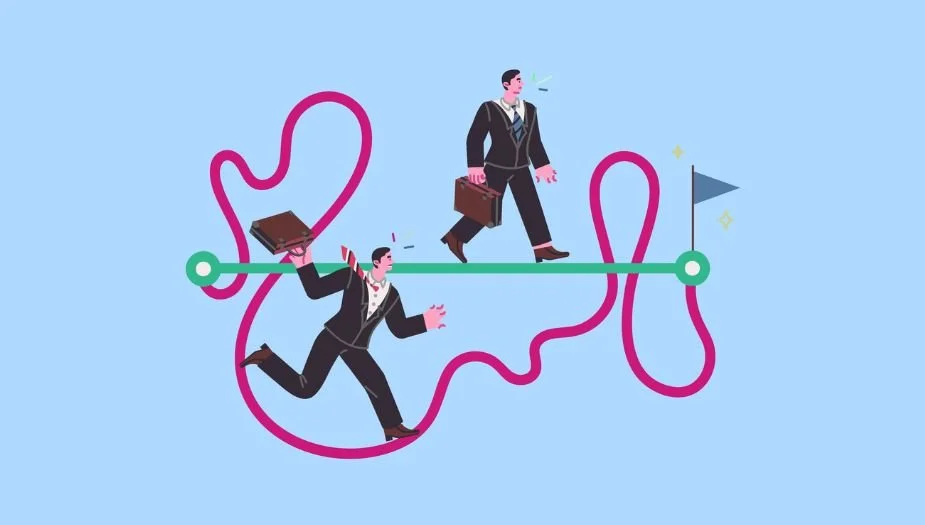
Growth Isn’t Linear—It’s Stressful (By Design)
Growth, change, healing—whatever flavor of progress you’re chasing—activates your stress response.
Let me say that louder for the perfectionists in the back:
Even positive change is perceived as a threat by your nervous system.
Why? Because your brain is designed to prioritize predictability over possibility. Certainty feels safe, even if it sucks. That’s why people stay in careers they hate, routines that drain them, and burnout cycles that are wrecking their health. It's not laziness—it's biology.
In fact, research shows that uncertainty triggers a stronger stress response than predictable negative outcomes. Translation: Your brain would rather know something bad is coming than sit in the ambiguity of maybe-it’ll-be-great.
So when you try to change—whether it's setting boundaries, starting therapy, or leaving a job that’s crushing your soul—your system reads that as: “Danger! Unknown ahead!”
Cue the resistance. Cue the doubt. Cue the internal drama.
This is not a personal failure.
It’s a physiological pattern.
Your Identity Will Fight to Survive
Here’s where things get spicy.
When you start showing up differently—prioritizing rest, saying no, actually choosing yourself—you’re not just building new habits. You’re dismantling old identities.
And those identities? They’ll fight like hell to stay alive.
Maybe your self-worth has been tangled up in being “the reliable one,” “the high performer,” or “the one who never drops the ball.” When you start letting go of those identities—even for the sake of your own health—it can feel like you’re losing yourself.
This isn’t just philosophical—it’s neurological.
According to research from Dr. Lisa Feldman Barrett, a leading neuroscientist in emotional regulation, the brain constructs your “self” through predictive coding. It anticipates who you’re supposed to be based on past behavior. When you deviate, your brain interprets that as prediction error—a potential threat.
And so it pushes back. Hard.
You’ll second-guess your decisions.
You’ll grieve parts of you that no longer serve you.
You’ll feel like you’re regressing when, in fact, you’re evolving.
Progress often feels like a breakdown not because something’s wrong—but because something outdated is falling apart.
You’re Not Broken. You’re Rewiring.
Let’s get technical for a moment. Change—especially deep, sustainable change—involves neuroplasticity. That’s your brain’s ability to form new neural connections, reorganize existing ones, and essentially rewire itself.
This sounds sexy in a TED Talk. But in real life?
It’s awkward. It’s frustrating. It’s vulnerable.
It feels like trying to switch your dominant hand mid-meeting while your inbox explodes and your Slack is on fire.
Neuroplasticity requires focus, repetition, and rest. It thrives on deliberate effort. And it hates multitasking. So when you’re trying to build a new behavior—say, taking a lunch break instead of pushing through—you’ll feel the tug of your old wiring for a while.
The good news? The discomfort is data.
It means the rewiring is happening.
The bad news? If you interpret that discomfort as failure, you’ll self-sabotage your way back to the status quo.
High Achievers Are Especially Prone to This Trap
If you’re used to excelling, being “in progress” feels like weakness. Vulnerability gets conflated with incompetence. And asking for help? Forget it.
This mindset is one of the biggest blocks to sustainable change for high performers.
You’ve trained yourself to equate mastery with worth—so when you’re learning something new (like resting, feeling emotions, or not equating your calendar with your value), you assume something’s wrong with you.
Nothing’s wrong. You’re just in process.
You can’t white-knuckle your way through transformation. You have to let it be awkward and messy. And that takes more courage than most people realize.
So What Do You Do With All This?
Glad you asked. Here’s the short list of what works—because you don’t need more opinions, you need a strategy.
1. Normalize Discomfort
Treat resistance, confusion, and emotional turbulence as part of the growth process—not a red flag. If it’s uncomfortable, it’s probably working.
2. Stop Expecting Clarity to Come First
Clarity often comes after the leap, not before. Waiting until you feel “ready” or 100% certain? That’s a trap. Progress is built on micro-decisions and imperfect action.
3. Reframe Your Identity
Instead of “I’m not someone who rests,” try “I’m becoming someone who knows when to stop.” Give yourself permission to be a beginner at habits that support your health.
4. Invest in Recovery
Growth without recovery is just self-destruction in disguise. Prioritize nervous system regulation: breathwork, walking, stretching, proper sleep, human connection. Your brain can’t rewire in survival mode.
5. Track the Tiny Wins
Your brain is wired to notice threats. Balance the signal by deliberately tracking what’s working—even if it’s just “I paused before replying to that stressful email.”
Progress hides in small moments. Celebrate them like a boss.
Final Truth: Becoming Your Next-Level Self Is a Loss Strategy
You’ll have to lose who you were to become who you’re meant to be.
That includes:
Roles that earned you approval but drained your soul
Habits that once worked but now exhaust you
Identities that made you successful but keep you stuck
It’s bittersweet. It’s terrifying. And it’s the most liberating thing you’ll ever do.
So if you’re knee-deep in a growth spurt that feels more like a slow unraveling—pause. Breathe. Zoom out.
You’re not falling apart.
You’re breaking through.
And no, it won’t be easy.
But staying stuck? That’s harder.
Need Help? Want Support While You Redefine Success on Your Terms?
📣 If you're tired of white-knuckling your way through burnout and ready to rewire your habits, your nervous system, and your whole damn life—I'm here for it. Let’s talk.
Article References
The sources cited in the article:
Forbes. “Embracing Discomfort: The Path to Personal and Professional Growth.” Forbes - Embracing Discomfort
Verywell Mind (VM). “The 6 Stages of Change.” VM - The 6 Stages of Change
Harvard Business Review (HBR). "What Having a “Growth Mindset” Actually Means." HBR - What Having a Growth Mindset Means
Forbes. “The Value of a Growth Mindset and How to Develop One.” Forbes - The Value of a Growth Mindset
Psychology Today (PT). "Growth Mindset." PT - Growth Mindset
Harvard Business School. "Growth Mindset vs Fixed Mindset.” Harvard - Growth Mindset vs Fixed Mindset
VeryWell Mind (VM). “What is a Mindset and Why Does It Matter?” VM - What is a Mindset and Why Does It Matter?