The Ultimate Guide to Setting Up Your Home Gym: From Starter to Advanced
A home gym is the best investment you’ll ever make.
If you’re a busy professional juggling work, life, and the existential crisis of modern adulthood, squeezing in time for a workout can feel impossible. Enter the home gym—your 24/7, no-commute, no-excuses solution to staying fit, managing stress, and ensuring you don’t morph into a desk-shaped human.
The best part? You don’t need to drop $10K to build an effective setup. In fact, a well-thought-out home gym can save you thousands over time. A premium gym membership can cost anywhere from $100 to $300 per month, meaning you’re shelling out $1,200 to $3,600 per year—every year. Multiply that by five years, and you’re looking at $6,000 to $18,000. By comparison, investing in a home gym costs less over time, eliminates the commute, and guarantees no waiting for the squat rack.
Whether you’re just getting started, stepping up your game, or going full beast mode, here’s how to create the perfect home gym at every level, along with estimated costs.
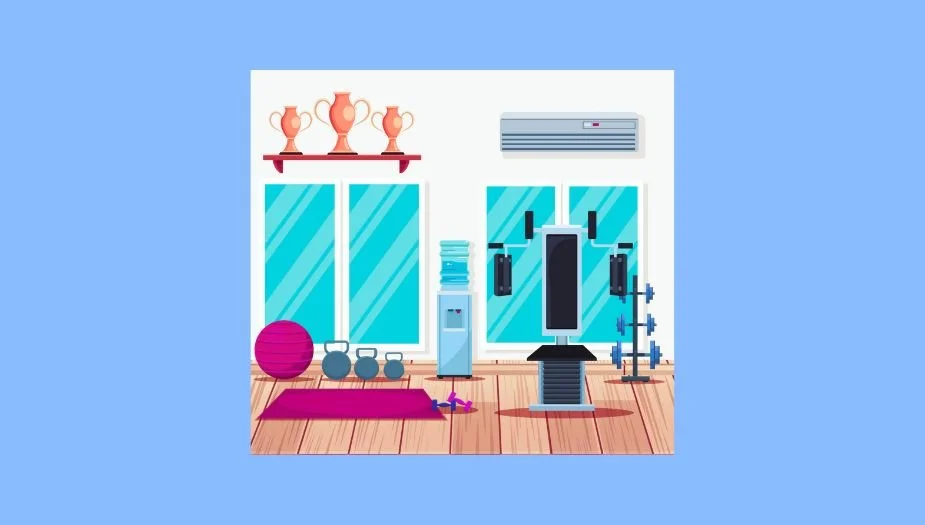
Level 1: The Starter Home Gym
For the no-fuss, space-conscious professional who wants maximum impact with minimal equipment.
Essential Equipment:
Dumbbells (set of 3 weights) – Light, medium, and heavy for progressive overload.
Resistance bands & mini loop bands – Versatile for strength, mobility, and rehab.
Valslides – Perfect for core, lunges, and full-body workouts.
TRX Suspension Trainer – Bodyweight training that torches your muscles and improves mobility.
Estimated Cost: $150–$400
Why This Works:
This setup is small-space friendly, cost-effective, and ridiculously efficient. You can train every muscle group, improve stability, and build strength—all without clunky machines. Plus, resistance bands and TRX help combat the postural damage from sitting at a desk all day.
L1 Compatible Workout Programming:
Strength: Dumbbell goblet squats, resistance band rows, TRX push-ups
Core: Valslide mountain climbers, TRX knee tucks
Mobility & Recovery: Band-assisted stretches, TRX deep squat holds
Pro Tip: If you’re short on time, aim for 20-minute full-body circuits. No excuses.
Level 2: The Intermediate Home Gym
For those ready to lift heavier, move explosively, and level up their strength.
Essential Equipment:
Dumbbell set (5 to 50 lbs, Rogue recommended) – More weight = more strength gains.
Kettlebells (26, 45, 53, 72 lbs) – Deadlifts, swings, Turkish get-ups, and farmer carries.
Adjustable bench – Either a press bench or step bench for chest, arms, and Bulgarian split squats.
Equalizer bars – Fantastic for dips, rows, and core work.
Plyo box (wood or soft) – Essential for box jumps, step-ups, and explosive training.
Estimated Cost: $800–$1,500
Why This Works:
This setup allows for more progressive overload, power training, and functional movement. With heavier weights and more dynamic tools, you can improve strength, agility, and endurance—all without cluttering your space with unnecessary machines.
L2 Compatible Workout Programming:
Strength: Dumbbell Romanian deadlifts, kettlebell front squats, equalizer bar dips
Power: Kettlebell swings, box jumps
Conditioning: AMRAP (as many rounds as possible) of kettlebell snatches, plyo box step-ups, and burpees
Pro Tip: Master the basics before adding intensity—bad form plus heavy weights equals regret.
Level 3: The Advanced Home Gym
For those who want a pro-level setup that leaves commercial gyms in the dust.
Essential Equipment:
Expanded dumbbell collection (5 to 100 lbs, Rogue recommended)– More weights, more variety.
Olympic barbell + Rogue plates – Because nothing builds strength like barbell training.
Pull-up bar or lifting rig (Rogue) – A staple for upper body strength.
Wall balls (14, 20, 25, 30 lbs) & Slam balls (15, 20, 25, 30 lbs) – Great for explosive, high-intensity work.
Concept2 Rower & Assault Bike – The ultimate conditioning tools.
Weight sled – Nothing burns more calories in less time.
Treadmill or Assault Runner – If you want to clock in miles without leaving home.
Estimated Cost: $3,000–$10,000+
Why This Works:
At this level, you’re training like an athlete. Olympic lifts, high-intensity intervals, and heavy compound movements make for the most effective workouts possible. You’ll be able to build muscle, improve endurance, and torch stress with a gym that’s fully tailored to your needs.
L3 Compatible Workout Programming:
Strength: Barbell deadlifts, weighted pull-ups, kettlebell snatch complexes
Power & Conditioning: Wall ball throws, sled pushes, Assault Bike sprints
Endurance: Concept2 Rower intervals, treadmill incline runs
Pro Tip: Don’t just collect equipment—use it. Plan your workouts strategically to avoid overuse injuries and burnout.
Final Thoughts: Building a Home Gym That Works for You
The best home gym isn’t the one with the most gear—it’s the one you’ll actually use. Start with the essentials, master your movements, and upgrade as you progress. Investing in your health is the ultimate power move—because when you’re strong, fit, and stress-free, everything else falls into place.
So, what’s stopping you from building yours? Let’s get to work.
Need Help? Let’s create fitness programming to put your home gym to work.
You’ve create your workout space. Now it’s time to work up a sweat.
Let’s build a fitness routine that matches your fitness goals.
Article References
The sources cited in the article:
Rogue Fitness. Rogue Fitness website
Rep Fitness. Rep Fitness website
Titan Fitness. Titan Fitness website
Perform Better. Perform Better website