Inside The Wellness Briefing
A curated preview of recent insights, quick wins, and approval matrixes from The Wellness Briefing—a weekly dose of real talk and solutions for busy, burnout-prone professionals.
↓ Below, you’ll find sneak peeks of recent editions.
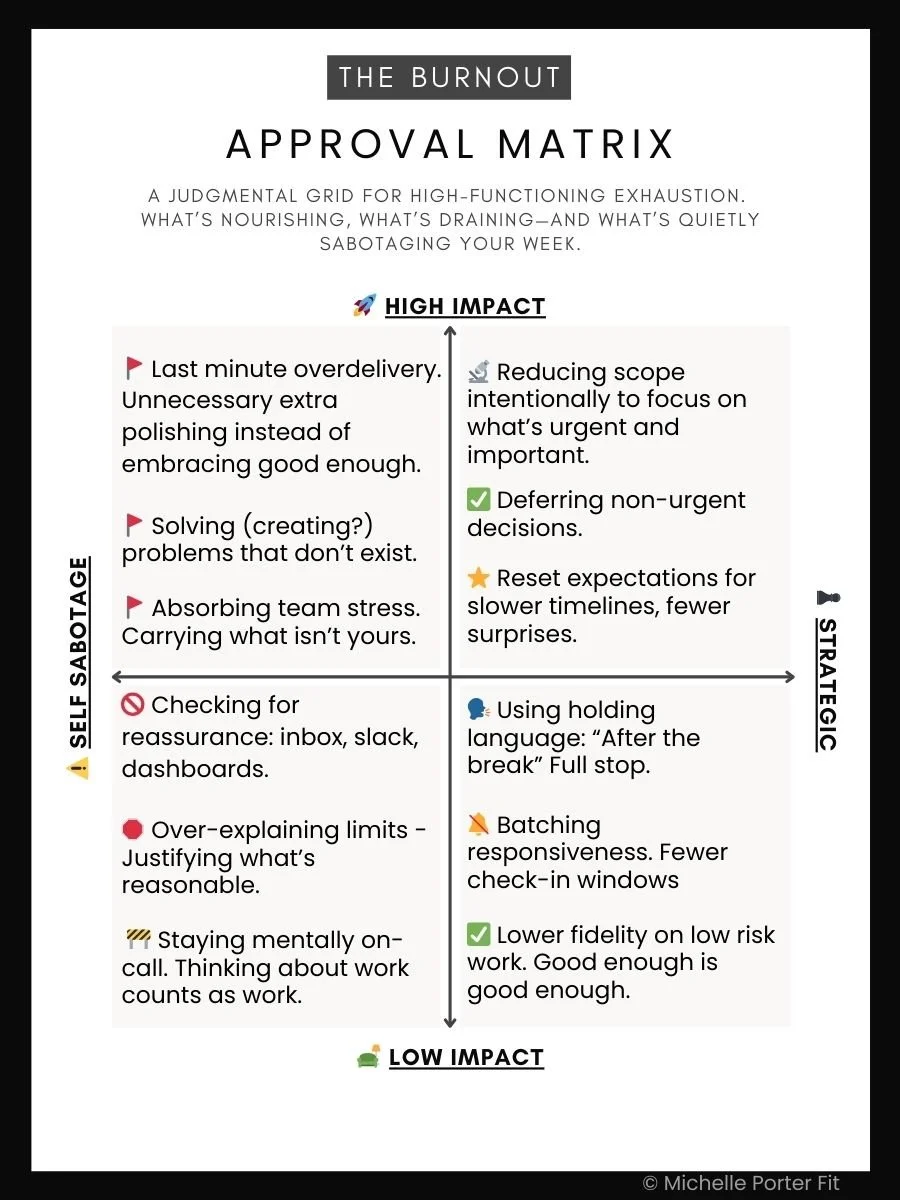
Edition No. 25 “Holding On Until the Break: When Burnout Peaks Right Before Relief” | December 16, 2025
🎯 Pro Tip from the Guide:
When capacity is low, decisions cost more than actions.
If you’re exhausted:
Reduce choices
Reuse defaults
Say “I’ll revisit this in January” without apology
Clarity now protects recovery later.
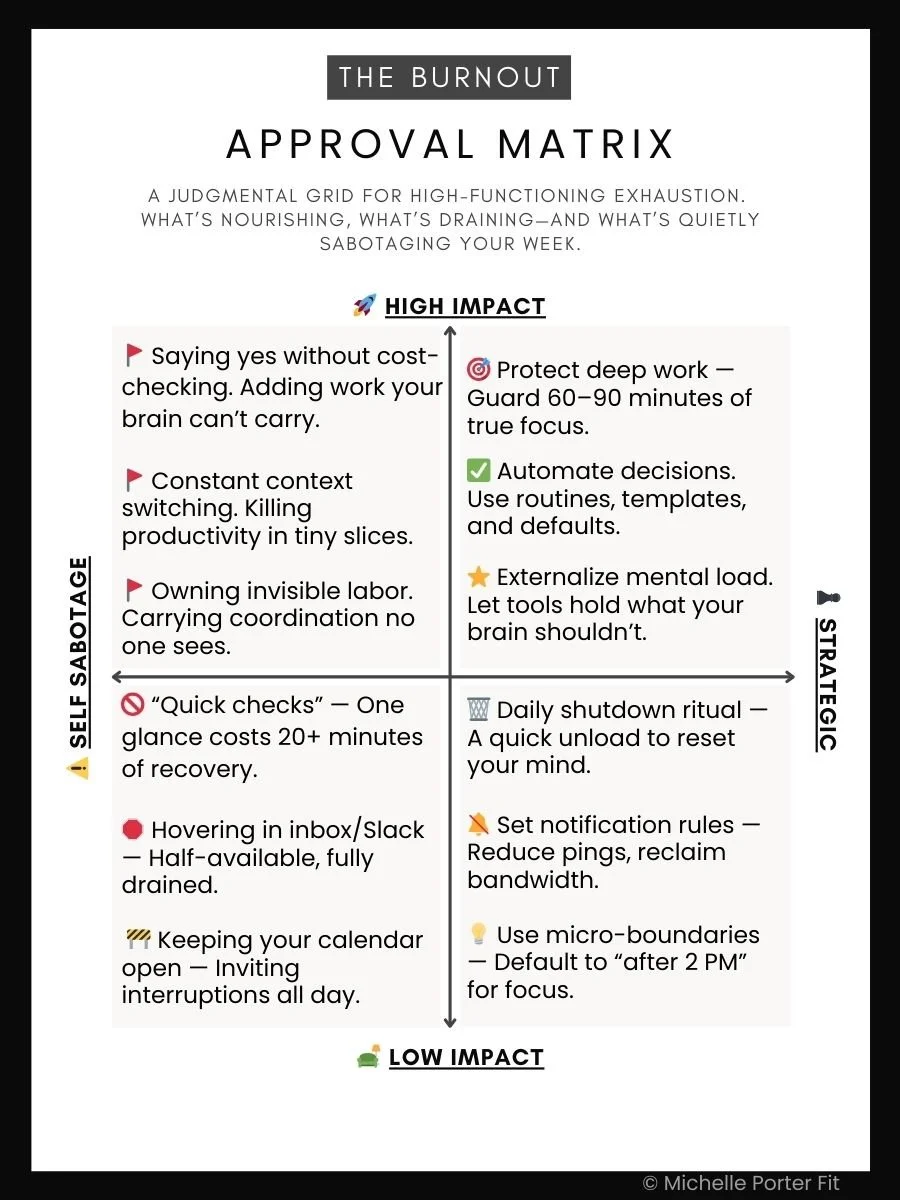
Edition No. 24 “Cognitive Overload: Why Your Brain Feels Like It Has 47 Tabs Open” | December 9, 2025
✅ Try This: Here are three micro-boundaries that restore cognitive bandwidth almost immediately:
1. Set a “No-Decision Window.”
Choose a 1–2 hour block daily where no decisions are made. You execute only what’s already defined. No new requests. No planning. No switching.
2. Interrupt the interruptions.
Before responding to a Slack or email ping, ask: “Does this need my brain or just my acknowledgment?” Half of interruptions can be deferred, delegated, or dismissed.
3. Use a “Single-Tab Rule” for complex work.
Close everything that’s not related to the task at hand. When you stop feeding the tabs, they stop feeding the stress.
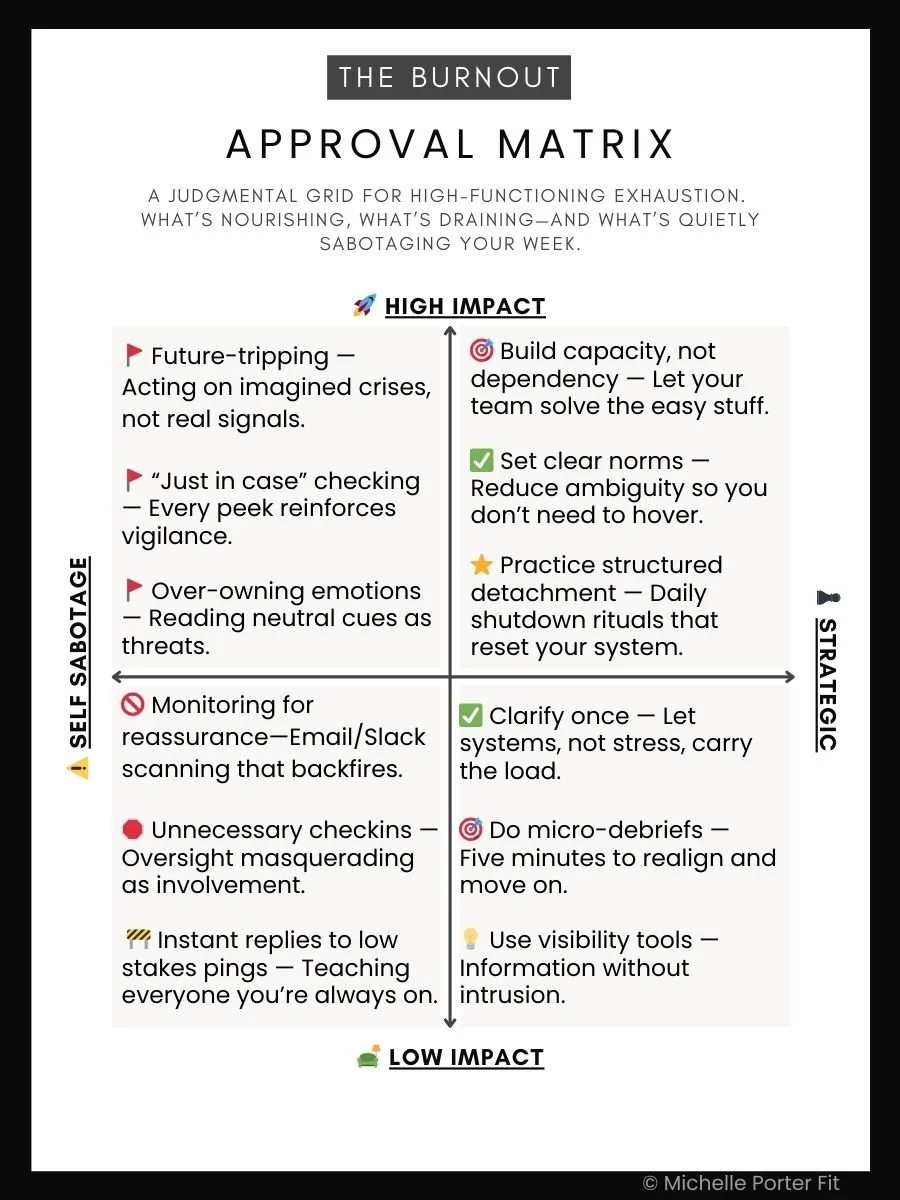
Edition No. 23 “Trust Fatigue: When Leadership Turns Into Hypervigilance” | December 2, 2025
💡 What That Means for You: If you feel like you can’t relax unless you’re checking in, checking up, or checking everything, you’re not experiencing “high standards.” You’re experiencing a dysregulated stress cycle.
When your baseline state is bracing for impact:
Small emails feel urgent
Neutral feedback feels threatening
Minor mistakes feel like personal exposure
Rest feels unsafe
Leadership becomes surveillance — and recovery becomes impossible.
Trust fatigue is not a mindset issue. It’s a physiological bottleneck that constricts your creativity, strategic thinking, and capacity to connect.
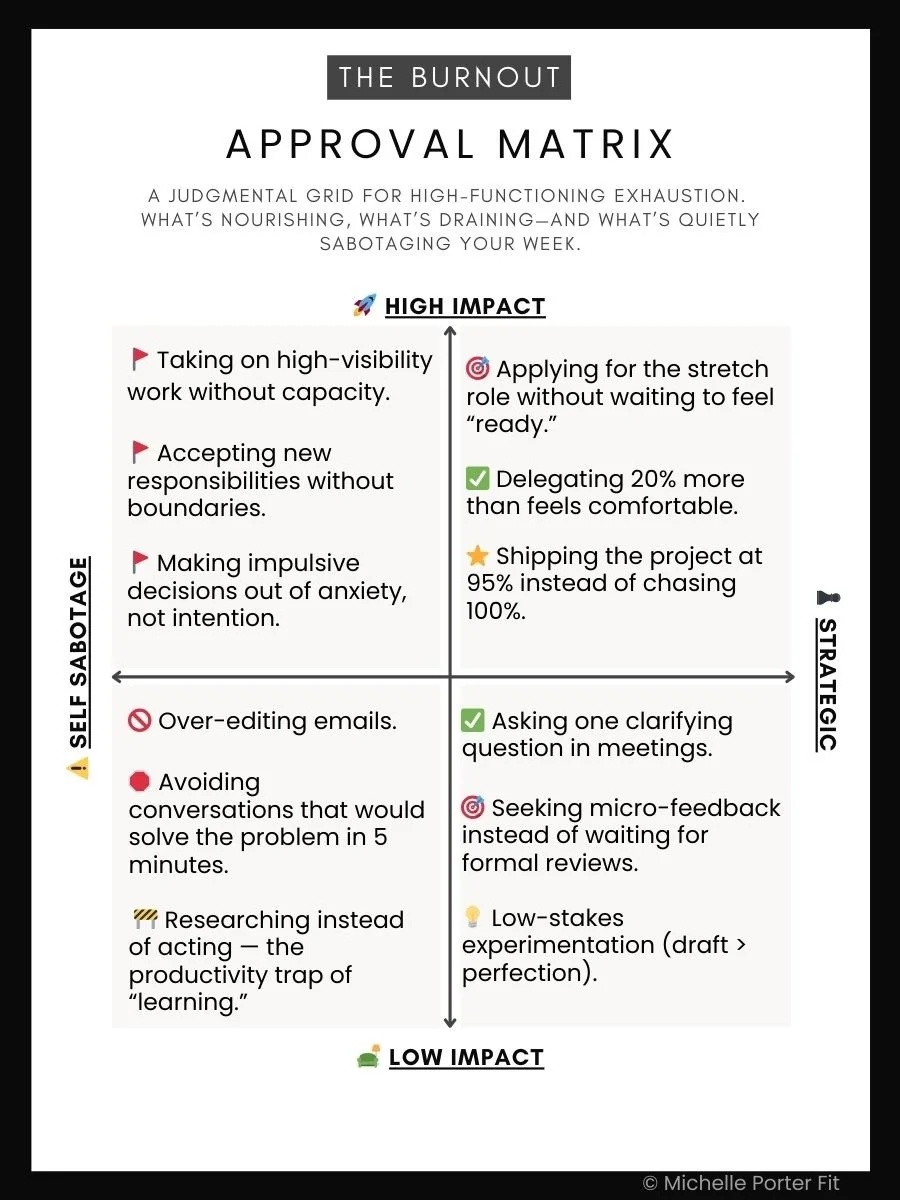
Edition No. 22 “Smart Risk-Taking When You’re Burned Out” | November 25, 2025
💡 What That Means for You: You don’t need to wait for confidence.
You need a risk filter:
Is the worst-case scenario recoverable? (Annoying is not the same as catastrophic.)
Is the best-case scenario meaningful? (Impact, visibility, growth, options.)
Will action teach you more than hesitation? (Hint: yes.)
Smart risk-taking is a stress management tactic, not a personality trait.
When you move while uncertain, your nervous system learns that discomfort isn’t danger — it’s momentum.
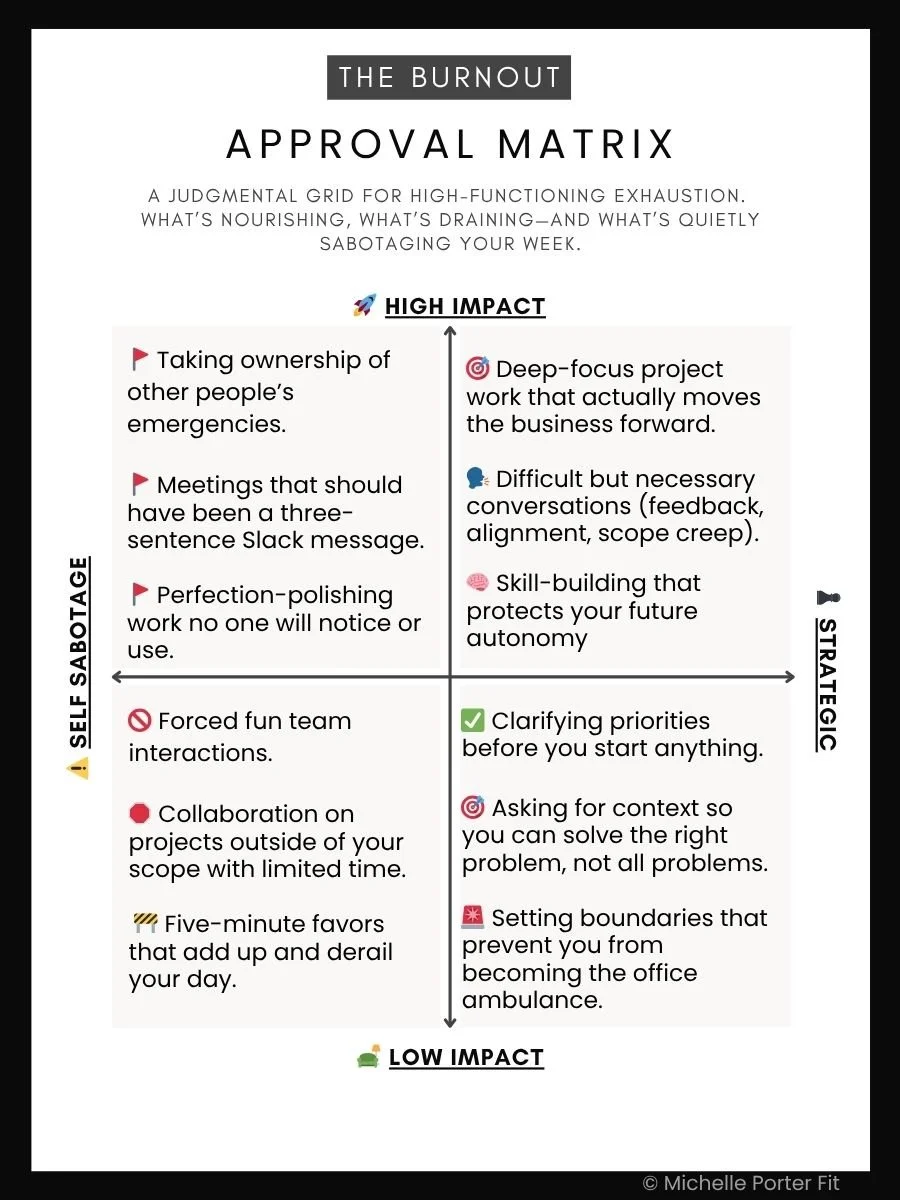
Edition No. 21 “Boundaries Are Strategy, Not Weakness” | November 18, 2025
🧠 1 Insight Worth Reading: An Inc. article sharing research from the Journal of Communication Management study found that just the expectation of being reachable off-hours is enough to cause stress, burnout, and tension at home—even if employees don’t actually respond.
When people protect recovery time, their clarity and creativity improve. In other words, the most consistent performers aren’t the ones who always say yes—they’re the ones who know when to stop.
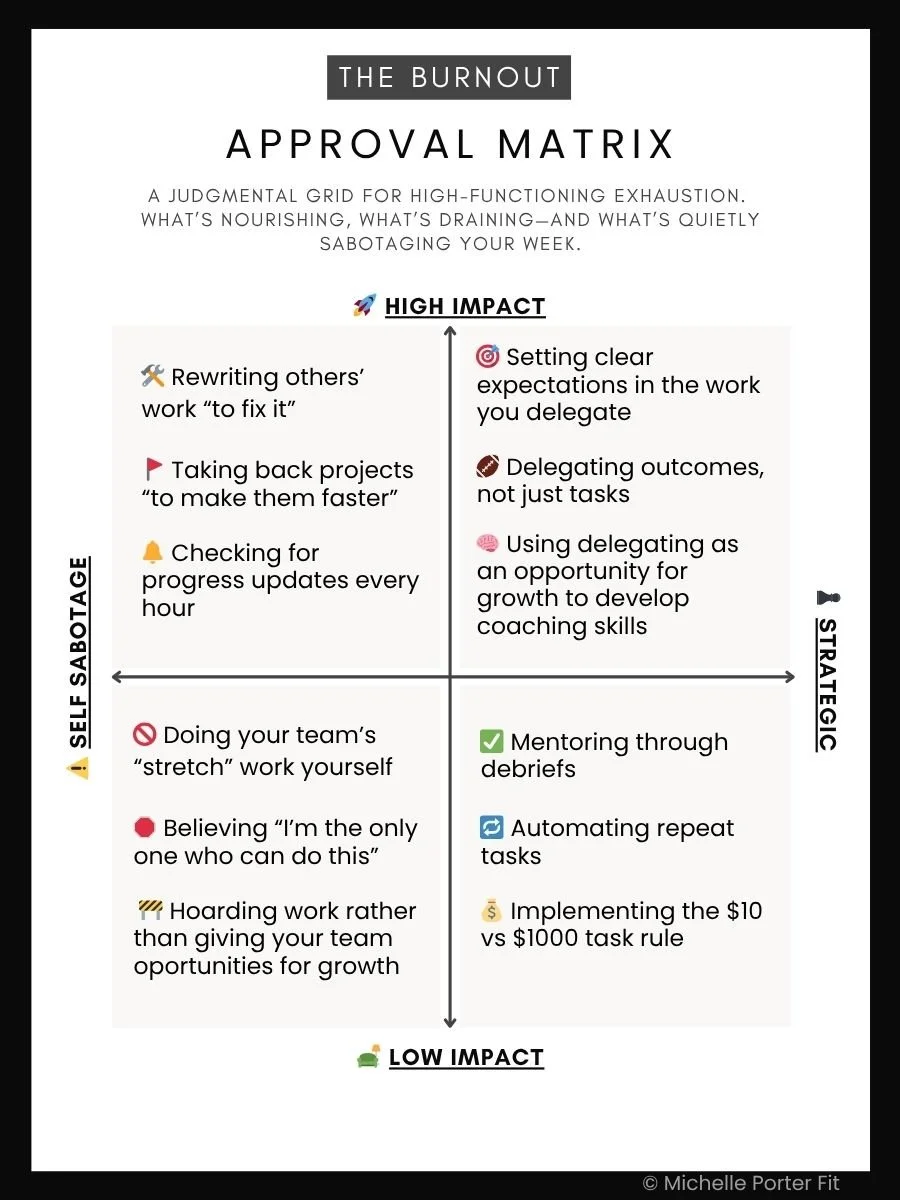
Edition No. 20 “Delegation Anxiety: When Letting Go Feels Unsafe” | November 11, 2025
✅ Next time you feel the urge to step in, run this quick check:
Is it high impact or just high visibility?
Is this task teaching me, or trapping me?
If I did nothing, what’s the real risk?
Then delegate one small thing you’d normally hoard. Start with discomfort, not disaster.
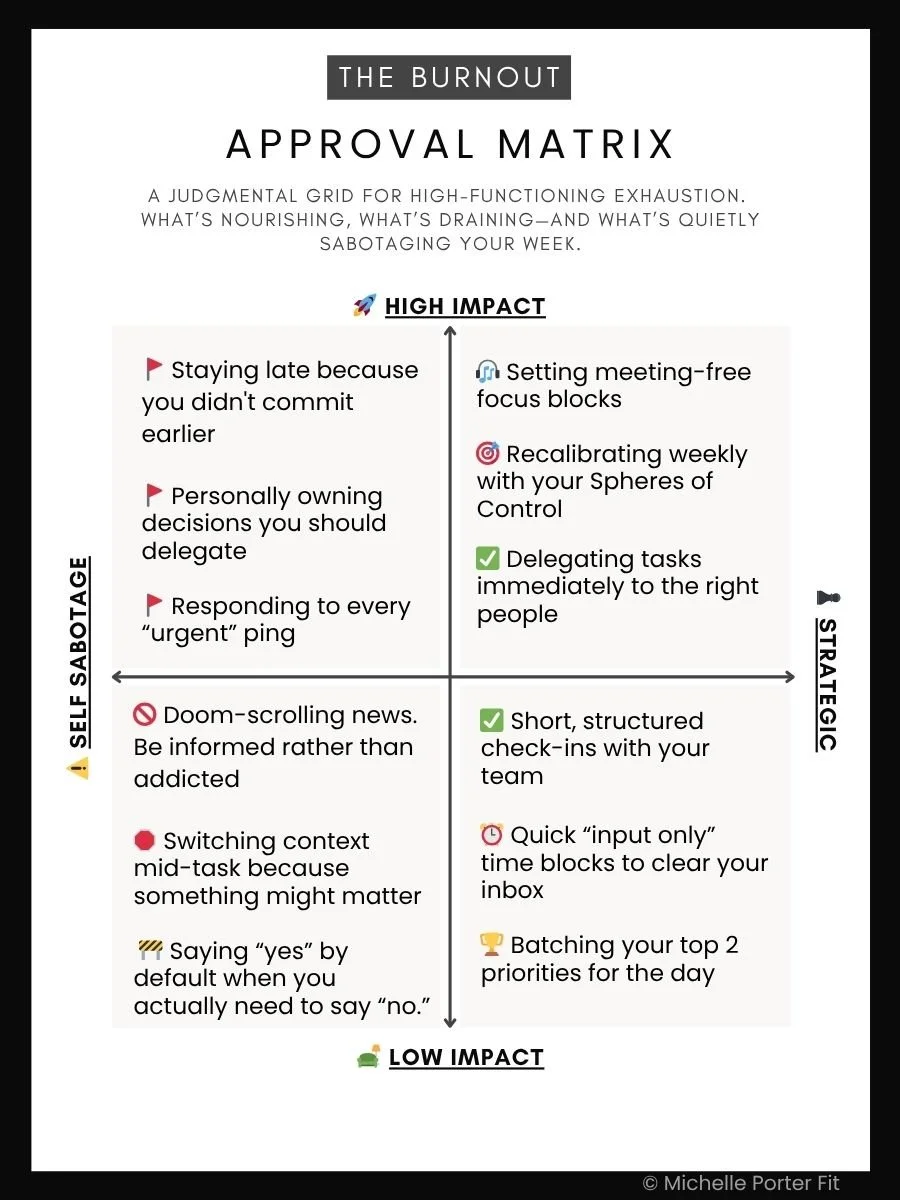
Edition No. 18 “Focus On What You Can Control” | October 28, 2025
🎯 Pro Tip from the Guide: You’re not the CEO of the global market—so stop acting like it. Treat your calendar like a terrain map:
invest 70 % of your time in your “inner sphere” (plans, direct actions, daily rhythms),
20 % in “influence” zones (team alignment, process improvements, delegation),
and only 10 % (at most) in “concern” areas (industry chatter, external validation, what-ifs).
That allocation preserves your bandwidth for high‐leverage work. And for the 10% of “concern” areas that you ruminate on?
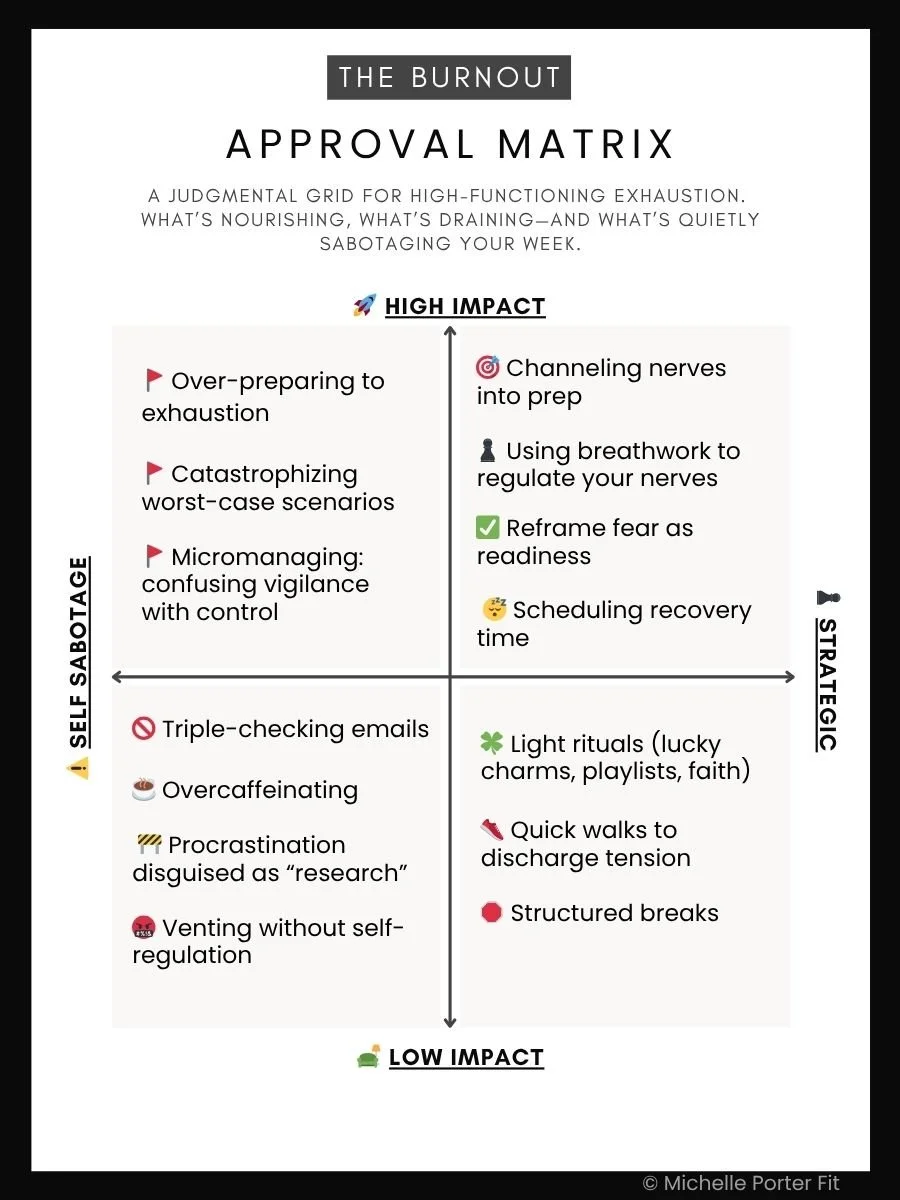
Edition No. 17 “Anxiety as a Superpower (Until It Isn’t)” | October 21, 2025
🧠 1 Insight Worth Reading: Stress, in the right dose, primes the brain for clarity and precision. But when your baseline is constant urgency, your body can’t tell the difference between a presentation and a threat.
Chronic anxiety rewires focus from strategic to survival mode. Learning to regulate that threshold is what separates sustainable performance from exhaustion disguised as drive.

Edition No. 16 “Is AI Streamlining or Sabotaging Your Productivity?” | October 14, 2025
💬 Coaching Cue “AI is not your brain’s autopilot. You’re still in the cockpit. Use it to extend, not replace, your attention and values.”
Think of this as communication strength training. The better you get at giving AI precise, contextual instructions, the sharper your clarity becomes everywhere else—delegating to your team, managing up, or setting boundaries.
Clear prompting isn’t just a tech skill; it’s leadership practice in disguise.
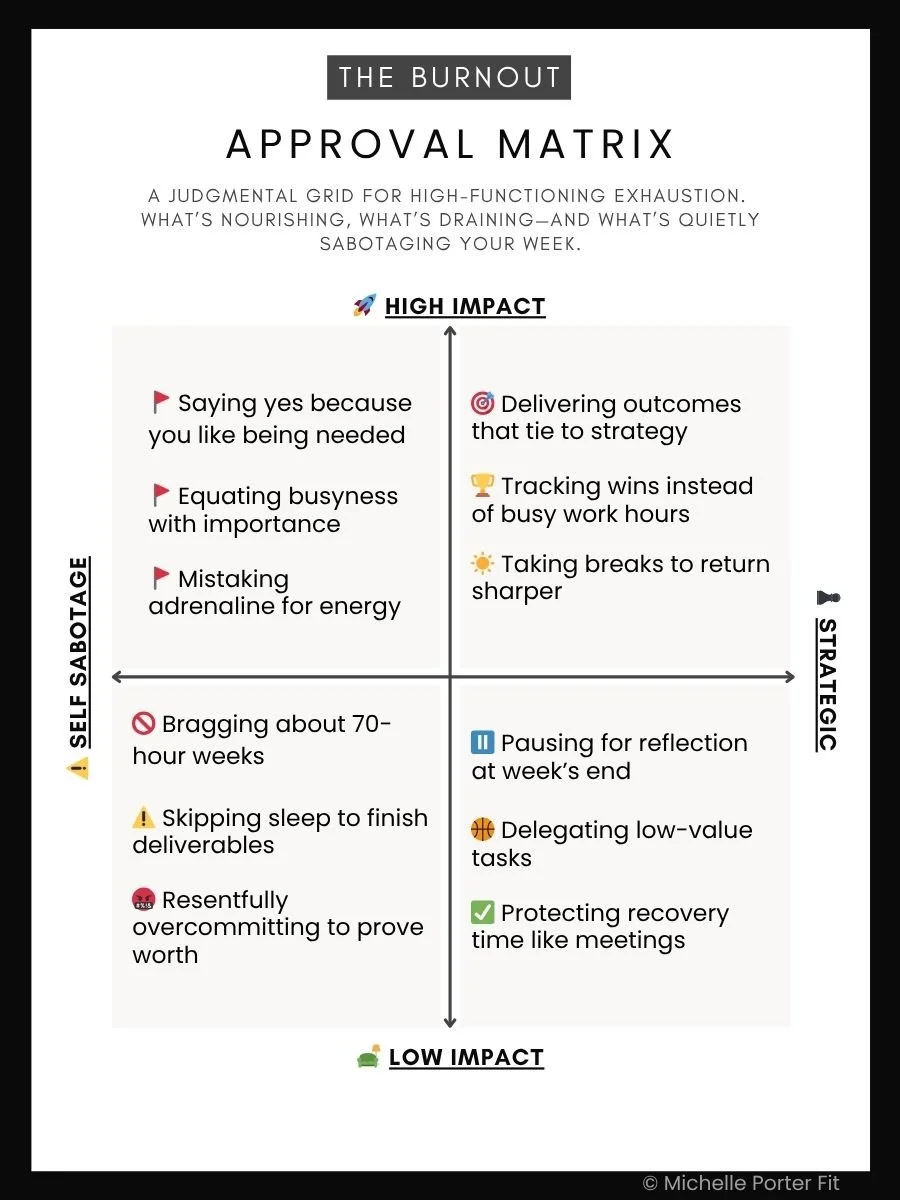
Edition No. 15 “The Overwork-Validation Loop” | October 7, 2025
📊 Wellness Stat of the Week: 67% of professionals admit they equate “busyness” with “importance” at work—yet only 22% of executives say hours matter more than outcomes.
📣 Gut Check: What’s harder for you—saying no or saying not now?
Sit with this question for a few minutes
Think about which one is more difficult for you and why
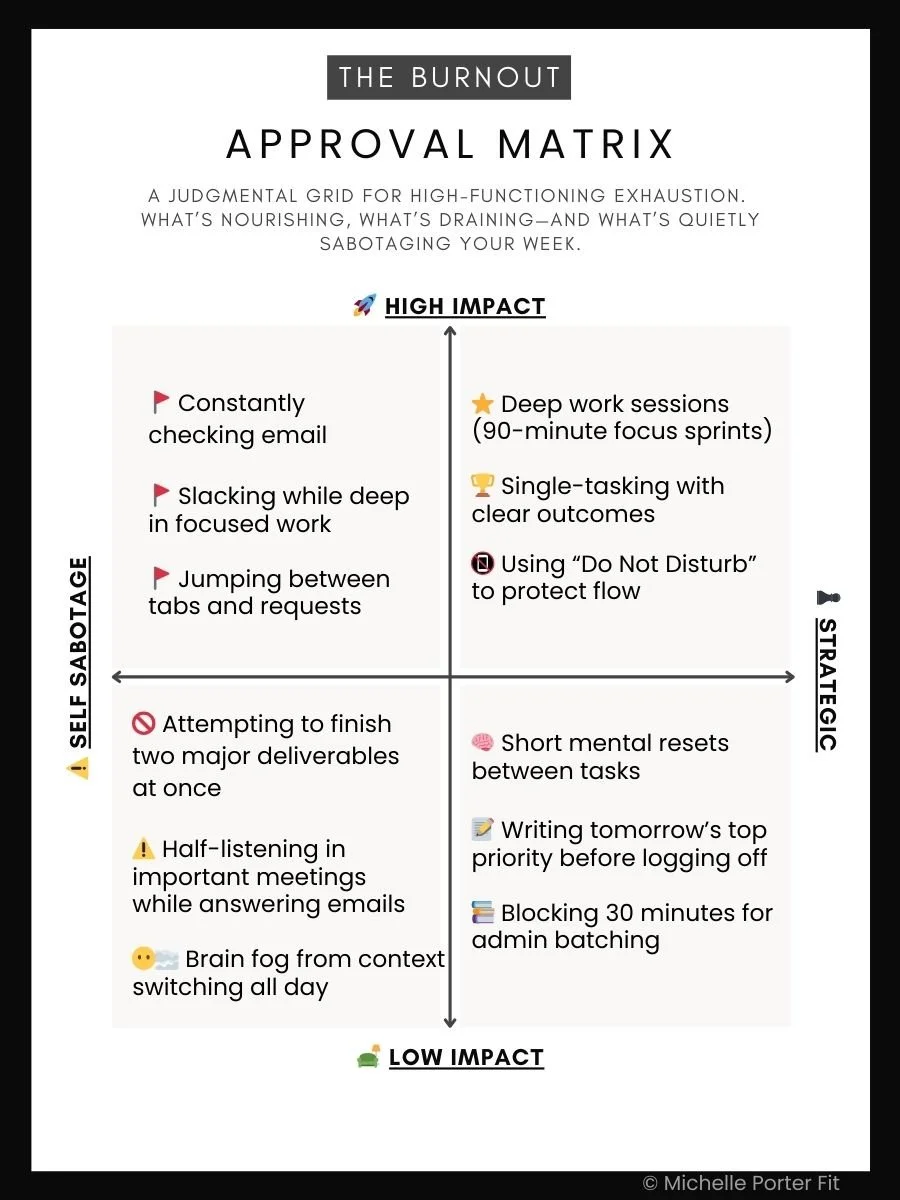
Edition No. 14 “The Myth of Multitasking” | September 30, 2025
🧠 1 Insight Worth Reading: Research from Stanford found that people who multitask heavily have more trouble filtering irrelevant information and switching between tasks efficiently. Their brains actually become worse at focusing.
💡 What That Means for You: If you’re feeling “scattered,” it’s not a lack of discipline—it’s the cognitive tax of too many pivots. Your output may feel faster in the moment, but quality and retention suffer. Protecting focus is protecting results.
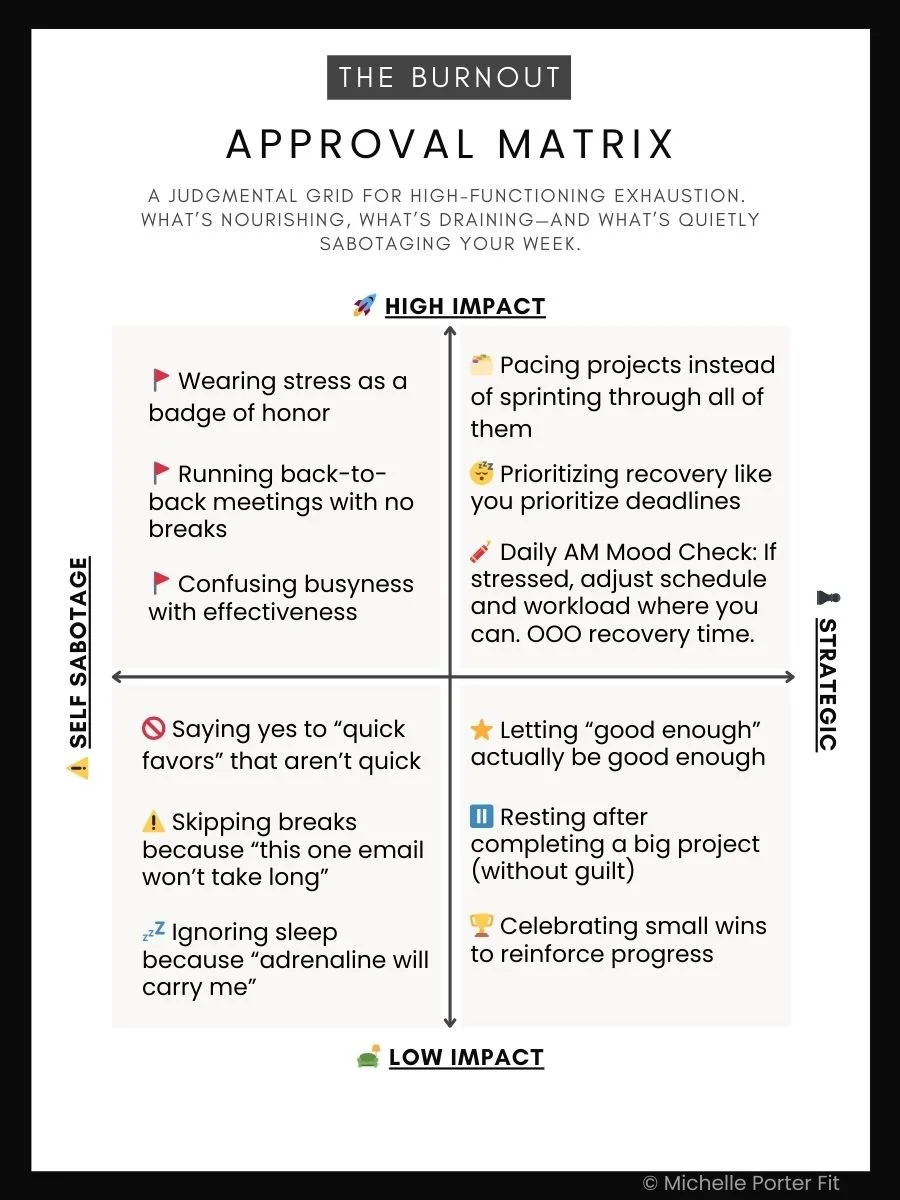
Edition No. 13 “Is Your Stress Momentum or Friction In Disguise?” | September 23, 2025
✅ Try This: Swap the “to-do” list for a “done” list at day’s end. Remind your brain of progress instead of feeding it an endless backlog.
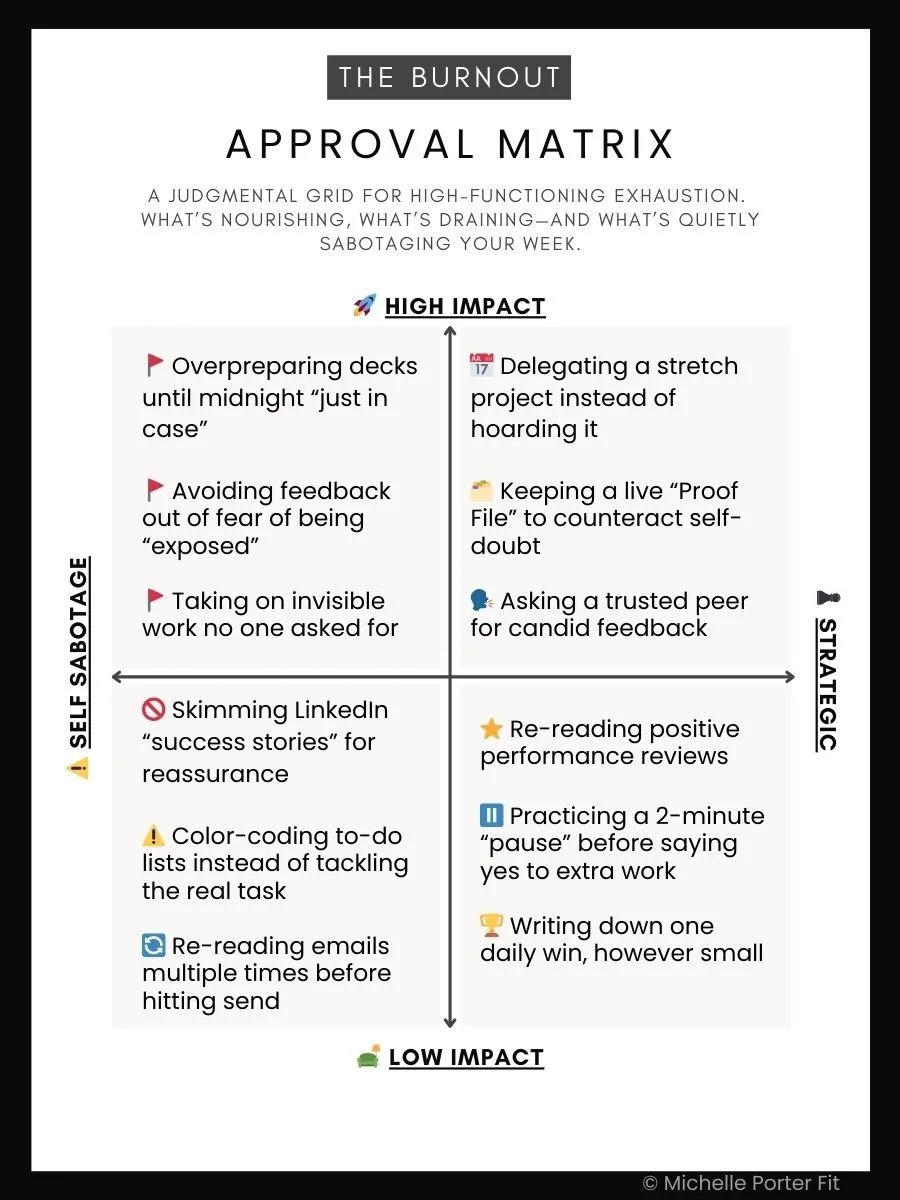
Edition No. 12 “The Confidence-Competence Gap” | September 16, 2025
🧠 1 Insight Worth Reading: Imposter syndrome doesn’t mean you’re faking it. It often means you’re in it—in the process of evolving into something harder and bigger than you’ve done before.
Imposter syndrome typically shows up when we decide to take on new roles or new responsibilities, and it can result in feelings of self-doubt, anxiety, and guilt.

Edition No. 11 “The Burnout Myth of the ‘Perfect Morning’” | September 9, 2025
✅ Try This: Create a 10‑minute “minimum viable morning”:
2 min quiet pause to center yourself (While you brew your coffee)
3 min light movement or stretch ( Need inspiration? Take 5 rounds of yoga Sun A)
5 min daylight exposure (Patio sit, take a walk, take your dog outside)
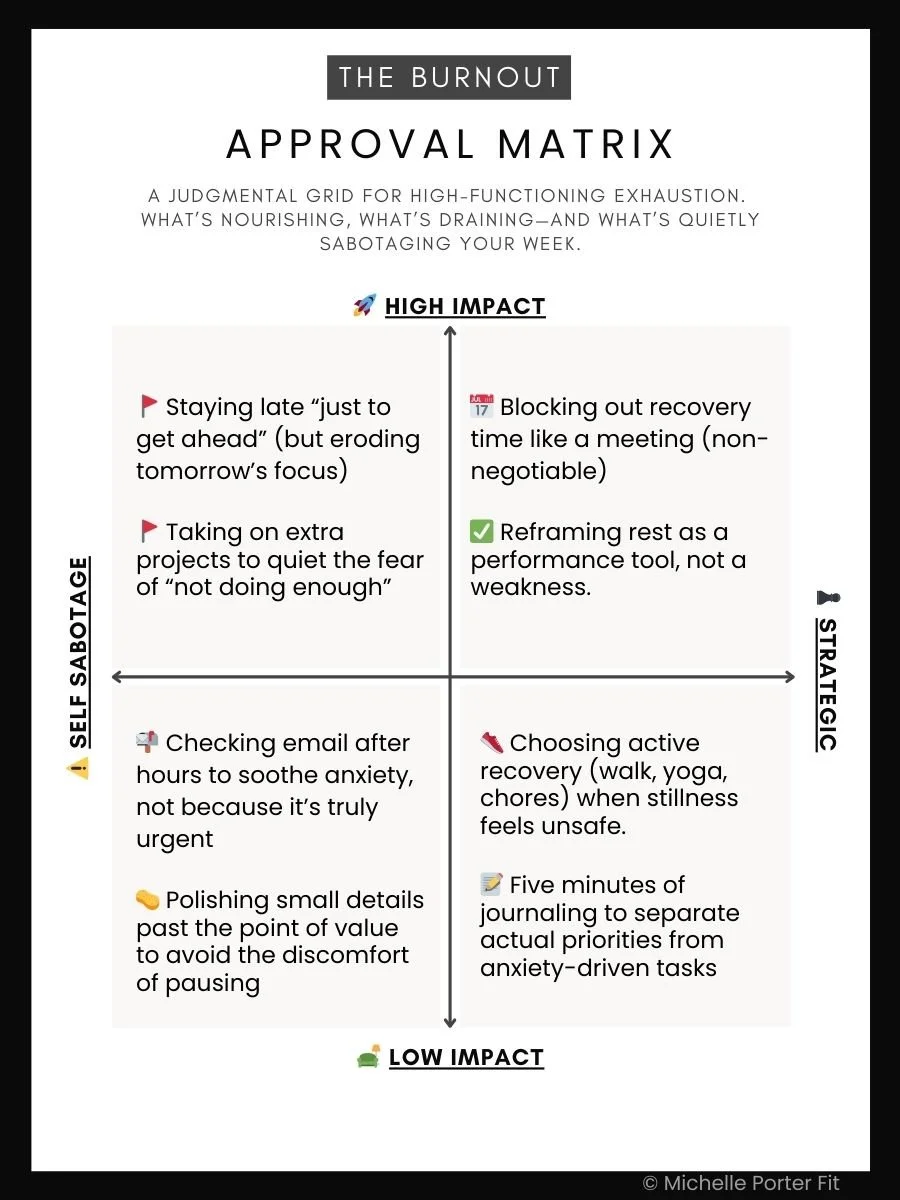
Edition No. 10 “When Anxiety Drives Your Productivity” | September 2, 2025
📰 1 Article to Know: A 2023 Psychology Today discusses that people with childhood adversity are more likely to develop "compulsive goal pursuit"—a pattern linked with anxiety, burnout, and emotional suppression.
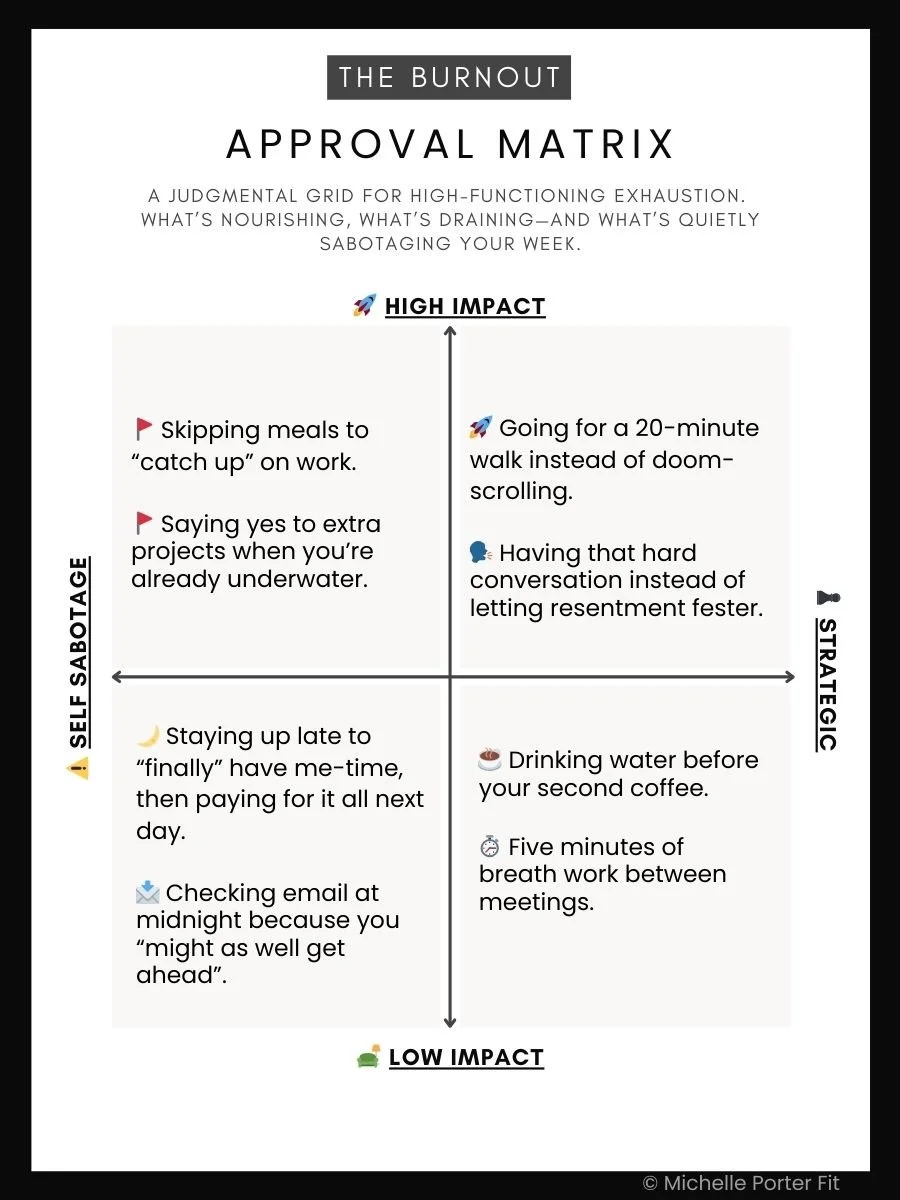
Edition No. 09 “The Emotional Overdraft” | August 26, 2025
❝ 1 Quote to Consider:
“Son, your ego’s writing checks that your body can’t cash.”
— Top Gun
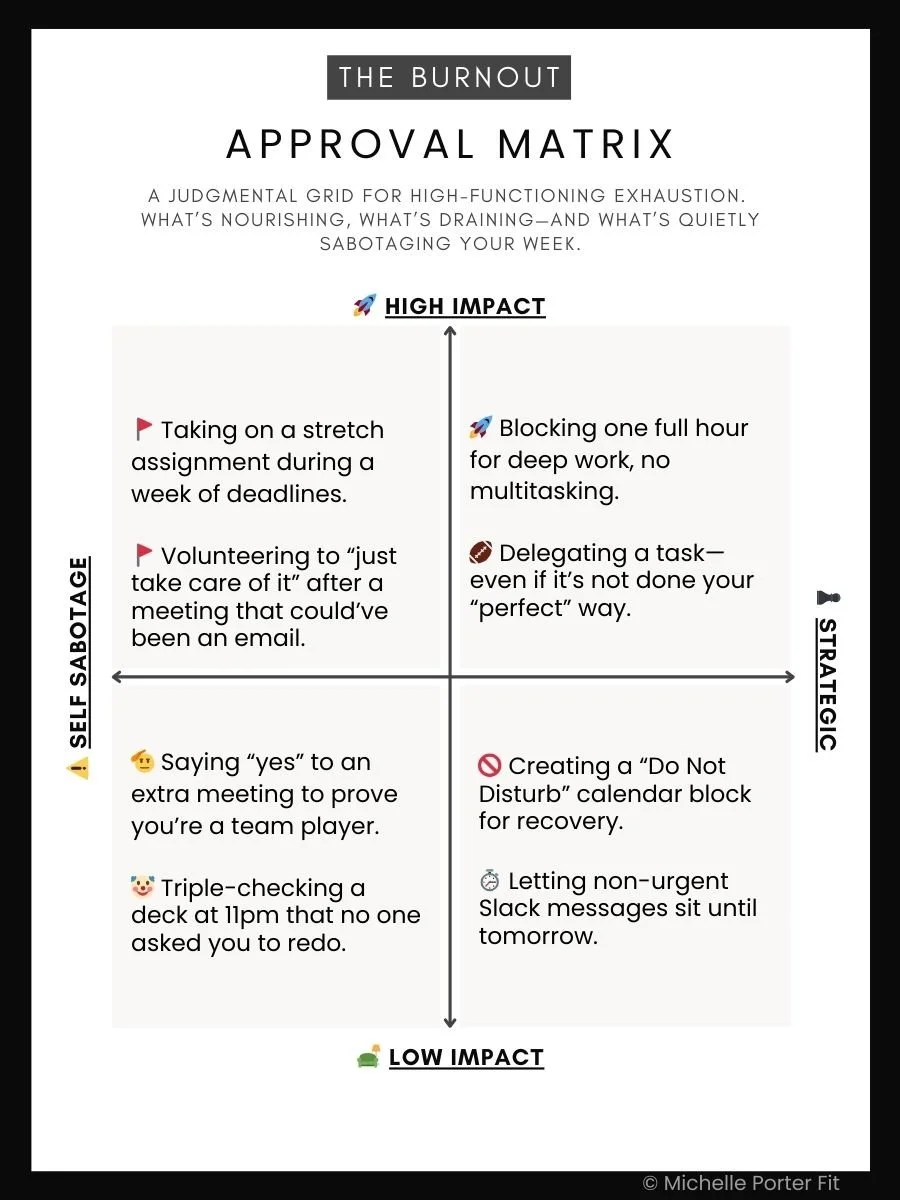
Edition No. 08 “Overfunctioning Is Not a Flex” | August 19, 2025
✅ Try This: Do a “Responsibility Audit”:
What tasks did you take on without being asked?
Which of them could be delegated, delayed, or declined?
What are you protecting by overfunctioning—your role, your identity, or someone else’s comfort?
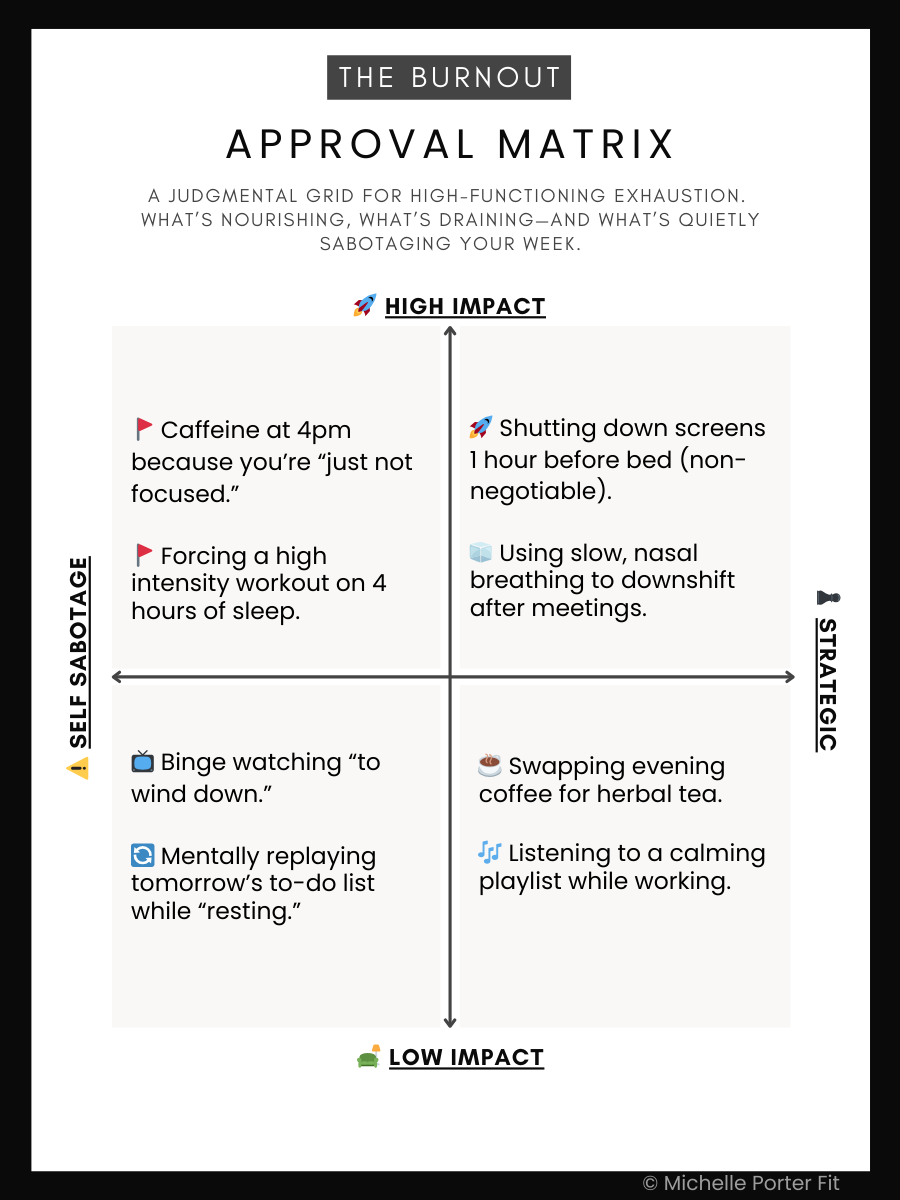
Edition No. 07 “Tired But Wired” | August 12, 2025
💡 What That Means for You: If your body is exhausted but your brain feels on edge, the issue isn’t just physical—it’s neurological. You don’t need more tiredness, you need less alertness before bed.
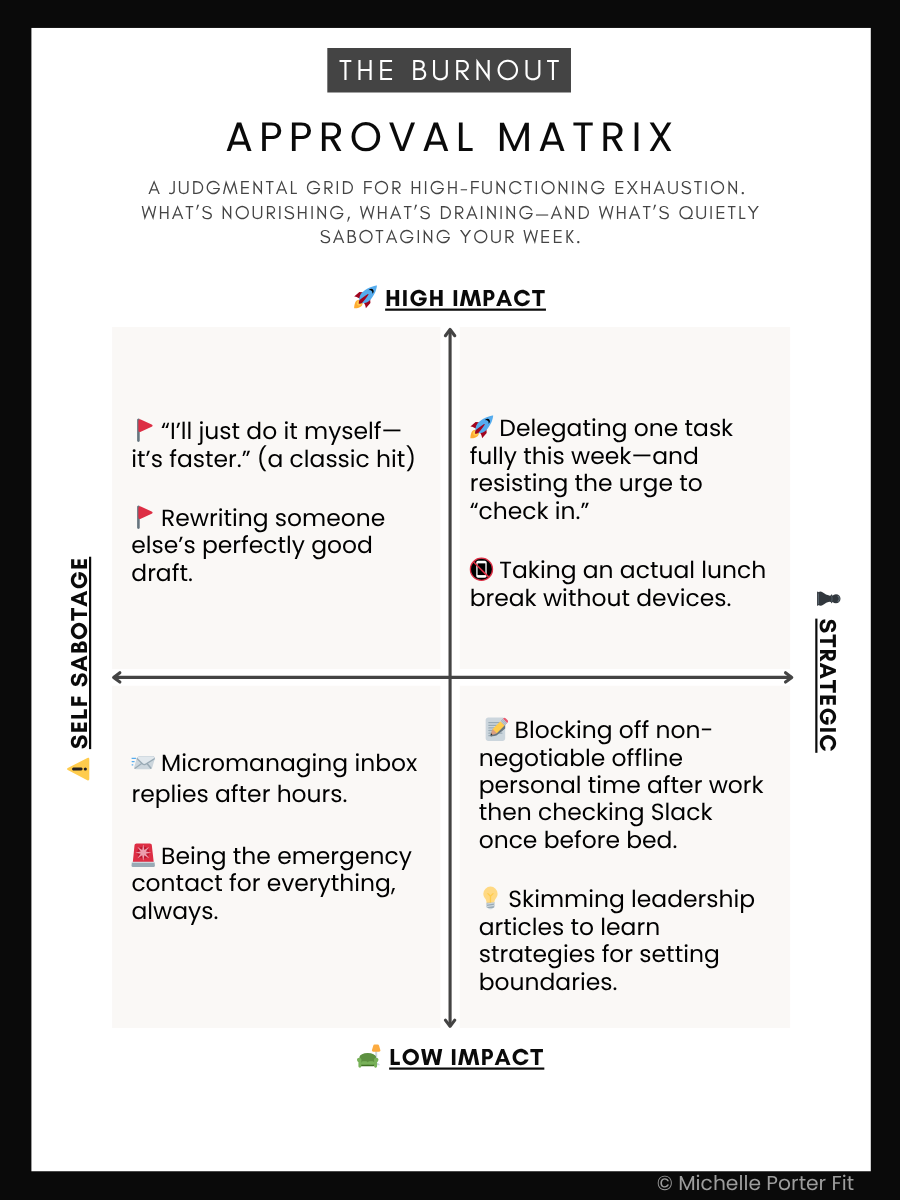
Edition No. 06 “The High-Performer’s Double Bind” | August 5, 2025
✅ Try This: Use the phrase: “Here’s what I need right now.” in one conversation this week. Practice it—even if it’s just asking for 10 minutes of silence after a meeting.
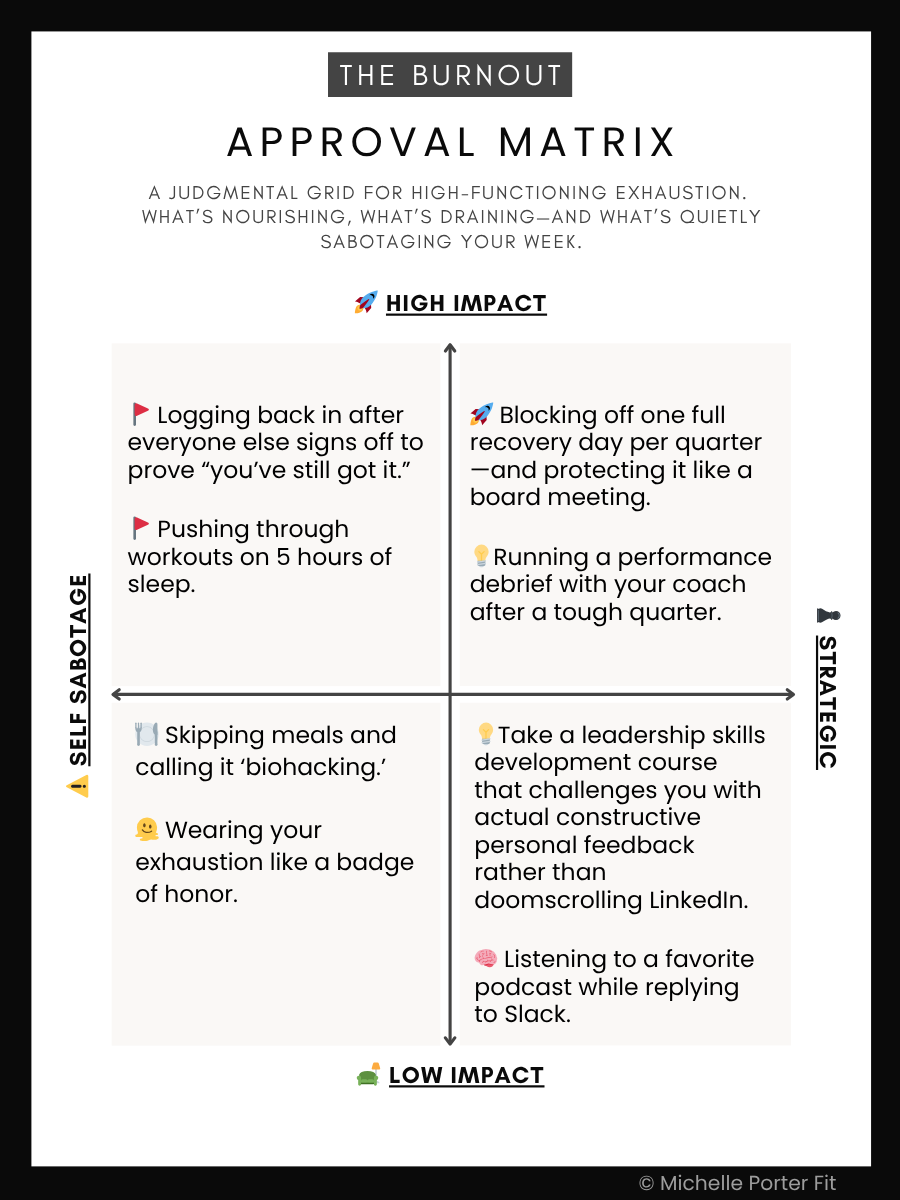
Edition No. 05 “Wellness ≠ Weakness” | July 29, 2025
✅ Try This: This week, ask one direct report: “What would make this team feel more sustainable?” Then listen without defending or problem-solving.