What It Feels Like When Your Brain Comes Back Online: Life After Chronic Stress
The power of having a clear mind again.
There is a specific moment that high performers describe after recovering from chronic stress or burnout. It doesn't arrive dramatically. It arrives quietly, often mid-morning on an ordinary Tuesday.
You're working through a problem and you just... solve it. Cleanly. Without the usual internal friction.
Without staring at the same paragraph for twenty minutes. Without the background noise of all of the weight of all of the stressors you’ve been carrying. Without that low-grade sense that your brain is running through wet concrete.
And for a second, you stop and think: when did thinking get this easy again?
You forgot what your brain actually felt like. You didn't realize how foggy you were until the fog lifted. That's how insidious chronic stress is… and that's how remarkable the recovery is. The mental clarity after chronic stress isn’t your imagination, it’s a neurological event. Your prefrontal cortex ( the part of your brain responsible for decision-making, strategic thinking, creativity, and emotional regulation ) is coming back online after months or years of operating in a compromised state.
Here is the thing about chronic stress that most high achievers don't fully understand until they are on the other side of it: your brain adapting to the fog was a survival tactic. Your brain acclimated to your increasing stress loads by functioning not from your pre-frontal cortex. You were quite literally “out of your mind.” The inability to make decisions without agonizing, the creative flatness, the irritability that had no clear cause, the sense that you were working twice as hard for half the output is what your mind surrendered in order to adapt to the chronic levels of stress.
Your brain did it’s best under sustained cortisol load, with compromised architecture.
And when the load lifts? The architecture rebuilds. The clarity returns. And it is genuinely life-changing.
What Chronic Stress Actually Did to Your Brain
Before we talk about what mental clarity feels like when it returns, it helps to understand what it was up against.
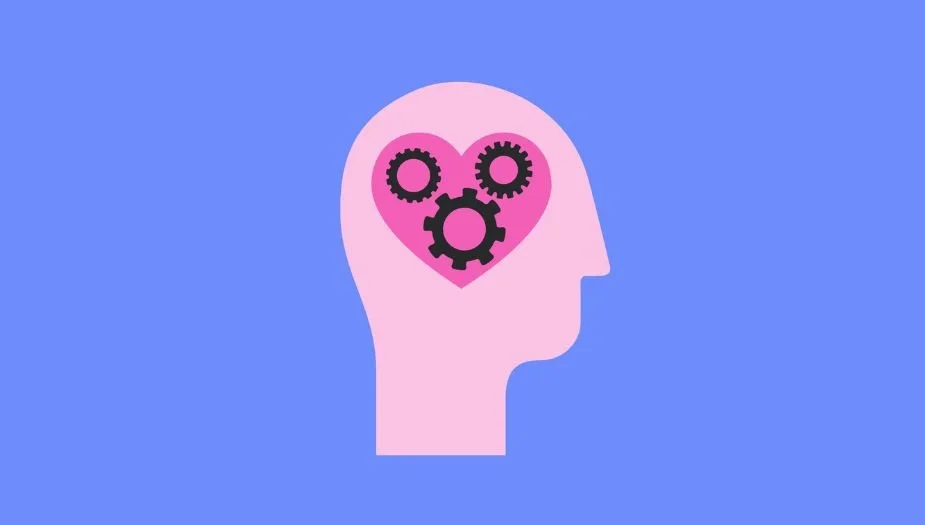
Chronic stress does not just make you feel bad. It structurally alters your brain, specifically in the regions most essential to the cognitive performance your career depends on. Research confirms that chronic stress profoundly affects the structure and function of the prefrontal cortex — the brain region critical for executive function and emotional regulation — leading to dendritic atrophy, spine loss, and alterations in neuronal connectivity.
In plain English: the physical structure of your most sophisticated cognitive center shrinks under sustained stress. The connections between neurons that enable sharp thinking, sound judgment, and creative problem-solving are literally reduced.
Inhibitory control, the ability to suppress automatic reactions in favor of deliberate choices, is metabolically the most expensive executive function the prefrontal cortex performs, and the first to erode when neural resources are depleted by chronic stress, poor sleep, or sustained uncertainty.
This is why the stressed, depleted version of you kept sending reactive emails you'd later regret. Why decisions that should have taken ten minutes took hours. Why you couldn't access the creative thinking that used to come naturally. It wasn't a motivation problem or a discipline problem. It was a structural one.
Cortisol creates a domino effect that hard-wires pathways between the hippocampus and amygdala in a way that creates a vicious cycle, producing a brain that becomes predisposed to a constant state of fight-or-flight. Your threat detection system was running the show and when your threat detection system is in charge, your strategic thinking is not.
The Good News: Your Brain Was Built to Recover
The good news: the changes chronic stress produces in the brain are largely reversible. The brain and body can recover from stress through neuroplasticity: the ability of neural communication pathways to reform.
However, the reversibility of these changes depends on the type and duration of the stress.
Research examining the plasticity of resting state brain networks found that individuals recovering from chronic stress displayed a normalization of activation-deactivation patterns in key brain networks. In other words, functional recovery brought their neural architecture closer to that of individuals who had not experienced chronic stress.
That is the science behind the Tuesday morning moment described at the opening of this article. The prefrontal cortex is rebuilding. The stress-hardwired pathways are softening. The brain is coming back. Once the sustained stress load lifts, your brain finally has the capacity to access motivation and clarity again. The dam breaks. The flood clears. And what's left, when the nervous system settles, is a mind that can actually do what it was built to do.
What Mental Clarity Actually Feels Like: Seven Changes You Will Notice
Mental clarity after chronic stress is not just the absence of fog. It is a positive shift across nearly every dimension of cognitive and emotional function. Here is what actually changes and why each one matters for your professional and personal life.
1. Decisions Stop Feeling Like Emergencies
Under chronic stress, decision-making is hijacked by the threat-detection system. Every choice, even low-stakes ones, gets filtered through an amygdala that has been on high alert for months. The result is decision paralysis, endless second-guessing, and the exhausting sensation that every option carries hidden danger.
When clarity returns, the prefrontal cortex reclaims the process. Enhanced decision-making is one of the primary markers of mental clarity; clear minds can better weigh options, see outcomes logically, and confidently select the best path.
You will notice this most in the small decisions first. What to prioritize today. How to respond to an ambiguous email. Whether to push back in a meeting. These start to feel obvious rather than overwhelming. That is not confidence returning, that is your executive function returning. The confidence follows.
2. Your Creativity Comes Back Online
Chronic stress and creativity are fundamentally incompatible. The prefrontal cortex — the brain's center for planning and reflection — needs periods of calm to function well. When we step out of constant reaction mode, the brain restores balance between focus and emotion. That balance is where creativity lives.
The high performer in burnout is not uncreative. They are cognitively overloaded. The brain's default mode network — the system that generates insight, makes unexpected connections, and produces the kind of thinking that actually moves problems forward is suppressed under sustained stress load. Recovery restores it.
Researchers have shown that a focused, clear state of mind boosts creative problem-solving abilities, making it easier to find novel ideas and insights.
You will notice this when solutions start arriving that weren't available before. When you find yourself in a meeting actually generating ideas rather than just managing reactions. When the work starts feeling interesting again rather than just obligatory.
3. Your Emotional Responses Become Proportional Again
One of the most disorienting features of chronic stress is emotional dysregulation: the experience of having responses that don't match the situation. Snapping at someone for something minor. Feeling disproportionate dread about a routine task. Crying in the car for reasons you can't fully articulate.
This is a prefrontal cortex that has lost the capacity to regulate the amygdala's output. The emotional brake system is worn down. Every trigger hits harder than it should. When clarity returns, the brake system is restored.
Mental clarity helps regulate negative emotions like anxiety, stress, overwhelm and contributes to greater resilience and improved overall mental health.
You will notice this when you move through a difficult conversation without the emotional hangover that used to follow. When something frustrating happens and you can actually process it in proportion. When Sunday evening stops feeling like a threat.
4. Your Memory Stops Feeling Like Swiss Cheese
Chronic stress is acutely damaging to memory specifically the hippocampus, the brain structure most responsible for encoding and retrieving experiences. Sustained cortisol exposure reduces hippocampal volume and impairs the brain's ability to consolidate information.
The practical result: you walk into rooms and forget why you came. You lose the thread of conversations mid-sentence. You complete tasks and have no memory of doing them. You read the same paragraph four times and absorb nothing.
Mental clarity produces better memory and recall — information becomes easier to remember and retrieve on the spot. When the cortisol load reduces and the hippocampus begins recovering, information sticks again. Reading feels productive rather than futile. Conversations leave traces. The sense of moving through life as a participant rather than an observer returns.
5. Other People Stop Being Exhausting
Chronic stress is profoundly socially depleting. The cognitive resources required to navigate other people — to read a room, calibrate a response, sustain attention in a conversation, manage interpersonal dynamics — are exactly the resources that stress depletes first.
The result: social interactions that should be energizing become draining. Relationships feel like obligations. Even people you love start feeling like demands you don't have the capacity to meet.
A clear and calm state enhances empathy, communication, and emotional intelligence, improving interactions significantly. When cognitive resources are restored, so is the social capacity that stress eroded. You start being genuinely present in conversations again. Other people stop feeling like a performance you have to put on and start feeling like: people.
This one surprises most high performers. They assumed the social withdrawal was just their personality. It was stress.
6. Your Body Sends Different Signals
Mental clarity after chronic stress is not purely psychological. The nervous system downregulation that produces cognitive clarity also produces physical changes that are unmistakable.
Sleep shifts from shallow and disrupted to genuinely restorative. The chronic tension in your neck, jaw, and shoulders that you had stopped noticing because it had been there so long begins to release. The immune system, suppressed by sustained cortisol, starts functioning properly again. The digestive issues that tracked so reliably with your stress cycle begin to resolve.
Your body stops running the fight-or-flight operating system as a default. The physical relief of that shift is — for most people who experience it — one of the most powerful signals that something fundamental has changed.
7. The Future Starts to Feel Real Again
This is the one that is hardest to articulate but most often cited by people recovering from chronic stress and burnout: the return of a felt sense of future.
Under sustained stress, the brain's threat-detection system keeps attention locked in the immediate. The future becomes abstract, threatening, or simply inaccessible. Planning feels pointless. Goals feel hollow. The version of yourself that wanted things — that had ambitions and projects and a sense of direction — feels like someone you used to know.
When clarity returns, the future becomes tangible again. Goals stop being pressure and start being orientation. The things you deferred — the project, the conversation, the decision — start calling again. Not as obligations. As possibilities.
This is not motivation returning. That is your prefrontal cortex coming back online. And when it does, the ambition that chronic stress buried is almost always still there, waiting.
How to Accelerate and Protect the Return of Clarity
Mental clarity does not always arrive on its own timeline without input. There are evidence-based practices that actively accelerate the recovery of cognitive function after chronic stress and protect it once restored.
Sleep is the non-negotiable foundation. The brain's primary mechanism for clearing the neurological debris of chronic stress is sleep — specifically slow-wave and REM sleep, during which the glymphatic system clears waste products from brain tissue and the prefrontal cortex performs critical consolidation work. Nothing else substitutes for this. Not caffeine, not exercise, not mindfulness. Sleep first. Everything else second.
Movement is necessary — it’s not optional. Exercise directly stimulates the production of BDNF ( brain-derived neurotrophic factor ) the protein responsible for neuronal growth and the repair of stress-damaged brain architecture. Research confirms that exercise is one of the most effective non-pharmacological interventions for stress-induced cognitive impairment. You are not working out to look better. You are rebuilding the physical structure of your thinking.
Reduce the cortisol inputs, not just the symptoms. Mental clarity doesn't return while the conditions producing the chronic stress remain fully intact. This is where the structural work matters: the values audit, the boundary-setting, the workload restructuring, the environmental redesign. Recovery without addressing the source is maintenance, not healing.
Protect stillness as a cognitive resource. Short breaks, mindful pauses, and even a few minutes of quiet can do more for mental health than another burst of effort, because the prefrontal cortex needs periods of calm to restore balance between focus and emotion. Stillness is not unproductive. It is when the brain does its most important maintenance work.
Reconnect with what generates flow. Research notes that having a meaningful project to focus your brainpower on strengthens overall mental health, provides direction and purpose, and builds resilience against stress and emotional struggles. Clarity accelerates when it has somewhere to go. Reconnecting with your Zone of Genius ( the work that draws on your genuine strengths and energizes rather than depletes ) during recovery is part of the mechanism.
Final Thoughts
It was all real. The brain fog. The friction. The version of yourself that couldn't think straight, couldn't make high quality decisions without second-guessing, couldn't remember what it felt like to be genuinely engaged in your own life, that was real too.
The clear mind was never gone forever. It was buried under chronic activation, accumulated stress, inadequate recovery, emotional overload, and a culture that rewards exhaustion while calling it ambition. But your brain remembers how to heal.
And when the fog lifts, even briefly, most people realize something profound: Your brain is not broken. It was responding rationally to irrational conditions: sustained stress without adequate recovery, demands that exceeded your system's capacity to process them, a life that had been quietly stripped of the things that made effort feel meaningful.
The clarity that returns after chronic stress is not a return to baseline. For most people, it is a return to a self they had forgotten existed: sharper, more emotionally available, more creative, more capable of genuine presence than the depleted version of themselves had been in years.
That version of you has been there the whole time waiting for the conditions that would let it surface.
Build those conditions. Protect them.
Article References
The sources cited in the article:
Mel Robbins Podcast. “Episode 255: If You Struggle With Stress & Anxiety, This Will Change Your Life.” Mel Robbins Podcast - Episode 255
ScienceDirect. “Chronic Stress-Induced Neuroplasticity in the Prefrontal Cortex.” ScienceDirect - Chronic Stress-Induced Neuroplasticity
Arizona State University News (ASU). “How Stress Affects the Brain.” ASU - How Stress Affects the Brain
MindLab Neuroscience (MLN). “Prefrontal Cortex Executive Function Under Stress.” MLN - Prefrontal Cortex Executive Function Under Stress
Psychology Today (PT). “Chronic Stress Can Damage Brain Structure and Connectivity.” PT - Chronic Stress Can Damage Brain Structure
PubMed. “Plasticity of Resting State Brain Networks in Recovery from Stress.” PubMed - Plasticity of Resting State Brain Networks