You’ve Been Told to Watch Your Cholesterol: Do You Know What That Actually Means?
You've probably been told cholesterol involves something called LDL and HDL. Beyond that, most people are working with half the information they need. Here's the full picture.
Let's get something out of the way immediately: cholesterol is not the villain it spent decades being portrayed as. Your body makes cholesterol on purpose. It is essential for building cell membranes, producing hormones — including estrogen, testosterone, and cortisol — synthesizing vitamin D, and creating the bile acids that allow you to digest fat. Without cholesterol, you cannot function. The problem is not cholesterol.
The problem is specific types of cholesterol, in specific quantities, operating in a specific physiological environment and what happens when that environment is chronically stressed, inflamed, and poorly managed.
High-achieving professionals between 35 and 60 are operating in an environment of chronic stress, demanding schedules, competitive pressure, and the hormonal and metabolic shifts of midlife: a combination that meaningfully influences cholesterol in ways most people never connect until they get a lab result that surprises them.
This article is the foundation you need to understand what cholesterol actually is, what your numbers mean, why high performers are specifically at risk even when they think they're eating well, what happens when it's ignored, and what to do about it.
What Cholesterol Actually Is
Cholesterol is a waxy, fat-like substance produced primarily by your liver and about 75 to 80% of circulating cholesterol comes from your own body's synthesis, not from food. The remaining 20 to 25% comes from dietary sources. This ratio is important to understand because it means that diet alone does not fully explain or control your cholesterol levels, and some people can do everything right nutritionally and still have elevated numbers driven by genetics or other factors.
Because cholesterol is a fat and fat cannot dissolve in blood, which is water-based, cholesterol is packaged into carriers called lipoproteins for transport through the bloodstream. Lipoproteins are essentially microscopic transport vehicles, protein-wrapped spheres carrying cholesterol and other fats to and from cells throughout the body. Different types of lipoproteins are classified by their density, and density is what gives rise to the HDL/LDL distinction most people are familiar with.
The Numbers: What a Lipid Panel Actually Tells You
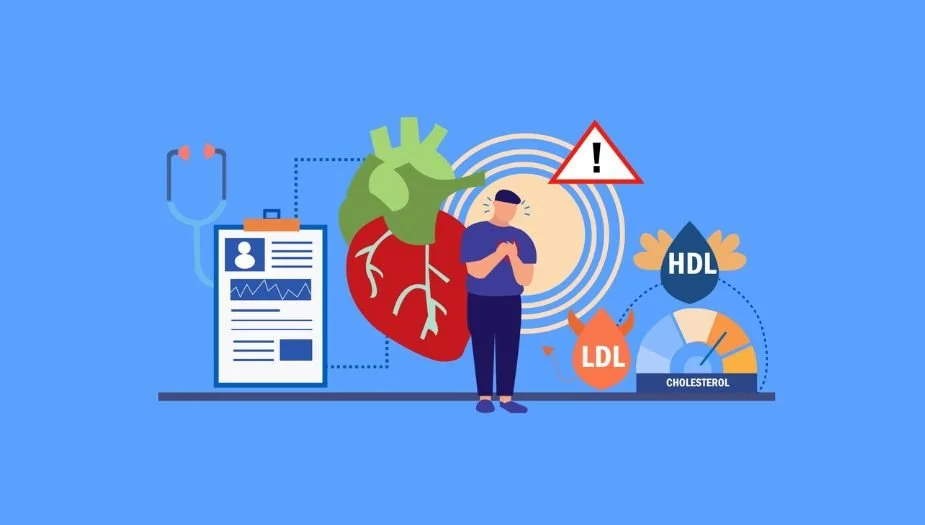
When your doctor orders a cholesterol test, called a lipid panel or lipid profile, they're measuring four things. Understanding what each means is the first step to owning your cardiovascular health rather than just nodding at a number.
LDL Cholesterol (low-density lipoprotein): is the one most commonly labeled "bad." This is not entirely wrong but is meaningfully oversimplified.
LDL's job is to carry cholesterol from the liver to cells throughout the body that need it.
The problem arises when LDL is present in excess: when your body has too much LDL cholesterol, it can build up on the walls of your blood vessels, forming plaque that can cause heart disease and stroke.
The optimal LDL target is below 100 mg/dL for most adults. Above 160 mg/dL is considered high. If you have had a previous cardiovascular event, your cardiologist may target LDL below 70 mg/dL or even lower.
HDL Cholesterol (high-density lipoprotein): is labeled "good" for legitimate reasons.
HDL carries LDL cholesterol away from the arteries and back to the liver, where the LDL is broken down and passed from the body. Higher HDL is protective against cardiovascular disease.
The target is generally above 60 mg/dL, with levels below 40 mg/dL in men and below 50 mg/dL in women considered a risk factor.
One nuance worth knowing: research now suggests that extremely high HDL ( above 80 to 90 mg/dL ) is not necessarily more protective and may in some cases be associated with increased risk. More HDL is better up to a point; beyond that point, the quality and function of HDL particles matters more than the raw number.
Triglycerides: are not technically cholesterol but are measured alongside it because they are closely related to cardiovascular risk.
Triglycerides are the primary form in which fat is stored in the body and they represent stored calories from carbohydrates, fats, and alcohol that haven't been used for energy.
A high triglyceride level combined with high LDL cholesterol or low HDL cholesterol is linked with fatty buildups within the artery walls, which increases the risk of heart attack and stroke.
Target triglycerides below 150 mg/dL. Levels between 150 and 199 are borderline high; above 200 is high and warrants attention.
Total Cholesterol is the aggregate number most people recognize.
Below 200 mg/dL is desirable; 200 to 239 is borderline high; 240 and above is high. However — and this is important — total cholesterol alone is a blunt instrument.
A person with a total cholesterol of 220 but high HDL and low LDL has a very different cardiovascular risk profile than someone with the same total cholesterol but low HDL and high LDL.
Always look at the full panel, not just the headline number.
Non-HDL Cholesterol: your total cholesterol minus your HDL. This is increasingly regarded by cardiologists as a more informative risk marker than LDL alone.
It captures all the cholesterol-carrying particles that can contribute to plaque formation, not just LDL.
Some researchers consider it a better predictor of cardiovascular events than LDL in isolation.
Your non-HDL should ideally be below 130 mg/dL.
What High Cholesterol Actually Does to Your Body: The Mechanism
Understanding the mechanism makes the risk concrete and the intervention logic obvious.
The process begins when LDL particles infiltrate the inner walls of arteries — the endothelium — and become oxidized. The immune system detects oxidized LDL as foreign and mounts an inflammatory response, recruiting macrophages to the arterial wall to engulf the LDL particles. These macrophages, engorged with cholesterol, become foam cells: the hallmark of early plaque formation. Over time, smooth muscle cells from the arterial wall migrate to the area and lay down structural protein, creating a fibrous cap over the growing fatty deposit. This calcified, hardened buildup is called atherosclerotic plaque.
Atherosclerosis can cause narrowed blood vessels, increasing the risk of heart disease and stroke. When cholesterol plaque is in the heart arteries, it's called coronary artery disease; in the neck arteries, carotid artery disease; in the leg and abdominal arteries, peripheral artery disease.
The most immediately dangerous moment in this process is not the gradual narrowing: it is plaque rupture. If a cholesterol-rich plaque ruptures, it can form a blood clot that blocks the artery, leading to a heart attack. This blockage cuts off the oxygen supply to the heart muscle, causing severe damage or death to the tissue. The same mechanism in an artery supplying the brain produces a stroke.
This is why high cholesterol is called a silent condition. High cholesterol has no symptoms. The only way to know if you have high cholesterol levels is to have a simple blood test. You feel nothing while plaque accumulates over years and decades. The first symptom is sometimes a heart attack. This is not a scare tactic, it’s the mechanism, and it’s why regular screening matters and why early intervention beats late intervention every time.
The broader consequence landscape beyond heart attack and stroke includes coronary artery disease producing chronic chest pain (angina), peripheral artery disease causing leg pain and circulation problems, kidney disease from narrowed renal arteries, and erectile dysfunction from compromised blood flow in smaller vessels, all downstream effects of the same plaque accumulation process driven by chronically elevated LDL.
The Chronic Stress Connection: What Nobody Tells High Performers
Research has consistently shown that stress leads to increased cortisol levels, which negatively affect lipid metabolism. Chronic elevation of cortisol disrupts the body's natural balance, resulting in an atherogenic lipid profile marked by hypertriglyceridemia, and lower HDL cholesterol levels.
This means the high-performing Portfolio Manager working 60-hour weeks, the VP under sustained pressure, the physician carrying chronic emotional weight — is running a cholesterol risk that compounds with their occupational stress load independently of what they're eating.
The mechanisms are direct and multiple. Cortisol signals the liver to produce more cholesterol as part of the fight-or-flight energy mobilization response: LDL rises because the body is preparing to deliver energy to tissues. When under stress, the liver increases cholesterol production, leading to an increase in blood lipid levels. Cortisol affects the way the body handles dietary fats, causing imbalances in HDL and LDL levels. Meanwhile, adrenaline released alongside cortisol triggers the release of triglycerides from fat cells into the bloodstream.
The behavioral dimension compounds the biological one. Chronic stress can lead to increased cholesterol levels related cardiovascular problems. Stress can also damage the endothelial layer of arteries, a single layer of cells that lines the inside walls, contributing to atherosclerosis and heart attacks. Damaged endothelium is more permeable to LDL infiltration, accelerating the plaque formation process.
The practical implication: a high performer under significant chronic stress who gets a cholesterol panel showing elevated LDL and triglycerides with depressed HDL is not just dealing with a dietary problem. They are dealing with a stress physiology problem that is expressing itself on their lipid panel. Treating only the diet without addressing the chronic stress load is treating the symptom while feeding the cause.
Can You Have High Cholesterol Even If You're Eating Well? Yes. Here's Why.
Several factors can elevate cholesterol independently of diet.
Genetics is the most significant. Familial hypercholesterolemia is an inherited condition affecting approximately 1 in 250 people, in which genetic variants impair the liver's ability to clear LDL from the blood. People with this condition can have LDL of 190 mg/dL or higher regardless of diet and exercise, and without treatment, face substantially elevated cardiovascular risk beginning in early adulthood. Even without outright familial hypercholesterolemia, genetic factors significantly influence where your cholesterol baseline sits.
Chronic stress, as established above, directly elevates LDL and triglycerides and suppresses HDL through cortisol-mediated mechanisms. The high performer eating a clean diet but operating under sustained occupational stress may well have elevated cholesterol driven primarily by stress physiology rather than nutrition.
Excess calories from any macronutrient — including from healthy foods — drives triglyceride production. When you consume more energy than your body requires, the excess is converted to triglycerides and stored as fat. This means overeating olive oil, avocados, nuts, salmon, and other unimpeachably healthy foods can still elevate triglycerides if total caloric intake consistently exceeds energy expenditure. The food quality matters and the total quantity matters independently. Being "healthy" in your food choices does not grant caloric immunity.
Refined carbohydrates and added sugars have a direct and underappreciated effect on cholesterol: specifically on triglycerides. Added sugar consumed beyond energy needs is converted to triglycerides in the liver through de novo lipogenesis. The person who eats excellent protein, vegetables, and healthy fats but also drinks sweetened coffee drinks, eats protein bars with 20 grams of added sugar, and snacks on processed carbohydrates is adding meaningful triglyceride-elevating inputs that compound their lipid risk.
Inadequate physical activity blunts HDL production and impairs triglyceride clearance. The high performer who eats well but sits for ten hours a day will have a meaningfully different lipid profile from their counterpart with equivalent nutrition and regular activity.
Thyroid dysfunction directly suppresses the liver's ability to clear LDL from the bloodstream. Hypothyroidism, even subclinical hypothyroidism, can produce significant LDL elevation that is entirely unresponsive to dietary intervention. If your cholesterol is persistently elevated despite genuinely good lifestyle management, thyroid testing is warranted.
Age and hormonal shifts matter significantly. Estrogen has a protective effect on cholesterol metabolism: it lowers LDL and raises HDL. As estrogen declines in perimenopause and menopause, women often see significant adverse shifts in their lipid panel that have nothing to do with their diet. Men's gradual testosterone decline in the 40s and 50s similarly affects body composition and lipid metabolism. This is normal biology, not failure, but it requires acknowledgment and management.
The honest answer to: "Can I have high cholesterol while eating healthy foods?" is: absolutely yes, and multiple independent mechanisms can drive it. This is not a reason to resign yourself to pharmaceutical intervention without exploring the full picture. It is a reason to think systemically rather than fixating on a single dietary variable.
What to Do About It: The Full Intervention Stack
The evidence on managing cholesterol without medication, and when medication becomes appropriate, is clear enough to provide a practical framework.
Step One: Know Your Numbers Completely
The American Heart Association recommends that all adults 20 or older should have their cholesterol checked every four to six years as long as their risk remains low. After age 40, your healthcare professional will also want to use an equation to calculate your 10-year risk of having a heart attack or stroke.
If you haven't had a lipid panel recently, get one. If you have had one and only know your total cholesterol, get the full breakdown: LDL, HDL, triglycerides, and ideally non-HDL cholesterol. If your LDL is persistently elevated, ask your doctor about LDL particle number (LDL-P) or apolipoprotein B testing, which are more granular predictors of cardiovascular risk than standard LDL alone.
Step Two: Dietary Intervention — The Levers That Actually Move Numbers
Diet moves cholesterol, but different dietary factors affect different markers in different directions. Understanding which levers do what prevents the common mistake of making general "healthy eating" improvements without targeting the specific problem.
Saturated fat is the primary dietary driver of LDL. It works by downregulating the liver's LDL receptors, reducing the liver's ability to clear LDL from the blood. Decreasing consumption of saturated fats to less than 7% of total daily calorie intake can reduce LDL cholesterol by 8% to 10%. The primary sources to reduce are fatty red meat, full-fat dairy, butter, palm oil, and coconut oil. This does not mean eliminating these foods, it means being strategic about frequency and portion.
Trans fats are worse than saturated fats for cholesterol, they simultaneously raise LDL and lower HDL. The FDA banned partially hydrogenated oils from the U.S. food supply in 2020, but they can still appear in trace amounts in fried foods and some processed products. Practically speaking, avoiding fried fast food and processed baked goods eliminates most remaining trans fat exposure.
Soluble fiber directly lowers LDL by forming a gel in the digestive tract that binds cholesterol and bile acids, reducing their absorption. The more soluble fiber you eat, the more cholesterol your body excretes rather than recirculates. Oats, barley, beans, lentils, apples, citrus, and psyllium husk are the highest-impact sources. Targeting 10 to 25 grams of soluble fiber daily produces measurable LDL reduction.
Monounsaturated and polyunsaturated fats like olive oil, avocados, nuts, fatty fish, and seeds actively improve the lipid profile by replacing saturated fat in the diet, enhancing the liver's LDL clearance, and in the case of omega-3 fatty acids, directly lowering triglycerides. Polyunsaturated fat actually reduces LDL cholesterol by encouraging the liver to remove LDL particles from the bloodstream more effectively.
Added sugar and refined carbohydrates are the primary dietary drivers of elevated triglycerides. Reducing added sugar intake which for most Americans means significantly cutting sweetened beverages, flavored coffee drinks, and processed snacks is the highest-leverage dietary intervention for high triglycerides and low HDL.
Plant sterols and stanols are compounds found naturally in small quantities in vegetables, nuts, legumes, and whole grains. They structurally resemble cholesterol and compete with it for absorption in the gut, reducing LDL by 6 to 12% when consumed consistently at 2 to 3 grams per day.
Step Three: Exercise — Specifically What Moves What
Regular exercise can help raise HDL cholesterol, the "good" cholesterol. Working up to at least 30 minutes of exercise five days a week, or vigorous aerobic activity for at least 25 minutes three days a week, is recommended.
Aerobic exercise is particularly effective at raising HDL and lowering triglycerides. Strength training provides complementary benefits for body composition and insulin sensitivity. The combination of both produces the most favorable lipid outcomes.
One important nuance to point out: exercise intensity matters, but excessive intensity under conditions of chronic stress can temporarily elevate cortisol and blunt the lipid benefit. For people carrying significant chronic stress loads, consistent moderate-intensity exercise — zone 2 cardio, steady-state strength work — is more reliably beneficial for lipid management than white-knuckle HIIT layered on top of an already elevated cortisol baseline.
Step Four: Manage the Stress Load
For high performers, this is serious cardiovascular health intervention. Managing stress through techniques such as exercise, meditation, and therapy can improve cardiovascular health and promote healthier eating habits, which may help prevent cholesterol problems.
Sleep quality, active recovery, deliberate parasympathetic restoration, the practices that lower chronic cortisol, directly improve lipid profiles by removing the primary hormonal driver of LDL elevation and triglyceride production. An executive who gets their saturated fat under control but continues sleeping five hours and running chronically hot on cortisol has addressed one input while leaving the larger one unchecked.
Step Five: Medication — When It's the Right Tool
Let's be direct about this: there is no shame in needing medication, it doesn’t mean you failed.
For people with familial hypercholesterolemia, for people whose LDL remains elevated after genuine sustained lifestyle intervention, for people with existing cardiovascular disease or multiple cardiovascular risk factors, and for people whose 10-year cardiovascular risk calculation puts them above evidence-based treatment thresholds: statins are an appropriate, evidence-backed, and often necessary intervention.
Statins have decades of clinical trial data demonstrating meaningful reduction in cardiovascular events and mortality. They work by inhibiting the liver's cholesterol synthesis pathway, triggering upregulation of LDL receptors and more aggressive LDL clearance from the blood. Sometimes a low-dose statin or other drug combined with lifestyle changes can provide synergy, perhaps letting you avoid high doses or multiple medications.
Lifestyle intervention should always be the first line and should continue alongside any medication. But for people with genuinely high cardiovascular risk, refusing medication while waiting for lifestyle changes to achieve sufficient LDL reduction is a form of optimism that the evidence does not support.
The decision should involve your physician, a complete cardiovascular risk assessment. Rather than just cholesterol numbers other data like: blood pressure, smoking status, diabetes status, family history, and age give an honest accounting of how committed and sustainable your lifestyle changes are.
The Lab Values You Actually Want to Know
For your stressed out high-achievers specifically, here are the target ranges worth carrying into your next physical:
LDL: below 100 mg/dL optimal; below 70 mg/dL if you have any cardiovascular risk factors.
HDL: above 60 mg/dL optimal for both men and women.
Triglycerides: below 150 mg/dL.
Total cholesterol: below 200 mg/dL.
Non-HDL cholesterol: below 130 mg/dL.
Beyond the standard lipid panel, two additional tests are worth discussing with your physician: a high-sensitivity C-reactive protein (hs-CRP) test, which measures chronic systemic inflammation and provides independent cardiovascular risk information; and a coronary artery calcium (CAC) scan, which directly measures actual plaque calcification in the coronary arteries and can meaningfully refine your cardiovascular risk estimate beyond what blood markers alone can provide.
The AHA recommends cholesterol screening starting at age 20, repeated every four to six years if risk is low, but for your demographic, with the stress loads, hormonal shifts, and lifestyle factors in play, annual or biennial lipid panels from age 40 onward are a reasonable standard.
Final Thoughts
High cholesterol does not announce itself. It builds silently over years, narrows arteries you cannot feel narrowing, and announces itself, at worst, as a heart attack or stroke. At best, it announces itself as a number on a lab report that catches the problem early enough to fix it.
Your cholesterol picture is shaped by genetics, diet, exercise, body composition, hormonal status, thyroid function, and chronic stress and cortisol load. None of these variables operates in isolation, which means that addressing only one while ignoring the others is incomplete strategy.
The high performer's instinct is to optimize everything. Apply that instinct here. Get the panel. Know the numbers. Understand what's driving them. Address the full set of inputs: dietary, physical, hormonal, and stress-related; rather than waiting for a single bad lab result to force the issue.
Your cardiovascular system is running 24 hours a day, silently bearing the load of the life you're living. It deserves the same strategic attention you give everything else.
Article References
The sources cited in the article:
CDC. “LDL and HDL Cholesterol and Triglycerides.” CDC - LDL and HDL Cholesterol and Triglycerides
American Heart Association (AHA). “HDL (Good), LDL (Bad), Cholesterol and Triglycerides.” AHA - Cholesterol and Triglycerides
WebMD. “Stress and High Cholesterol: Is There a Link?” WebMD - Stress and High Cholesterol: Is There a Link?
Yale Medicine (YM). “9 Things You May Not Know About Cholesterol.” YM - 9 Things About Cholesterol
Mayo Health Clinic (MHC). “Top 5 Lifestyle Changes to Improve Your Cholesterol.” Mayo - Lifestyle Changes to Improve Cholesterol