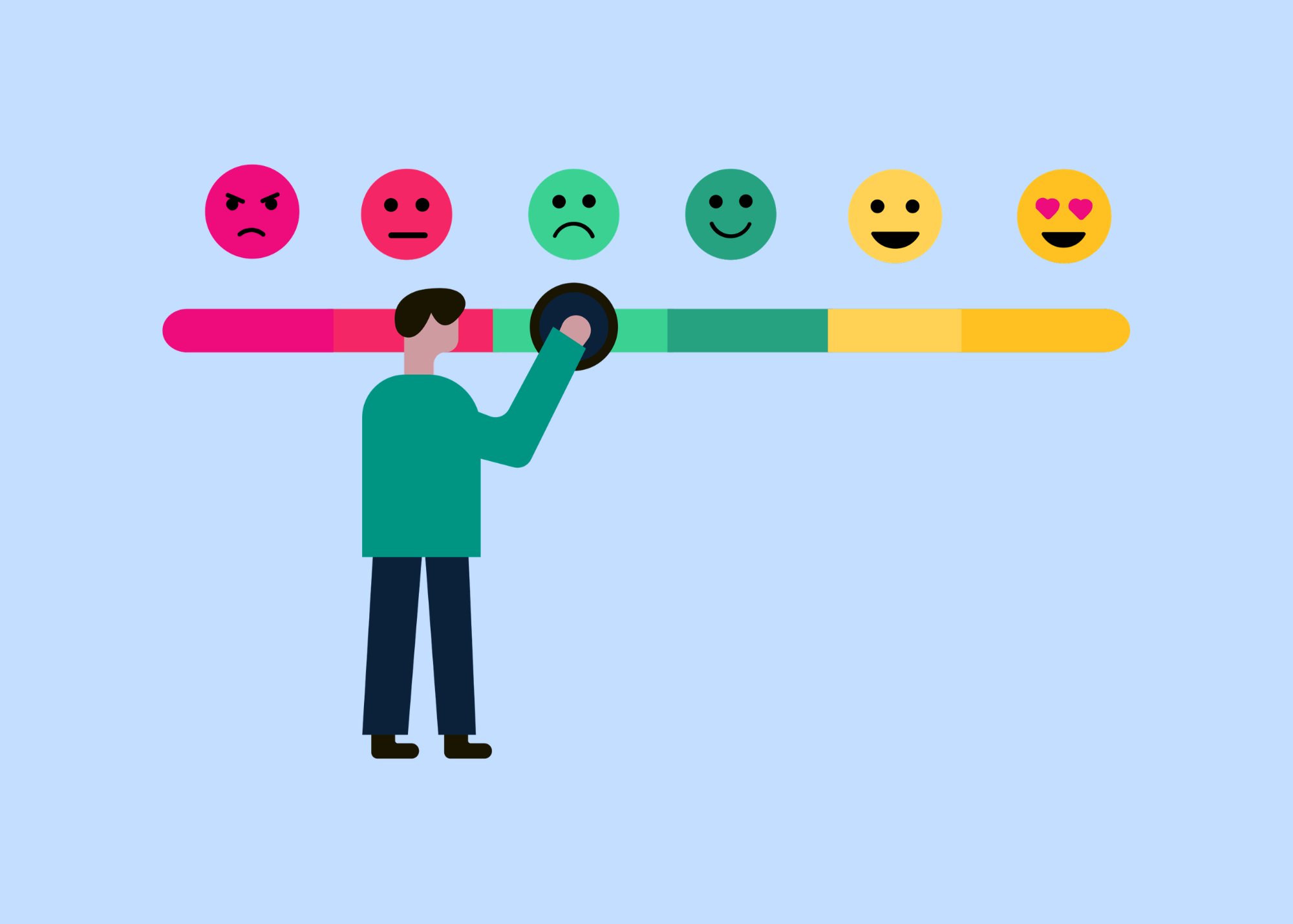
Someone Else’s Breakdown Does Not Have to Become Your Burnout
What to do when the people around you are spiraling and crashing out.
Let’s get one thing straight: someone else’s breakdown does not have to become your burnout.
Whether it’s your partner crying in the kitchen for the third night in a row, your manager rage-slacking at 11:42 PM, or your best friend emotionally unraveling on voice memos all weekend, it’s easy to get pulled into someone else’s storm—especially when you're wired for performance, responsibility, and fixing problems (hi, fellow high achiever).
But just because you care doesn’t mean you’re on cleanup duty.
When the people closest to us—personally or professionally—are spiraling, having a breakdown, or deep in burnout, it is possible to offer safety, empathy, and space without turning yourself into their emotional janitor. In fact, it’s necessary. Because the moment you start over-functioning for someone else, you under-function for yourself.
This article is your field guide for holding compassion and boundaries at the same time—offering lifelines, not lessons—and staying grounded while others crash out.
1. Understand This: Chaos Is Contagious
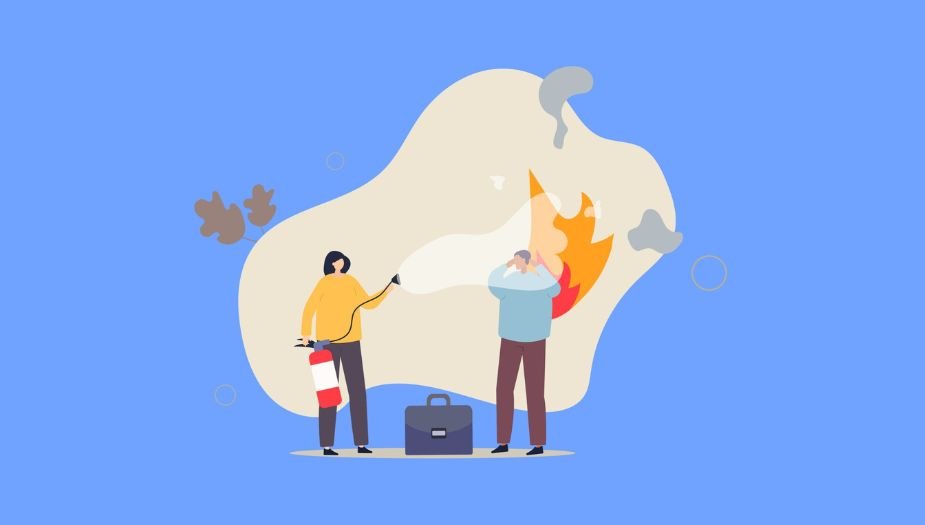
Here’s the truth no one wants to say out loud: proximity to someone else’s emotional collapse can feel like secondhand smoke—you weren’t the one burning out, but now your lungs hurt.
Burnout, chronic stress, and emotional dysregulation can hijack social systems. Families, teams, even friend groups. Emotional dysregulation doesn’t happen in a vacuum—it seeks company. Misery loves it. So when someone’s spiraling, they often (unintentionally) pull others in through guilt, projection, or outright panic.
You need to know when to step in—and when to step back.
Quick Gut Check:
Are you walking on eggshells trying to avoid triggering them?
Are you rearranging your schedule, energy, or goals to manage their emotions?
Are you thinking more about their crisis than your own needs?
If yes, you’re probably absorbing what’s not yours.
And here’s the part ambitious, loyal, high-achieving adults struggle with: proximity is a choice. You are not tethered to someone else’s chaos simply because you love them, work for them, or have history with them. Yes, compassion matters. Commitment matters. But so does exposure.
If someone’s storm is constant—months or years of volatility, rage, crisis cycles, emotional unpredictability—you have to zoom out and ask a harder question: Is this a temporary breakdown… or is this the climate? There is a difference between supporting someone through a season and living inside their permanent weather pattern.
If their nervous system is chronically dysregulated and they refuse responsibility for stabilizing it, you may need more than boundaries. You may need distance.
That can look like:
Transferring teams.
Updating your résumé.
Sleeping in a separate room for a while.
Reducing emotional access.
Creating parallel lives inside the same household.
Ending the relationship entirely.
This isn’t cold. It’s honest. You cannot build a regulated life inside an unrelenting storm.
2. Offer Lifelines, Not Lessons
You’re not their therapist. You’re not their HR rep. You’re not a self-help manual. And unless someone explicitly asked for coaching, your TED Talk on cortisol and cognitive distortion isn’t helping right now.
When someone is overwhelmed or emotionally crashing, their executive function is offline. They can’t take in “shoulds,” “you knows,” or “if I were you” wisdom. That comes later—after safety.
Think: anchor, not analyst. Lifeline, not lecture.
So, what’s a lifeline?
It signals presence — without offering your nervous system as collateral.
Instead of overly open-ended emotional availability, try:
“I can see this is heavy. I can listen for 15 minutes.”
“This sounds difficult. I can’t talk right now, but I have time later this afternoon.”
“I’m here with you. I’m not here to fix it.”
“You don’t have to solve this right now. Let’s just slow it down.”
“Do you want advice, quiet company, or to revisit this later?”
“I care about you. I also need to keep this conversation respectful.”
Notice what’s happening here:
Time boundaries.
Role clarity.
Emotional tone standards.
No rescuing.
You’re present. But you’re not dissolving.
3. Stay In Your Lane
Let’s be brutally honest: high achievers tend to overfunction. You want to do something, solve something, fix something. But when someone else is falling apart, overfunctioning becomes a form of control. It’s often more about soothing your discomfort than supporting their experience.
It’s NOT your job to:
Interpret their trauma.
Rewire their nervous system.
Become their therapist.
Pick up their slack.
Pause your life until they “get better.”
This is where internal boundaries matter. Instead of saying, “I have to fix this,” try:
“This is hard to watch, but it’s not my responsibility to solve.”
“They’re allowed to have their process. I’m allowed to protect my peace.”
“I can care deeply and still focus on what I need to do today.”
“Caring does not require absorbing. I can support without overextending.”
“I don’t need to set myself on fire to help them be comfortable.”
“If I’m depleted, I step back.”
And when it’s chronic:
“Kindness doesn’t mean sacrificing my mental and emotional health in their chaos.”
“My own health matters more than their continual, poorly managed crises.”
“If this continues, I will need to change my level of access.”
“My peace is a priority, not a reward for tolerating their storm.”
You can be empathetic without enmeshment.
And sometimes staying in your lane means recognizing when the road you’re on isn’t sustainable. High achievers often default to endurance: “I can handle it.” “It’s just a tough quarter.” “They’re just under pressure.” “It’ll pass.”
But if you’ve been saying “it’ll pass” for two years, that’s not resilience. That’s self-abandonment dressed up as grit.
There is a difference between:
Showing up during someone’s hard chapter (and)
Sacrificing your nervous system to live inside their unresolved trauma.
You are allowed to decide that the cost is too high.
4. Protect Your Mental and Emotional Load
You’ve got enough tabs open. You don’t need to keep someone else’s crisis running in the background while trying to meet your Q3 goals, pick up your kids, and remember to eat lunch.
Here’s how to stop carrying what isn’t yours:
Label the load.
Ask yourself:
What am I carrying right now that doesn’t belong to me?
Someone else’s anxiety?
Their to-do list?
Their avoidance of therapy?
Visualize a return.
If it helps, imagine physically handing it back: “This is yours. I trust you’ll figure out what to do with it.”
Use stress shields.
Stress is energy—and energy transfers. Before a difficult interaction, ground yourself:
A few deep, intentional breaths.
Physically plant your feet.
Set an internal mantra: “I am not absorbing this.”
Afterwards, do a quick stress rinse: Move your body, take a walk, drink water, vent to someone safe. You wouldn’t walk through mud and not wash your shoes. Don’t carry their residue.
5. Don’t Make It Personal
When someone lashes out, shuts down, or acts irrationally, it’s easy to think:
What did I do wrong?
Why are they treating me this way?
Why can’t they just get it together?
But here’s the deal: people in burnout aren’t usually rational, regulated, or fair. They’re operating from fight-flight-freeze—and you just happened to be nearby when the grenade went off.
Their breakdown is not your betrayal.
In fact, not taking it personally is one of the highest forms of emotional maturity you can practice. It keeps you from retaliating, from fixing, and from drowning in resentment.
Let them have their messy moment. You don’t need to match their energy.
6. When It Isn’t Your Problem
Let’s go there: sometimes you’re trying to support someone who doesn’t want help, refuses to take accountability, or consistently weaponizes their stress. Not everyone is in burnout recovery mode. Some are in burnout denial.
Here are red flags that signal it’s no longer your problem:
They’ve made you their emotional punching bag.
You’re walking away from every conversation feeling drained, resentful, or anxious.
You’ve offered support and clear boundaries—and they ignore both.
They expect you to abandon your needs to meet theirs.
That’s not stress—that’s manipulation masked as fragility.
When support turns into self-sacrifice, it’s time to reassess your role and reassessing your role may mean reassessing the container entirely. Not every chaotic dynamic can be boundary-managed.
Some environments are structurally unhealthy:
A workplace that rewards volatility and punishes regulation.
A partner who cycles through crisis and doesn’t change.
A family system built on guilt and emotional dependency.
In these cases, the work is not “how do I regulate better?”
The work is “why am I still here?”
Leaving a job.
Ending a relationship.
Creating significant space.
Designing a parallel emotional life.
Limiting access.
These are not failures. They are sometimes the most regulated choice available, especially for high-capacity professionals who default to fixing and staying. Sometimes the most mature boundary is departure.
How to Bow Out With Grace:
We’re removing over-explaining and guilt-softening.
Instead of emotionally cushioning everything, try:
“I care about you, but I’m noticing I’m getting overwhelmed, too. I’m stepping back from this conversation so I can stay grounded.”
“I’m not in a place to support this right now, I have my own stress I’m managing. You need to tap someone else to help you process this.”
“I don’t have the bandwidth right now for venting. You need to talk to someone else.”
“I love you but I can’t be your only lifeline.”
“I can’t be your primary support for this.”
“This feels bigger than what I can hold. A therapist would be more helpful here.”
“If this continues in this tone, I’m going to end the conversation.”
Short. Clear. Regulated. You don’t need a paragraph to justify protecting your peace.
Heads up: a chaotic and dysregulated person will likely react with fury, anger, tears, when you bow out with boundaries. Dealing with their initial negative reaction to your boundaries is far better than wasting your time and emotional energy consumed in their storm.
7. After the Storm: Rebuilding Without Resentment
Once they’ve stabilized—whether it’s your partner, your colleague, or your friend—it’s worth circling back to the impact of their chaos and how to do things differently next time.
Wait until they’re emotionally grounded. Then try:
“When things were intense, I felt like I was being pulled into your storm. I want to support you, but I also need to protect my bandwidth.”
“What would feel supportive to you in the future—without me abandoning my own priorities?”
“Let’s come up with a plan for if this happens again—what signals you can give me, what boundaries I’ll hold, and how we can both stay okay.”
This isn’t about punishment. It’s about co-regulation. We get better at this when we talk about what didn’t work—and what will next time.
Final Thoughts: Be the Lighthouse, Not the Life Raft
Here’s the metaphor I want you to hold onto: You are a lighthouse, not a life raft.
A lighthouse stands tall, steady, and visible. It doesn’t jump into the water to drag people to shore. It shines light so they can find their own way back.
Your job isn’t to rescue people from their chaos—it’s to stay rooted in your own clarity, your own values, your own goals. That way, when they are ready to swim back to shore, they know exactly where to go.
Compassion without collapse. Grace without guilt. Boundaries without burnout. That’s how you protect your peace and still show up as the powerful, grounded human you are.
Need support staying anchored when everyone else is spinning out?
This is exactly what I help high performers do in my coaching practice. We build real-world strategies to manage chronic stress, protect your mental load, and stop letting other people’s chaos cost you your career, health, or peace of mind.
Your goals deserve more than just survival mode.
Article References
The sources cited in the article:
SHRM. “Outbursts and Breakdowns: When an Employee Becomes Emotional, What’s a Manager to Do?” SHRM - Outbursts and Breakdowns
Forbes. "Am I Burned Out? How to Recognize The 12 Stages of Burnout." Forbes - Am I Burned Out? 12 Stages of Burnout
PsychCentral (PC). “Are You Absorbing Other People’s Emotions?” PC - Are You Absorbing Other People’s Emotions?
Washington Post (WP). “Stress is Contagious. Here’s How Not to Catch It.” WP - Stress is Contagious
Mayo Clinic (MC). “Emotional Exhaustion: When Your Feelings Feel Overwhelming.” MC - Emotional Exhaustion
Cleveland Clinic (CC). “11 Signs of a Toxic Work Environment.” CC - 11 Signs of a Toxic Work Environment
Inc. “The 12 Stages of Burnout, According to Psychologists.” Inc. - The 12 Stages of Burnout, According to Psychologists
The NYTimes (NYT). “Your Body Knows You’re Burned Out.” NYT - Your Body Knows You’re Burned Out