The Easiest Ways to Get More Protein in Your Meals ( That You'll Actually Do )
Most protein advice involves food combinations nobody wants to eat to increase daily protein intake. This advice starts with the meals you're already making.
Let's get something out of the way immediately: you do not need to drink bone broth at your desk, add protein powder to your pasta sauce, or eat cold canned tuna out of a gym bag to hit your protein targets.
Every list of "easy ways to get more protein" seems to include at least three suggestions that are technically accurate and practically useless for anyone with a normal life, a functioning palate, and standards for what they put in their body. The advice exists. The follow-through doesn't.
This article is different. We're starting with the meals you already eat, the restaurants you already go to, and the food preparation habits that are realistic for someone who is busy, stressed, and not interested in becoming a competitive bodybuilder. Because getting more protein into your day is genuinely not complicated — it just requires a slight shift in how you think about building a meal.
Here's why it matters enough to bother: protein is the most satiating macronutrient, the primary raw material for muscle maintenance and repair, and the dietary foundation of neurotransmitter production: the dopamine, serotonin, and norepinephrine your brain depends on for focus, motivation, and emotional regulation. For high performers over 40 managing chronic stress and trying to maintain or build lean muscle mass, adequate protein intake is not optional nutrition advice. It is a physiological requirement that most people are significantly undershooting.
The target is 0.7 to 1 gram of protein per pound of bodyweight daily. For a 160-pound adult, that's 112 to 160 grams of protein every day. Distributed across three meals and a snack or two, that's roughly 35 to 45 grams of protein per eating occasion. When you see it framed that way — not as a daily mountain to climb but as a per-meal target to hit — it becomes far more manageable.
Let's build toward that number starting with the most practical intervention available.
Step One: Plan Your Protein Before You Plan Your Meal
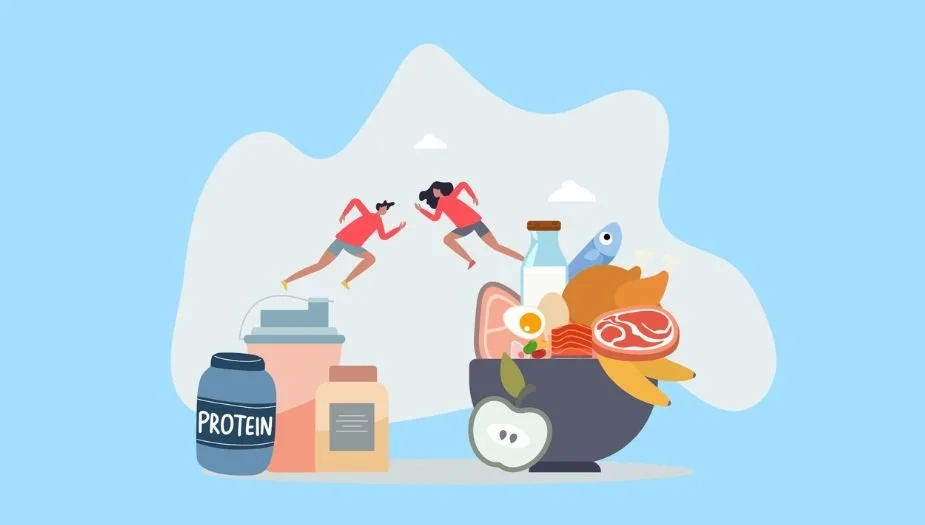
The single most effective strategy for getting more protein is also the least glamorous: plan your meals for the day and make sure protein is the first box you check at each one, not an afterthought.
Most people build their meals around whatever sounds good, what's convenient, or what they're in the mood for and then protein either shows up or it doesn't. The result is a day that starts with a carbohydrate-dominant breakfast, continues with a salad that's mostly vegetables at lunch, and ends with a dinner that finally has adequate protein. This results in two thirds of the day's protein demand is compressed into one meal, which is both metabolically suboptimal and increasingly uncomfortable to execute.
Flip the sequence. Start every meal with the protein question: what is my protein source here, and is there enough of it? Everything else — the grains, the vegetables, the sauces, the sides — gets built around the answer.
This doesn't require new recipes, new ingredients, or new cooking skills. It requires a small cognitive reframe: protein is the anchor of the meal, not an optional addition to it.
For someone new to thinking this way, the most practical starting point is adapting the meals you already love. You're not overhauling your diet, rather you're upgrading the protein content of what you're already eating.
Upgrade the Meals You Already Make
Think about your current rotation of go-to meals and ask a simple question about each one: where is the protein, and is there enough of it?
Your salad already has a protein slot: fill it properly. A salad with mixed greens, cherry tomatoes, cucumber, and a drizzle of olive oil is a side dish. A salad with six ounces of grilled chicken, a hard-boiled egg, and a handful of chickpeas is a meal with 45 to 50 grams of protein. The base is identical. The protein sources are what convert it from a garnish to a performance meal. If you're already making salads regularly, you're one ingredient decision away from hitting your protein target at lunch.
Your pasta already has a protein slot: use it. Pasta with marinara is carbohydrates and sauce. Pasta with marinara and a generous portion of lean ground beef, turkey meatballs, Italian sausage, or grilled shrimp is a balanced meal. The pasta isn't the problem. It's actually a fine vehicle for protein delivery when you treat it as one. A serving of pasta with four to six meatballs or four to five ounces of ground meat adds 35 to 45 grams of protein to what would otherwise be a primarily carbohydrate meal.
Your grain bowls and rice dishes are protein delivery systems waiting to happen. Brown rice, quinoa, or farro as a base paired with grilled salmon, rotisserie chicken, lean steak strips, or pan-seared tofu becomes a meal that hits 40 or more grams of protein without any meaningful additional effort. The grain bowl format is essentially purpose-built for the protein-first approach, it invites layering and customization without requiring a recipe.
Your stir-fry, your tacos, your soup, your eggs — all of these already have protein logic built in. The question in each case is simply whether the portion is adequate. Three scrambled eggs provide roughly 18 grams of protein which is a reasonable start but probably not sufficient for a meal. Three eggs plus two strips of turkey bacon or a quarter cup of cottage cheese on the side moves you closer to a meaningful target. The adjustment is minor. The protein contribution is significant.
The through-line across all of these: you're not creating new eating habits from scratch. You're ensuring the meals you're already comfortable making are delivering adequate protein at each occasion.
Eating Out? Use the "Add Protein" Option. It Exists Everywhere.
Here's something the wellness industry rarely acknowledges loudly enough: restaurant and fast-casual menus have largely caught up with where nutrition science has been for years. The "add protein" or "double protein" option is now standard across an enormous range of dining formats and it is one of the most practical protein strategies available to someone eating out frequently for work or travel.
At virtually every fast-casual lunch spot Chipotle, CAVA, Sweetgreen, Dig, Panera, and dozens of regional equivalents the standard bowl or salad can be upgraded with a double portion of grilled chicken, steak, salmon, shrimp, tofu, or legumes for typically two to four dollars. That single modification can add 20 to 30 grams of protein to a meal that would otherwise fall short.
At sit-down restaurants, the same logic applies even without a formal menu option. Ordering a larger protein portion, adding a side of grilled protein to a salad or grain dish, or simply choosing the entrée with the most substantial protein component are all zero-friction adjustments. You're not asking the kitchen to do anything unusual. You're just being intentional about what anchors your plate.
For business travel specifically where protein is the macronutrient most likely to fall through the cracks of airport food, conference catering, and client dinner menus this mindset matters enormously. At a conference lunch buffet, the protein sources are there. The question is whether you find them first and build your plate around them, or pile on the pasta and bread and realize too late there's no room for the chicken.
Breakfast: The Meal Where Most People Leave the Most Protein on the Table
If there is one meal where the protein gap between what most people eat and what their biology actually needs is the largest, it is breakfast.
The standard high-achiever breakfast, that is if breakfast happens at all, is a coffee and something carbohydrate-dominant grabbed on the way out the door. Maybe yogurt. Maybe a granola bar. Maybe nothing. The result is a morning that starts with an inadequate protein supply for neurotransmitter production and muscle protein synthesis, followed by compensatory hunger and poor food decisions by mid-morning.
A protein-first breakfast doesn't require elaborate cooking. It requires the right ingredients available and a basic game plan.
Eggs are the most practical high-protein breakfast food available. Two eggs provide 12 grams of protein and take three minutes to cook in any format. Add a third egg and a couple of slices of turkey bacon or smoked salmon and you're at 25 to 30 grams of protein before you've left the kitchen. Greek yogurt particularly the higher-protein varieties like Fage, Skyr, or Two Good provides 15 to 20 grams per serving with essentially zero preparation. A protein shake made with water or milk and a high-quality whey or plant-based protein powder provides 25 to 30 grams in about 60 seconds. Cottage cheese with fruit is 20 to 25 grams depending on serving size. Overnight oats made with Greek yogurt and a scoop of protein powder easily reach 30 to 35 grams.
None of these require cooking skills. All of them require that the ingredients are in your kitchen, which means the real intervention is the grocery run, not the morning routine.
Smart Protein Snacks That Are Actually Appealing
Between-meal snacking is where protein consistency either holds together or falls apart. Most people default to carbohydrate-dominant snacks like crackers, fruit, chips, or granola bars that provide energy but don't move the needle on daily protein targets. Swapping some of those snacks for protein-forward options doesn't mean giving up convenience or palatability. It means stocking different things.
The criteria for a useful protein snack: it should be grab-and-go or require minimal preparation, taste like something you'd actually want to eat, and provide at least 10 to 15 grams of protein per serving.
Hard-boiled eggs ( pre-cooked in batches and stored in the fridge ) are six to seven grams of protein each, portable, and require zero preparation after the initial cooking session. Two eggs is a complete snack. Three eggs is a small meal.
Greek yogurt or Skyr in individual containers provides 15 to 20 grams of protein, travels easily, and pairs well with berries or a small handful of granola if you want a carbohydrate component.
Cottage cheese in small containers ( widely available pre-portioned ) delivers 20 to 25 grams of protein per serving and works with sweet toppings like berries or savory ones like everything bagel seasoning.
String cheese or cheese sticks are six to seven grams of protein each, require no preparation, and have a long refrigerator shelf life. Pair with fruit or a handful of nuts for a more complete snack.
Jerky beef, turkey, or salmon is shelf-stable, portable, and delivers 9 to 12 grams of protein per one-ounce serving. Check the sodium content and ingredient list when selecting; the simpler the better. This is the snack that belongs in your bag, your desk drawer, and your carry-on.
Edamame ( available frozen in individual steam-in-bag portions or fresh in pods ) provides 17 grams of protein per cup and takes four minutes in the microwave. For an office lunch add-on or afternoon snack, it's one of the more underrated options.
Protein bars with clean ingredient lists ( RXBARs, SANS Meal Bars, Perfect Bars ) provide 12 to 17 grams of protein with minimal processing. The bar category varies enormously in quality; read labels and look for options where real food ingredients dominate and added sugar is minimal. These are convenience options, not staples but for travel days or genuinely chaotic weeks, they earn their place.
Rotisserie chicken deserves special mention as perhaps the most versatile, highest-value protein source available at virtually every grocery store in America. A rotisserie chicken provides roughly 35 grams of protein per breast, requires no cooking, costs around ten dollars, and can be pulled and portioned within minutes into meals and snacks for multiple days. Rotisserie chicken on top of a salad, pulled into a grain bowl, wrapped in a whole-grain tortilla, eaten cold from the container while standing at the kitchen counter, all of these are valid. All of them hit the protein target with zero friction.
Final Thoughts: Protein at Every Meal, Enough at Each One
All of the above comes down to one operating principle that is simple enough to remember and flexible enough to work across any eating context: restaurants, home cooking, travel, conference catering, rushed mornings, and late work nights.
Protein at every meal. Enough at each one.
Not a specific food. Not a rigid meal plan. Not a tracking app if that's not your thing. Just a consistent habit of asking before you eat, before you order, before you prep: where is my protein here, and is there enough of it?
Twenty-five to forty grams per meal, distributed across three to four eating occasions, gets most people to their daily target without dramatic dietary change, without eating anything unpleasant, and without making food a source of stress in a life that already has plenty of it.
The meals you love can be the meals that fuel you properly. They just need protein to be the first decision, not the last.
Article References
The sources cited in the article:
Precision Nutrition (PN). "All about protein: What is it and how much do you need?” PN - All about protein
Harvard Med. “How much protein do you need?” Harvard - How much protein do you need?
WebMD. “What are macronutrients?” WebMD - What are macronutrients?