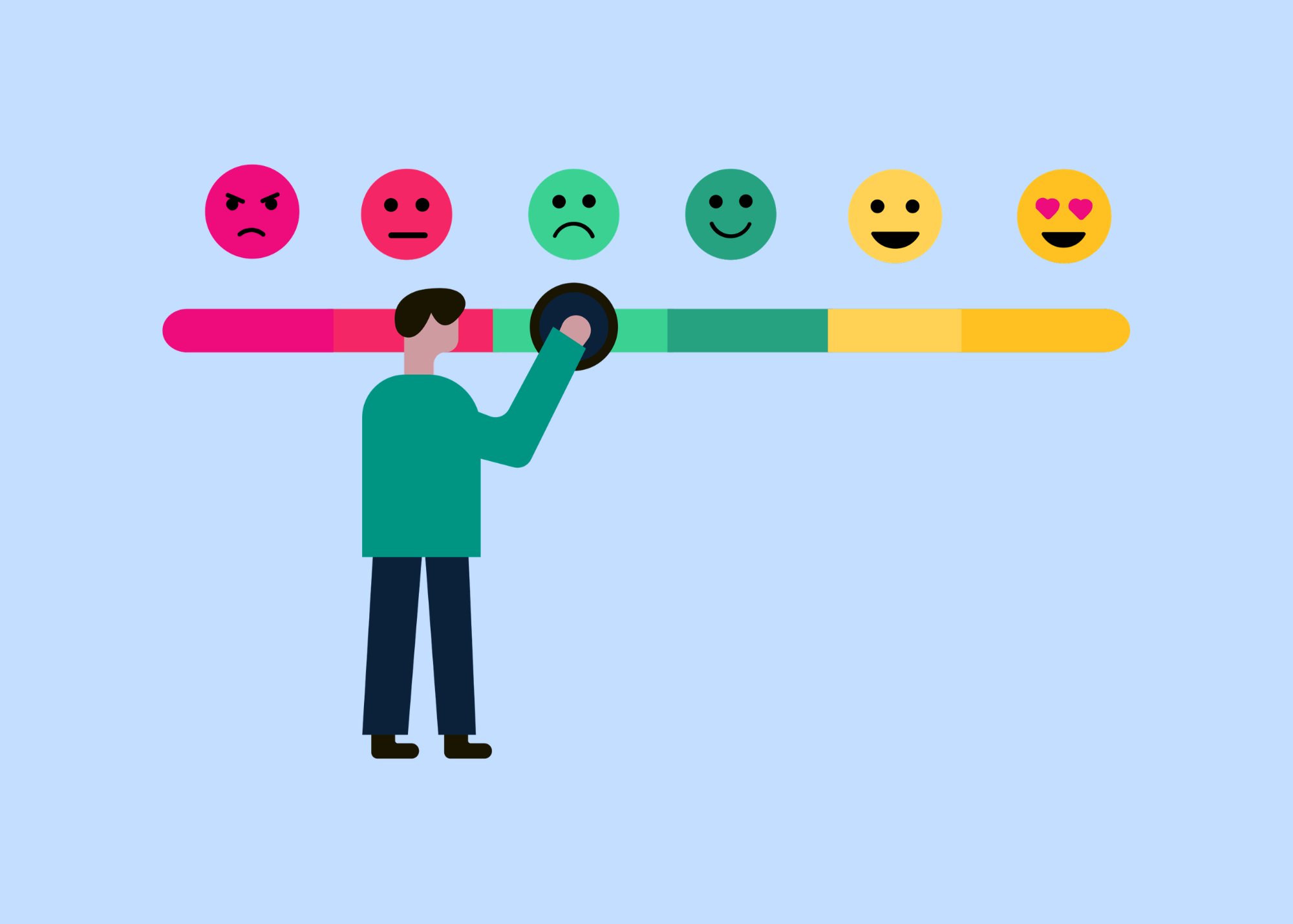
Your Environment Matters More Than Your Motivation: Audit It Ruthlessly
Stop trying to want it more. Start designing the conditions that make the right thing inevitable.
Here is the story most high achievers tell themselves when they're stuck, stagnant, or failing to change something they genuinely want to change: I just need to get more motivated.
So they listen to another podcast. Read another book. Make another vision board. Write another set of goals in a fresh notebook on January 1st. And for a few days, sometimes a few weeks, it works. The motivation is there. The intention is real. The commitment feels genuine.
The fatal flaw: motivation is a myth.
It works until life reasserts itself. The environment reasserts itself. And the behavior quietly reverts to exactly what it was before. This isn’t a motivation or willpower failure. It is a design failure. And the distinction matters enormously — because one is a character flaw and the other is a solvable problem.
Motivation is overvalued. In many cases, the environment matters more. This isn’t a self-help opinion. It’s the conclusion of decades of behavioral science research, from BJ Fogg's work at Stanford's Behavior Design Lab to James Clear's synthesis of habit research in Atomic Habits to the broader field of environmental psychology, which has been documenting the profound, largely unconscious ways our surroundings shape our behavior since the 1970s.
Behavioral science shows that habitual behaviors are often triggered automatically, with little conscious thought. Environmental cues activate mental representations of rewarding outcomes that facilitate the execution of actions. In other words, your surroundings are constantly prompting behavior whether you are aware of it or not.
Your environment isn’t neutral: it’s either working for you or against you.
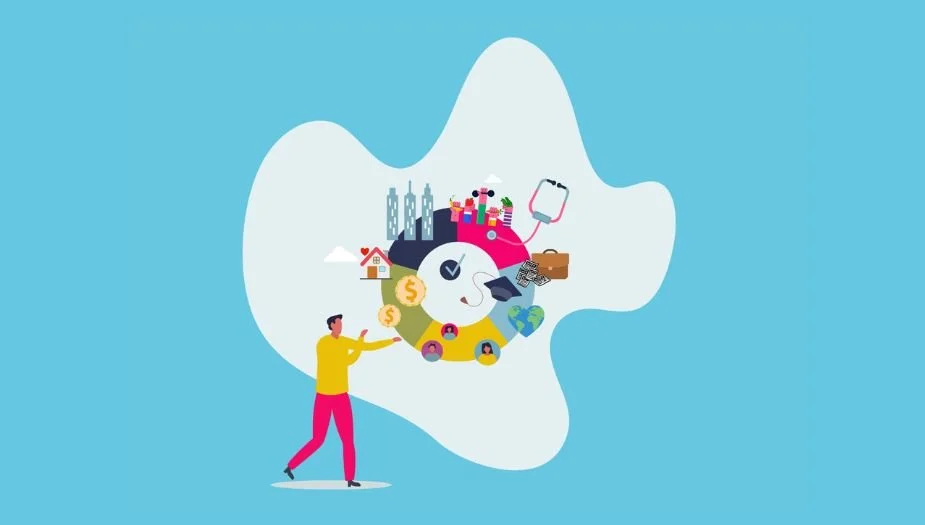
What "Environment" Actually Means
When most people hear "environment," they think about air quality or maybe office ergonomics. That is far too narrow.
Your environment is every external condition that shapes your behavior, your biology, your baseline stress level, and your sense of what is possible: whether or not you are consciously aware of it. It operates at three distinct levels, each with its own profound effect on your health, your performance, and your trajectory:
Your home: the physical space where you begin and end every day, and the people who share it with you
Your community: the neighborhood, city, and social ecosystem you exist within
Your workplace: the culture, the people, the physical space, and the professional norms you operate inside daily
All three shape you. None of them are fixed. And most high achievers have audited none of them with any real rigor.
That ends here.
The Behavioral Science: Why Environment Wins Every Time
Before we get specific, it is worth understanding exactly why environment consistently outperforms motivation as a driver of behavior.
Whenever possible, design an environment that makes good decisions for you. One study from Cornell University found that people eat 22% less food simply by switching from 12-inch dinner plates to 10-inch plates. The environment made the decision, not the person's willpower or intention.
That is the mechanism. Your environment removes or creates friction for specific behaviors. When the healthy behavior is the easy behavior — when the running shoes are by the door, when the fruit is on the counter, when the office is calm and your tools are organized — you do it. When the environment makes the unhealthy or unproductive behavior the path of least resistance, you do that instead. Not because you lack discipline; because you are human and humans conserve cognitive energy by defaulting to what is easiest.
Self-control is a limited resource. As a person carries out actions that require controlling thoughts, managing emotions, resisting impulses, and making decisions, their reserve of willpower is drained. Exercising any one of these depletes self-control across all of them.
This is the ego depletion problem. Motivation and willpower are finite daily resources and they are depleted by every decision, every distraction, and every friction point your environment creates. When you are making fifty micro-decisions before noon because your environment is chaotic, your willpower is not available for the things that actually matter.
The solution isn’t more willpower, it’s fewer friction points. It is an environment that makes the right behavior obvious, easy, and inevitable.
Environment One: Your Home
Your home is the most intimate environment you inhabit. It is where you begin every day, end every day, and spend a significant portion of the hours in between. It should be the most deliberately designed environment in your life. For most people, it is the least.
The physical environment of your home is not neutral.
Clutter does more than hog physical space: it colonizes mental real estate. Research shows that a chaotic environment strains the brain's executive functions, elevates cortisol, and quietly chips away at emotional wellbeing.
In a landmark study, women who described their homes as cluttered had high levels of the stress hormone cortisol throughout the day. Those who described their homes as well-organized and restful had lower levels. The physical state of your home is producing a measurable hormonal response in your body every single day whether you notice it or not.
A study in the Journal of Environmental Psychology found that people who considered their homes more cluttered had lower levels of wellbeing and life satisfaction, as well as higher levels of negative feelings. Clutter also reduces the psychological attachment people have to their homes.
And it is not just the clutter. It is the conflict. The chaos. The emotional climate.
A home characterized by high conflict, emotional instability, or chronic tension is running the same physiological stress response as a cluttered environment except the trigger is relational rather than visual. Household chaos — created by clutter, crowding, noise, and sensory overstimulation — has been shown in experimental research to cause negative emotions and elevated physiological stress markers in parents, affecting both their emotional state and their behavior toward others.
The people in your home matter as much as the physical space. A peaceful, organized, emotionally stable home is not a luxury. It is infrastructure. It directly supports cognitive function, emotional regulation, physical health, and the quality of every decision you make from the moment you wake up.
Ask yourself honestly:
Does your home restore you or deplete you when you walk through the door?
Is the physical space organized in a way that reduces friction and cognitive load?
Is the emotional climate one of stability, warmth, and safety or tension, conflict, and unpredictability?
Do the people you share your space with support your growth or subtly resist it?
The answers to those questions are not background details of your life. They are primary inputs into your health and your performance.
Environment Two: Your Community
This one is harder to talk about because it touches on geography, belonging, identity, and the deeply uncomfortable reality that where you live and who surrounds you has an outsized influence on who you become.
The research on this is unambiguous and has been accumulating for decades. Above and beyond one's background characteristics, social and environmental contexts change outcomes, this question may be the Holy Grail of social science research for it speaks directly to the importance of context, above and beyond genetic predispositions or even human motivations and values.
In plain language: the community you live in shapes you in ways that override your individual motivation, values, and intentions. It is not a small effect. It is structural.
Neighborhood barriers affect residents' health behaviors and health outcomes in three ways: by encouraging risky behaviors, discouraging physical activity, and creating psychosocial stressors.
Think about what that means in practice:
A community that normalizes sedentary behavior makes movement harder.
A community with no sidewalks, no green space, and no safe places to exercise produces less active residents regardless of how motivated those residents are to be active.
A community characterized by small thinking, stagnant ambitions, and resistance to growth creates social friction around anyone who wants more. Not through malice, through the invisible gravitational pull of collective norms.
The five-people-you-spend-the-most-time-with principle is not motivational mythology. It is behavioral science. Community social networks facilitate the dissemination of health information and access to material and emotional support and social cohesion, social networks, and social capital have all been shown to influence residents' self-reported health, BMI, and overall wellbeing.
The community questions worth asking honestly:
Does the culture of your community align with your actual values or does it quietly undermine them?
Do the people around you normalize growth, ambition, and continuous learning or treat those things with suspicion?
Does your community make the healthy behaviors easy ( walkable, accessible, socially supported ) or effortful?
Is it safe? Physically, socially, and psychologically?
Do you feel genuinely at home here or like you have outgrown the container?
The last question is the most important and the most uncomfortable. Some communities are not places you have outgrown. Some are places you never fit in the first place and staying in them is not loyalty. It is the slow, invisible acceptance of a ceiling that was never yours to begin with.
Environment Three: Your Workplace
You spend more waking hours in your workplace than almost anywhere else. The culture, the people, the physical space, the professional norms all of it is shaping your behavior, your identity, your health, and your sense of what is possible, every single day.
Most people evaluate their workplace almost entirely on compensation and title; that is a catastrophically incomplete audit.
James Clear puts it directly: Every habit is just a behavior that is context-dependent. The context is the environment. If you want to change your behavior, change your environment before you try to change your motivation.
A workplace with a culture of chronic urgency, unclear expectations, toxic social dynamics, or zero investment in growth produces specific behaviors regardless of how motivated, disciplined, or talented the people inside it are.
It produces:
reactive thinking rather than strategic thinking
self-protective behavior rather than collaborative behavior
burnout not because the people are weak, but because the environment is designed, by default or by dysfunction, to deplete
Conversely, a workplace with genuine psychological safety, a culture that values growth, a physical environment that supports focus, and leadership that models the behavior it expects produces different people. Same individuals. Different environment. Dramatically different outcomes.
The workplace audit that most high achievers never run:
Does this environment bring out the best version of your professional self or a compressed, defended version of it?
Is the culture growing or slowly calcifying?
Do the people around you raise your standard or gradually lower it?
Does the physical environment support the kind of work you need to do or fight it at every turn?
Are you learning and evolving here or performing competence in a role that stopped challenging you two years ago?
A workplace that is slowly dying does not announce itself dramatically. It announces itself in the quality of your thinking at 3pm. In the Sunday dread that starts Saturday evening. In the quiet erosion of the ambition and creativity you walked in with on day one.
That is not a motivation problem. That is an environment problem.
The Deep Health Connection
Your environment does not just shape your behavior. It shapes every dimension of your health simultaneously, continuously, and largely below the threshold of conscious awareness.
Across the six dimensions of deep health: physical, mental, emotional, social, existential, and environmental; your home, community, and workplace are primary inputs, not background conditions:
Physical health is directly produced by environmental factors: what food is available and normalized, how much movement your environment supports or discourages, how much your nervous system is running in threat mode because of chaos, conflict, or chronic stress
Mental health is shaped by cognitive load and a chaotic, high-conflict, or high-pressure environment depletes executive function faster than almost any other factor
Emotional health is regulated, or dysregulated, by the emotional climate of the spaces you inhabit. You cannot be emotionally stable inside chronically unstable environments without paying an enormous hidden cost
Social health is a direct product of community. The quality of your connections, the values of the people around you, and the psychological safety of your relationships are all environmentally determined
Existential health your sense of meaning, purpose, and values alignment is constantly tested by your environments. A workplace that violates your values, a community that reflects none of them, a home that drains rather than restores: all of these are existential health problems wearing practical disguises
Environmental health is the dimension most obviously connected but often the most neglected. The physical spaces you inhabit, the air quality, the noise levels, the access to nature, the aesthetic of your surroundings all of it is producing measurable effects on your biology and your psychology every day
The through-line is this: you cannot fully address any dimension of your health without addressing the environmental conditions that are either supporting or undermining it. Coaching the individual without examining the environment is like optimizing an engine while ignoring the fuel quality. It produces marginal gains at best.
The Values and Ikigai Lens
Here is where the environment audit gets sharper and more personal.
If you have done the work of identifying your core values — the non-negotiable principles that define how you want to live and the kind of person you are committed to being — then you have a precise instrument for evaluating every environment you inhabit.
The question for each environment is not "is this good or bad?"
It is "does this environment support or undermine the expression of my actual values?"
A person who values growth living in a community that pathologizes ambition is not going to thrive regardless of internal motivation.
A person who values peace and connection living in a home characterized by chronic conflict is not going to access either regardless of how hard they try.
A person whose ikigai sits at the intersection of creativity, impact, and mastery, doing work in an organization that values compliance, stasis, and political maneuvering is going to experience that gap as burnout, not as a personality problem.
The mismatch between your values and your environment is not something you can motivate your way through. It is a structural problem that requires structural change.
Ask these questions through your values lens for each environment:
Home: Does the way this space is organized, and the way the people in it behave, reflect and reinforce what I say matters most to me? Or does it require me to compromise my values daily just to function?
Community: Do I see my values reflected in the culture, norms, and aspirations of the people around me? Does this community expand my sense of what is possible or quietly contract it?
Workplace: Is the work I do, and the way I am asked to do it, in alignment with my purpose and my values? Or am I performing a version of myself that an earlier, less self-aware iteration of me chose — and that no longer fits?
Where the answers reveal persistent misalignment, that is not discomfort to be managed. That is information to be acted on.
What Happens When You Don't Act on It
Let's be direct about the cost of staying in environments that don't fit.
It is not dramatic. It is gradual. And that gradualness is precisely what makes it so dangerous for high achievers who are good at adapting, performing, and pushing through.
Cognitively: A chaotic or high-friction environment depletes executive function consistently, until the cognitive capacity you are known for — the strategic thinking, the sharp decision-making, the creative problem-solving — is operating at a fraction of its actual ceiling. You adapt to the lower output and call it your baseline.
Emotionally: Sustained emotional dysregulation from a high-conflict home or a toxic workplace does not stay contained. It bleeds. Into relationships that deserve better. Into interactions that compound the damage. Into a baseline emotional state that has quietly shifted from resilient to defended.
Physically: The cortisol load of chronic environmental stress whether from a chaotic home, a community that feels unsafe, or a workplace running on dysfunction produces the same physiological damage as any other form of chronic stress: disrupted sleep, suppressed immunity, elevated inflammation, and accelerated biological aging.
Existentially: The most insidious cost is the slow erosion of the sense that your life is actually yours, that you are moving toward something that matters, in conditions that support who you are. When your environments consistently undermine your values, the result is not just stress. It is a quiet, persistent grief for the version of yourself that the right conditions would have allowed to exist.
That is not a dramatic crisis. It is the burnout hiding in plain sight inside a successful-looking life.
The Framework: How to Redesign Your Environment
You cannot change everything at once. And you do not need to. What you need is a clear-eyed audit and a prioritized sequence of structural changes starting with the environment that is costing you the most.
Principle 1: Audit before you optimize.
You cannot redesign what you have not clearly seen. Start with honest assessment not idealized memory, not what you tell people when they ask how things are going. What does each environment actually produce in you, consistently, on an ordinary week? That is the data that matters.
Principle 2: Make the right behavior the easy behavior.
For each environment, identify the two or three structural changes that would remove the most friction from the behaviors you want and add friction to the ones you don't. This is design thinking applied to your life. It is not glamorous. It is extraordinarily effective.
Principle 3: Address the people, not just the spaces.
The physical environment matters. The human environment matters more. The emotional climate of your home, the values of your community, and the culture of your workplace are produced by people and changed by them. Who is in your environment is at least as important as what is in it.
Principle 4: Align environments with values, not just preferences.
The standard for a good environment is not "does this feel comfortable?" High achievers are remarkably good at being comfortable in environments that are slowly breaking them down. The standard is: does this environment support the expression of my core values and the pursuit of my ikigai? Comfort is not the goal. Alignment is.
Principle 5: Accept that some environments cannot be optimized, only exited.
This is the hardest principle and the most important one. Some home dynamics require more than reorganization. Some communities have fundamentally incompatible values. Some workplaces are not going to change. The question — the honest, courageous question — is whether continued investment in trying to thrive inside a misaligned environment is strategy or avoidance.
Leaving is not failure. Staying in an environment that systematically undermines your values, your health, and your potential and calling it resilience is not strength. It is the most expensive form of comfort there is.
Final Thoughts: Design Your Life, Don't Just Live It
Motivation gets all the credit. Environment does all the work.
The high performers who sustain their health, their output, and their sense of purpose over decades are not the ones with the most iron discipline or the most motivational content in their podcast queue. They are the ones who have been ruthlessly intentional about the conditions in which they live and work. They have designed their homes to restore rather than deplete. They have chosen communities that reflect their values and expand their sense of what is possible. They have invested their professional lives in environments that bring out their best and made the hard decisions when those environments stopped doing that.
They understood something most people spend their entire careers missing: you are not separate from your environment. You are, in large part, a product of it.
Which means the most powerful thing you can do for your motivation, your health, your performance, and your future is not to want it more: it’s to build the conditions that make it inevitable.
Audit your environments. Align them with your values. Design accordingly.
Article References
The sources cited in the article:
James Clear. "Motivation is Overvalued. Environment Often Matters More." James Clear - Power of Environment
BJ Fogg. "Tiny Habits: The Small Changes That Change Everything.” BJ Fogg - Tiny Habits
Psychology Today (PT). “Clutter, Cortisol, and Mental Load.” PT - Clutter, Cortisol, and Mental Load
NeuroScience News (NN). “Why Household Mess Triggers Stress and Anxiety.” NN - Why Household Mess Triggers Stress and Anxiety
Inc. “ How Your Environment Shapes Your Success as a Leader.” Inc - Environment Shapes Your Success as a Leader