Burnout Recovery: Time to Come Out of Your Cocoon and Get Some Wins
Resting your way to recovery only gets you so far. At some point, the cocoon has to open.
The goal was never to stay small forever. It was to rebuild enough to go big again on your own terms.
You Survived the Crash. Now What? You did the hard part. You stopped. You slept. You said no to things. You cleared the calendar, reduced the obligations, and let your nervous system come down from the ledge it had been standing on for the better part of two years. And it worked. Sort of.
You feel more stable. Calmer. Less like you're one bad meeting away from a complete unraveling. The physiological free-fall has stopped. The fog has thinned. You can get through a Tuesday without feeling like you're being slowly ground into dust.
But here's what nobody warned you about: stability and recovery are not the same thing.
Because somewhere in the process of getting stable, you got small. The life you rebuilt around your recovery: the reduced obligations, the careful boundaries, the deliberate simplicity became something you're now quietly terrified to disturb.
The ambition that once defined you feels dangerous. The big goals feel like threats. The thought of pushing hard again, of taking on something meaningful and challenging, sends a very specific kind of dread through your body that you've started to interpret as wisdom. However, this isn't wisdom. It's the last symptom of burnout and it might be the sneakiest one.
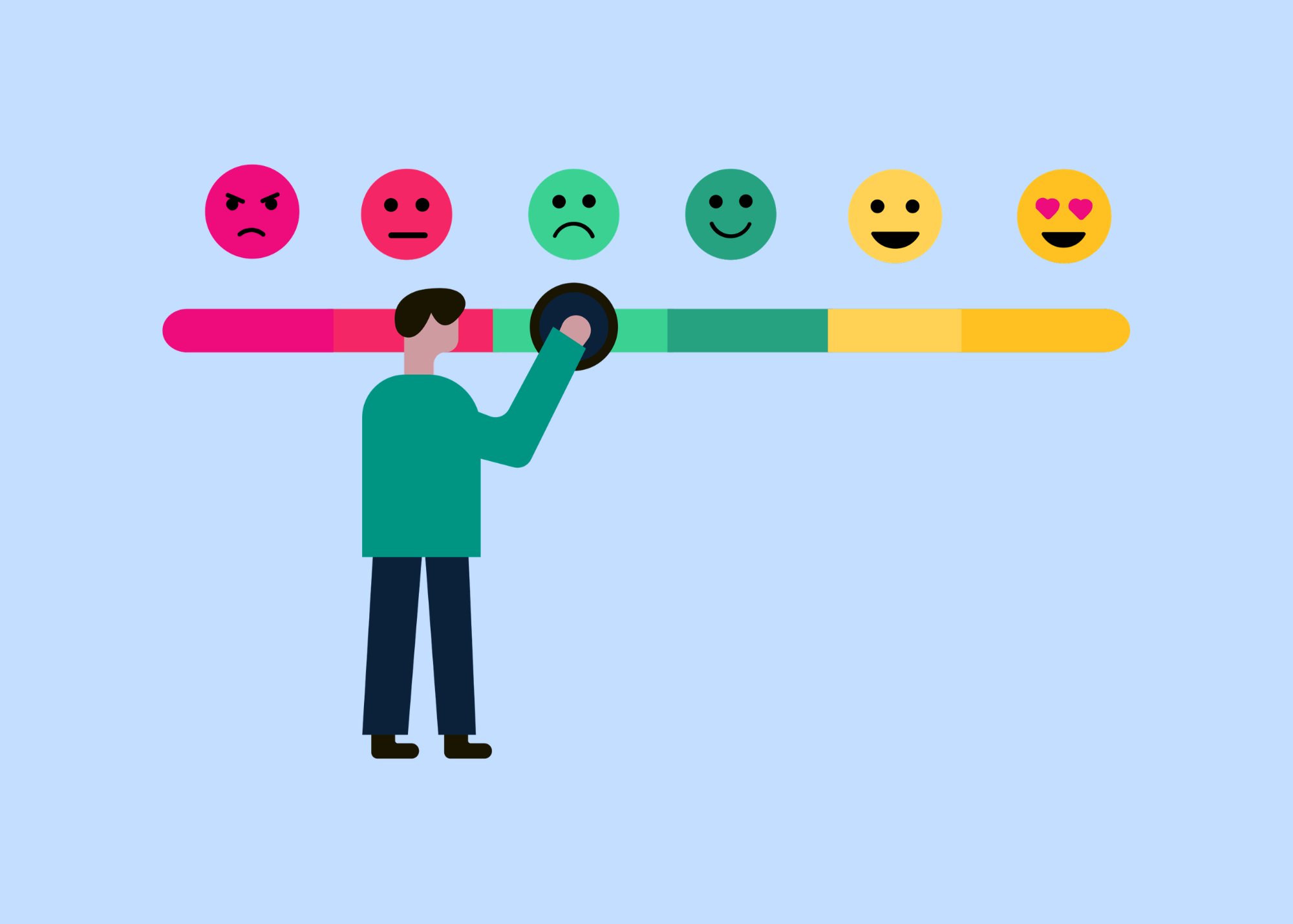
To fully recover you have to come out of the cocoon, get back into the world, and start getting some wins.

What the Burnout Recovery Roadmap Actually Looks Like
Burnout recovery is not a light switch. It is a staged process and understanding where you are in that process changes everything about what you should be doing next.
The roadmap has five distinct phases, and most people stall somewhere in the middle:
Phase 1: Physiological Recovery
Recharge the body. The focus here is outsourcing responsibilities, minimizing output, and meeting basic physical needs: sleep, nutrition, movement, rest.
This is the acute phase. Nothing ambitious belongs here.
Phase 2: Psychological Recovery
Recharge the mind. Minimal resumption of duties through careful management.
The focus is building psychological and mental resources: stability, regulation, the ability to think clearly again.
Phase 3: Evaluate Priorities
Align values and priorities. Expand external resources and support. Re-establish positive and fulfilling connections.
This is where the identity work begins: figuring out what actually matters and what you're rebuilding toward.
Phase 4: Preventative Boundaries
Resume duties with a focus on balance. Prioritize what matters most. Learn to delegate.
Limit exposure to chronic stress. Learn to say no with conviction and without guilt.
Phase 5: Optimize Work for Wellness
Sustainability solutions. Supportive processes and systems.
Continued prioritization of personal fulfillment and rest alongside meaningful output.
Here's where most people in recovery make the critical mistake: they treat Phase 2 as the destination.
They get stable. They stop the bleeding. They establish some routines and feel functional again. And then they stay there. Even though they’ve healed physically and mentally, moving forward feels genuinely terrifying.
Phases 3, 4, and 5 require re-engagement with the world. They require ambition, initiative, and eventually, some risk. And for a nervous system that just survived a burnout, those things don't feel like growth. They feel like the beginning of another collapse.
That fear is real. But clinging to the cocoon will keep you stuck.
The Science Behind the Fear: Why Your Nervous System Treats Ambition Like a Threat
This is not a mindset problem. This is a biology problem.
Chronic burnout — the kind that brings high performers to their knees — does not leave the nervous system neutral. It leaves it recalibrated. Specifically, it recalibrates your threat detection system to be significantly more sensitive than it was before.
The amygdala, your brain's threat-response center, becomes hyperactivated during prolonged stress exposure. Research published in Neuron confirms that chronic stress increases amygdala reactivity while simultaneously reducing prefrontal cortex regulation.
In simple terms: your ability to assess actual risk is compromised precisely when your threat detection is running hottest.
The result: things that are not actually dangerous like a new project, a challenging goal, or a meaningful commitment register as threats. Your body responds to ambition with the same low-grade alarm signal it used to reserve for genuine danger.
This is your nervous system doing exactly what it was trained to do by two years of chronic crisis. The training just needs to be updated.
Additionally: research on burnout and HPA axis dysregulation, the hypothalamic-pituitary-adrenal axis that governs your stress response, shows that prolonged burnout can produce a blunted cortisol response, a state where the body has essentially stopped producing adequate stress hormones after sustained overproduction. This is why burnout survivors often feel both anxious about re-engagement and completely flat about the prospect of doing ambitious things. The physiological machinery for energized pursuit is temporarily offline.
Getting wins — small, concrete, achievable wins — is not just psychologically motivating. It is physiologically restorative. It is how you retrain the nervous system to associate effort and challenge with reward rather than threat.
The Memory Problem: Why Your Own Skills Feel Like Someone Else's
Here is one of the most disorienting and least-discussed features of burnout recovery: you may not remember what you were capable of.
Chronic stress and burnout produce measurable, documented effects on memory consolidation, recall, and the sense of autobiographical continuity — the felt experience of your own history as yours.
Research from the Karolinska Institute found that burnout is associated with significant impairments in episodic memory ( the type of memory that stores personal experiences )as well as reduced activity in the hippocampus, the brain's primary memory consolidation structure. Prolonged cortisol exposure, a hallmark of chronic stress, has a neurotoxic effect on hippocampal neurons, literally impairing the brain's ability to encode and retrieve personal memories.
What this produces in practice:
Skill amnesia — you know intellectually that you once managed complex projects, led teams, or performed at a high level, but you cannot access the felt memory of doing it. The competence feels theoretical, not real.
Identity discontinuity — the high-performing version of you feels like a character in someone else's story. You watched that person do impressive things. You are not convinced you are that person.
Depersonalization — a dissociative quality to memories from the burnout period specifically, where your own actions feel like things that happened to someone else, observed from a distance rather than lived from the inside.
This dissociative memory experience is particularly common in high performers who were operating in a state of chronic crisis: the memories were encoded under extreme stress, in a neurological state so different from your current one that retrieval feels like accessing a foreign archive.
This matters enormously for recovery. Because if you are trying to rebuild confidence by accessing memories of your own competence, and those memories either don't exist or feel like they belong to someone else, the confidence rebuild stalls. You cannot remember being good at what you're good at. And in the absence of that memory, your nervous system defaults to the most recent data it has: the collapse.
The solution is not to excavate the past. It is to create new evidence in the present.
Which brings us to the wins.
Why Wins Are Not Optional: The Neuroscience of Rebuilding Confidence
Let's be direct about what crushed confidence actually is, biologically.
Confidence is not a personality trait. It’s a prediction. Specifically, it is your brain's ongoing prediction about the probability of success based on accumulated evidence from past experience. High confidence means your brain has a lot of data suggesting that when you attempt things, they tend to work out. Low confidence means the data is thin, outdated, or dominated by failure and collapse.
Burnout systematically corrupts that data set. The memories of competence are inaccessible. The most recent evidence is of exhaustion, impaired performance, and breakdown. Your brain is making predictions based on that evidence and those predictions are generating the fear, the hesitation, and the shrinking.
Research confirms that dopamine, the neurotransmitter central to motivation, confidence, and reward anticipation, is significantly depleted in states of chronic stress and burnout. Without adequate dopamine, the anticipation of reward that drives ambitious behavior is simply not available. Everything feels flat, risky, or pointless.
Getting wins restores the data set. Each small success generates a dopamine release that does two things simultaneously: it feels rewarding in the moment, and it updates your brain's predictive model about your own capability. Enough wins, accumulated consistently, and the prediction changes. The confidence rebuilds because you gave your brain actual evidence.
This is why wins are not a nice-to-have in burnout recovery. They are the mechanism.
Come Out of the Cocoon: How to Start Getting Wins
The wins do not need to be impressive. They need to be real.
The architecture of an effective wins strategy in burnout recovery has three principles: start smaller than your ego is comfortable with, build consistently rather than dramatically, and choose wins that reconnect you with your actual values and strengths rather than wins that perform recovery for an audience.
Here is how to build the framework:
1. Define What a Win Looks Like Right Now
Not what a win looked like at your peak. Not what a win would look like if you were fully recovered. What a win looks like at your current capacity — which is real, valid, and enough to build from.
A win might be:
Completing a project you've been avoiding for three weeks
Having one difficult conversation you've been deferring
Finishing a workout you started
Showing up to something social when staying home felt easier
Pitching one idea in a meeting instead of staying quiet
The size is irrelevant. The completion is everything. Your nervous system does not distinguish between a small win and a large one at the neurochemical level — both generate dopamine, both update the predictive model, both contribute to the rebuilding.
2. Reconnect With Your Strengths Deliberately
Because skill amnesia is real, reconnecting with your own competence requires deliberate exposure not passive reflection. You cannot think your way back to confidence. You have to do your way back.
Identify two or three things you know you are genuinely good at. Things that, even if the memories feel distant, you have external evidence for: feedback you've received, results you've produced, skills you've been recognized for. Then find low-stakes opportunities to exercise those specific skills.
Not to prove anything. Not to perform recovery. To generate fresh evidence that the skills are still there: because they are. Burnout does not destroy capability. It obscures it. The work is excavation, not reconstruction.
3. Calibrate the Challenge to Build, Not Break
The wins need to be in what psychologists call the zone of proximal development: challenging enough to feel meaningful, achievable enough to complete. Too easy and they don't move the needle on confidence. Too hard and a failure sets the rebuild back.
In practice, this means resisting the high-achiever instinct to go from zero to ambitious in a single move. That instinct is the old operating system trying to reassert itself before the new one is installed. It is the part of you that wants to skip the rebuild and get back to the peak and it will get you back in the cocoon faster than anything else.
Scale up. Slowly. Deliberately. Let the wins accumulate before the stakes increase.
4. Track the Evidence
Because memory is compromised in burnout recovery, wins that are not recorded tend not to register. Your brain, still running a threat-heavy predictive model, will discount the wins and amplify the setbacks unless you actively counteract that bias.
Keep a simple record. Not a performance tracker. Not a productivity system. Just a running log of things completed, things attempted, things that went better than expected. Review it weekly. This is not journaling for its own sake, it is data collection for your brain's confidence rebuild. You are manually updating the evidence base that your nervous system is using to make predictions about your future capability.
5. Let Someone Witness the Wins
Isolation is a feature of burnout recovery. It is also, at a certain stage, a barrier to full recovery. Sharing wins with a coach, a trusted colleague, a peer who understands the recovery context does two things: one, it makes the win more real, more consolidated in memory and two, it reactivates the social dimension of your identity as a capable, contributing person.
You do not need an audience. You need a witness. There is a difference.
The Moment You Know You're Ready
There is a specific moment in burnout recovery when the cocoon stops being a refuge and starts being a cage. You will know it but because the smallness starts to feel suffocating rather than safe.
The ambitions you deferred start knocking again. The projects you shelved start calling. The version of you that did hard, meaningful things starts asserting itself against the version of you that learned to stay safe and stay small.
That’s the signal. The butterfly does not stay in the cocoon because flight feels dangerous. It comes out because staying in has stopped making sense.
You have done the hard, unglamorous work of physiological and psychological recovery. You have slept, and stabilized, and rebuilt some foundation. You have done things that the high-performer you used to be would have found embarrassingly modest… and they were exactly what you needed.
Now it is time to come out. Not to sprint. Not to perform. Not to prove anything to anyone other than yourself.
It’s time to get some wins. To remember what you are capable of. To give your nervous system new evidence and your confidence new data.
The cocoon kept you safe. The world is where you come back to life. Start small. Start now. Build the evidence.
Need Help? You didn’t come this far to only come this far.
You've stabilized. You've recovered. But if the idea of doing something ambitious again still sends a chill through you — that's exactly where coaching picks up.
Article References
The sources cited in the article:
PubMed. “Brain On Stress: Vulnerability and Plasticity of the Prefrontal Cortex Over the Life Course.” PubMed - Brain On Stress
PubMed. “Burnout Symptom Sub-types and Cortisol Profiles: What’s Burning Most?” PubMed - Burnout Symptom Sub-types and Cortisol Profiles
PubMed. “Structural Changes of the Brain in Relation to Occupational Stress.” PubMed - Structural Changes of the Brain: Occupational Stress
Psychology Today (PT). “Is Burnout Making You Dumber?” PT - Is Burnout Making You Dumber?
PubMed. “ Reconsidering Anhedonia in Depression: Lessons from Translational Neuroscience.” PubMed - Anhedonia in Depression