When You’re Burnt Out, People Become Overwhelming — Here’s Why (And What to Do About It)
When You’re Burnt Out, People Become Overwhelming
You used to be the go-to person. The one who could handle the high-stakes meetings, the client drama, the late-night family crisis texts — all before your second cup of coffee. You were “on,” always. Until you weren’t.
Now? Every interaction feels like too much. That quick Slack message makes your stomach drop. The idea of smiling through another client call feels like emotional fraud. And when a friend calls to vent (again)? You suddenly want to throw your phone into the Hudson River.
If you’re here, chances are you’ve blown past the early warning signs of burnout — and now you’re collapsing under the weight of it all. Mentally, physically, emotionally. And one of the first things to go? Your capacity to deal with people.
Let’s talk about why that happens — and what the hell you’re supposed to do about it when you still need a paycheck and can't go full “hermit in the woods.”
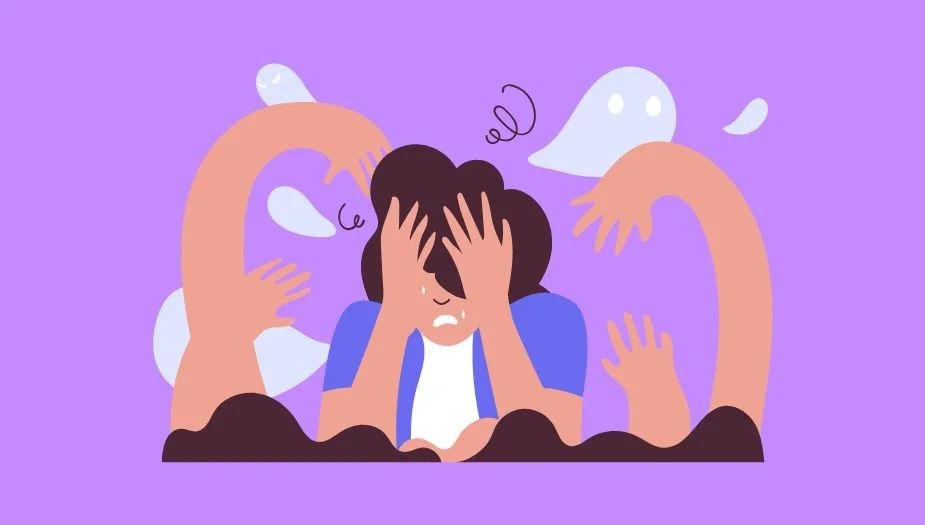
You’re Not Anti-Social — You’re Burnt the F*ck Out
Let’s set the record straight: being overwhelmed by people doesn’t mean you’ve suddenly become antisocial or even depressed. It means your nervous system is completely dysregulated. You’re not functioning from your usual baseline — you’re running on fumes, fried circuits, and a nervous system that’s screaming for rest and repair.
When you’re burnt out, your brain is in survival mode. Cortisol, adrenaline, and all the lovely stress hormones are on high alert. You don’t have the energetic bandwidth to emotionally regulate, let alone hold space for someone else’s needs, expectations, or drama. Even small interactions can feel like emotional grenades.
In short? It’s not that you hate people. You just physically and mentally can’t right now. And that’s not only valid — it’s expected.
The Hidden Cost of “High Performance”: People-Pleasing, Overfunctioning & The Pressure to Be “On”
Many high achievers are hardwired (or more accurately, trauma-wired) to be “the strong one.” Maybe that came from childhood. Maybe it was conditioned in corporate. Either way, you learned early that your value came from being useful, competent, and available — especially to others.
But here’s the thing no one told you while you were climbing that career ladder, holding your family together, and pretending you “love the hustle”: you cannot be a support system for everyone else while your own system is crumbling.
When burnout hits its peak, your internal scaffolding collapses. What used to be manageable becomes intolerable. And if you keep trying to show up like you’re fine, you’ll dig yourself even deeper into the hole.
Why Dealing With People Feels Like a Threat
Let’s talk neuroscience for a hot minute.
When you're deep in burnout, your brain interprets any demand—even a friendly one—as a threat. Your prefrontal cortex (the logical, calm part of your brain) goes offline. Your amygdala (the panic button) takes over. That’s why even normal social interactions feel draining, or worse, triggering.
And here’s the kicker: this happens even if you used to be extroverted, social, and thrive on collaboration.
Your identity hasn’t changed. Your nervous system has.
“But I Can’t Just Quit Everything and Disappear”
Correct. Most people can’t afford to take a six-month sabbatical, do an ayahuasca retreat in Peru, go no-contact with their family, and journal about their purpose on a beach in Bali. Healing is not always that aesthetic.
More often, it looks like this:
Working a less-demanding “bridge job” just to stabilize.
Setting fierce boundaries with loved ones who constantly drain you (even if they “mean well”).
Letting go of people-pleasing and saying no — a lot.
Finding one or two calm, safe people you can be real with — and letting that be enough.
Building your health back up bit by bit while the rest of life keeps moving.
This is the real healing work. It’s not glamorous, but it’s what actually works.
How to Get to Safety (Without Nuking Your Life)
If you're in the middle of this collapse and still trying to function, here’s your tactical game plan:
1. Redefine What “Safe” Looks Like Right Now
No, you don’t need to go live in a cabin. Safety is about regulating your nervous system and reducing the people and situations that keep lighting your brain on fire.
Right now, that might mean:
Taking a lower-pressure job that pays the bills but doesn’t eat your soul.
Going remote, part-time, or freelance if possible.
Saying “not available” to drama-laden family events or friend hangouts that leave you drained for days.
Healing requires stability. And stability requires lower exposure to the environments that caused (or triggered) the collapse in the first place.
2. Audit Your Social Load
Start categorizing your social world into three buckets:
✨ Calm & Regulating: People you can be around and feel better, not worse.
😐 Neutral: People who are fine, but you don’t need frequent contact right now.
🚩 Stress-Inducing: People who demand emotional labor, drain your energy, or make you feel worse every time.
Prioritize the first group. Minimize the third. This isn’t selfish — it’s triage.
3. Switch to Low-Stakes Communication
You don’t owe anyone long text responses, social updates, or emotional caretaking. Give yourself permission to:
Leave messages unread for a day (or three).
Send short “can’t talk, taking time to recover — will check in when I can” messages.
Mute or block people as needed without guilt.
You're allowed to protect your bandwidth.
4. Shift Your Career (Without Burning It All Down)
Your current job might be making things worse. That doesn’t mean you have to walk out today — but it does mean you need to start thinking long game.
Ask yourself:
What kind of work would feel less stressful, even temporarily?
Is there a way to reduce client-facing tasks or move into internal roles?
Could a bridge job buy you time to explore new career paths, education, or healing?
You’re not quitting. You’re strategically exiting the battlefield so you can recover and reassess.
Isolation vs. Strategic Retreat: Know the Difference
Now let’s be clear: there's a big difference between taking space to heal and falling into total isolation.
If you're simply protecting your energy, limiting contact, and craving more alone time — that's not a red flag. That’s recovery.
But if you're:
Unable to get out of bed most days
Withdrawing from everyone, even the safe people
Feeling hopeless, numb, or like “nothing matters”
Losing interest in everything, not just socializing…
That could be more than burnout. Depression often coexists with or follows extreme burnout, and it’s nothing to mess around with. This is where a licensed therapist or counselor comes in — especially one who understands trauma, high-functioning burnout, or chronic stress. You deserve real support.
Final Thoughts: You’re Not Broken. You’re Burnt.
You’re not crazy. You’re not weak. You’re not suddenly “bad at people.”
You’re a high-performing human who pushed past every mental and physical warning until your body and brain slammed the brakes for you.
Now, the work is this:
Create a sense of safety — financially, socially, emotionally.
Prioritize rest, recovery, and nervous system regulation.
Get ruthless about boundaries — yes, even with your mother.
Find a bridge — not just to a new job, but to a new way of being.
And above all, don’t try to “bounce back” to the person you were before burnout. That version of you survived, yes — but at a cost. The real win is becoming someone who doesn’t need to be in overdrive to feel worthy or successful.
Take your hands off the wheel for a second. Let the crash mean something. And trust that healing may be messy, but it will also show you who you really are — underneath all the coping and over-performing.
You’ve got this.
Need Help? You don’t just need systems. You need support.
Trust, connection, and community are part of sustainable performance.
💡 Let’s integrate social health into your strategy.
Article References
The sources cited in the article:
Forbes."3 Ways Burnout is Destroying Social Connections - And How to Repair Them." Forbes - 3 Ways Burnout is Destroying Social Connections
Psychology Today (PT). “Are You an Overgiver? When Life’s Demands Feel Overwhelming.” PT - Are You an Overgiver?
WebMD. “Compassion Fatigue: Symptoms to Look For.” WebMD - Compassion Fatigue: Symptoms to Look For
Psychology Today (PT). "How to Be There for Others Without Burning Out." PT - How to Be There for Others Without Burning Out
VeryWell Health (VW). “What Causes Social Withdrawl?” VW - What Causes Social Withdrawl?